

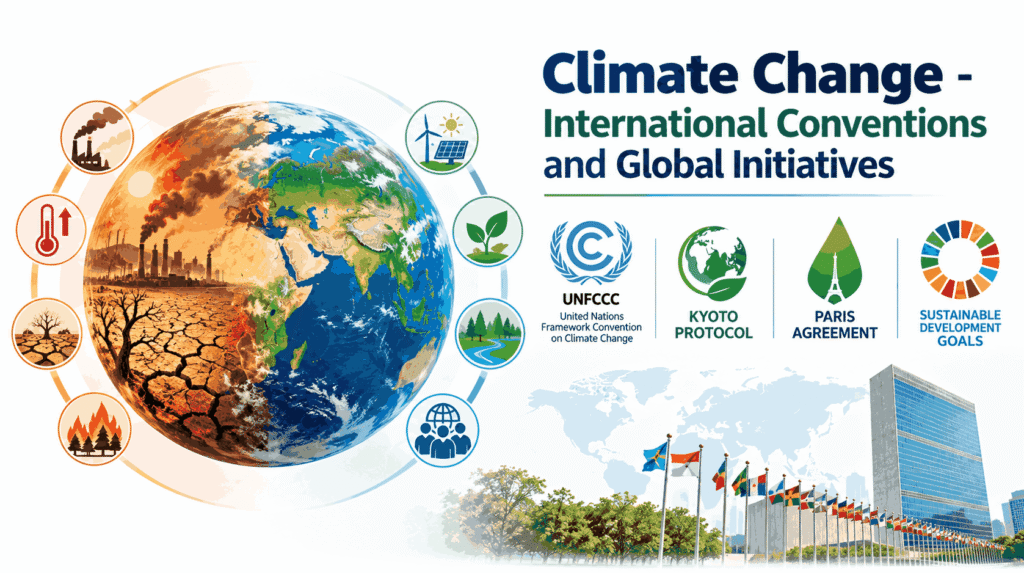
In agricultural ecology and crop geography, climate change represents a multi-decadal shift in global or regional climate patterns driven by anthropogenic alterations of the atmosphere. While natural climate variability occurs over centuries, modern global warming is accelerated by human activities that breach ecological limits, turning sustainable landscapes into areas of climate risk.
1. Defining Climate Change and the Agrarian Interface
Under the United Nations Framework Convention on Climate Change (UNFCCC), climate change is defined as a change of climate attributed directly or indirectly to human activity that alters the composition of the global atmosphere, observed over comparable time periods (typically decades to centuries).
Anthropogenic Drivers of Climate Change
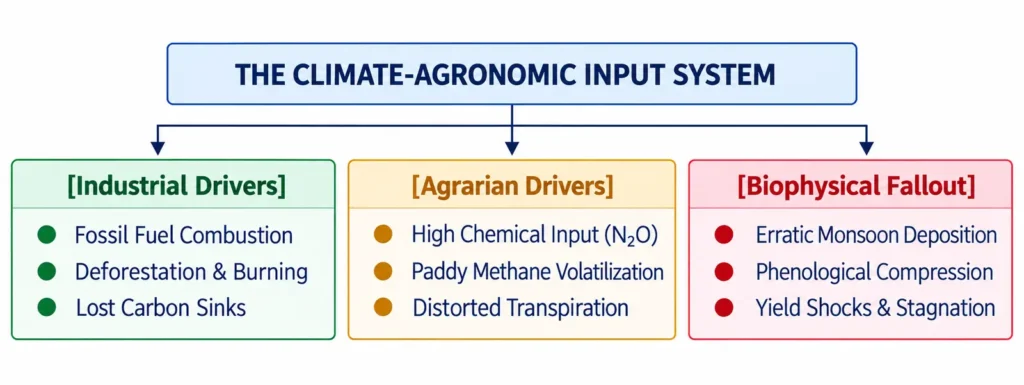
- Fossil Fuel Combustion: Burning massive volumes of coal, oil, and natural gas releases heavy loads of Carbon Dioxide (CO2) into the lower troposphere, trapping outgoing longwave radiation.
- Deforestation: When forest canopies are cleared or burned, their function as active carbon sinks is destroyed, releasing stored biomass carbon back into the atmosphere.
- Agricultural Management Errors: Intensive crop and soil management practices speed up global warming. These include methane (CH4) emissions from flooded rice paddies, nitrous oxide (N2O) release from over-applying synthetic nitrogenous fertilizers, and altered evapotranspiration rates due to landscape clearance.
2. Vulnerabilities and Impacts on Agriculture
Agriculture is highly sensitive to weather variations. Unseasonal climate patterns disrupt the predictable timelines of traditional farming systems, making developing nations like India vulnerable to food insecurity.
- Thermal Regime Shifts: Rising baseline temperatures increase vapor pressure deficits, forcing plants to close their stomata. This closure slows down carbon assimilation and shortens critical vegetative and grain-filling windows (phenological compression).
- Altered Precipitation Regimes: Shifting rainfall, erratic monsoons, and changes in winter snowfall patterns cause long dry spells and intense flash floods. These events trigger severe crop failure during critical growth stages like anthesis and pod-filling.
- Aggravated Pollution Cascades: Rising greenhouse gas levels interact with ground-level air pollutants (such as Ozone (O3), increasing the formation of toxic reactive oxygen species (ROS) that cause leaf flecking and suppress crop yields.
3. Early International Statutory and Assessment Mechanisms
To counter global climate change, international agencies have established scientific and legal bodies to guide environmental policy:
I. Intergovernmental Panel on Climate Change (IPCC)
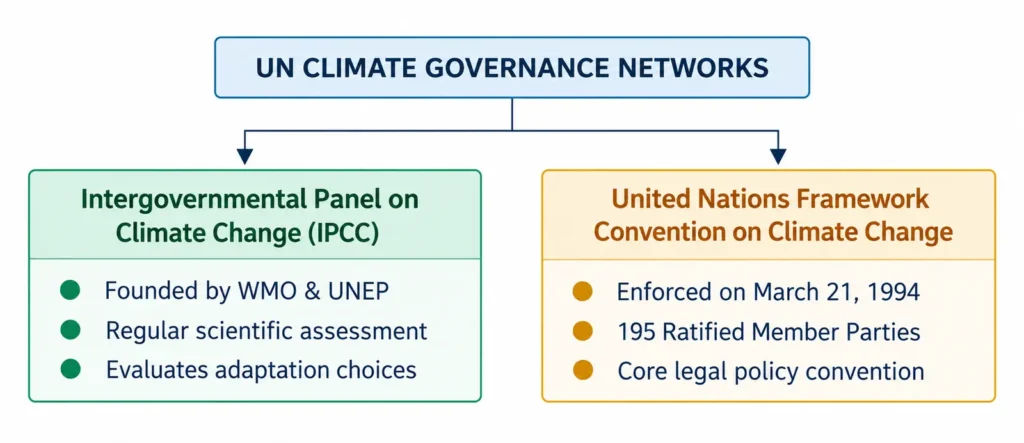
- Genesis: Co-founded by the World Meteorological Organization (WMO) and the United Nations Environment Programme (UNEP) to provide an objective, governmental-level mechanism to study global warming.
- Core Mandate: Acts as the apex United Nations scientific body assessing climate change. It does not conduct primary research; instead, it synthesizes peer-reviewed global scientific literature to provide policymakers with regular Scientific Assessments. These reports evaluate future environmental risks, calculate economic impacts, and propose actionable adaptation and mitigation blueprints for sectors like forestry and agronomy.
II. United Nations Framework Convention on Climate Change (UNFCCC)
- Genesis: Opened for signing at the Rio Earth Summit in 1992, it officially came into force on March 21, 1994.
- Institutional Architecture: Ratified by 195 countries, whose representatives are designated as the Parties to the Convention. The UNFCCC serves as the primary international legal framework coordinating global emission stabilization goals, working alongside the scientific assessments of the IPCC.
Climate Change Vulnerabilities and Potential Agrarian Shocks in India – UPSC Agriculture Optional
In agricultural ecology and spatial geography, India stands as one of the most vulnerable territories to global climate destabilization. The country features a unique combination of high economic activity density, a large population dependent on a climate-sensitive natural resource base, and an intense reliance on the Southwest Monsoon.
1. Global Geopolitical and Structural Risks of Climate Shocks
Climate change alters biophysical systems, introducing institutional and social risks that stretch past traditional state borders:
- Transboundary Water Tension: Shifting rainfall patterns and rising temperatures reduce water availability and compromise water quality. As demand grows, competition over shared river basins is expected to strain existing transboundary water governance systems.
- Sea-Level Rise and Coastal Degradation: Rising sea levels threaten the survival of low-lying coastal zones long before they are completely submerged. This trend leads to social disruption, forced migration, and conflicts over ocean resources and maritime borders.
- Unintended Policy Risks: Broadly implementing climate mitigation and adaptation policies (such as poorly managed carbon sequestration initiatives or biofuel crop expansions) carries a high risk of causing negative side effects, particularly in fragile or conflict-prone areas.
2. Structural Vulnerability Matrix of Indian Agriculture
India’s environment faces significant environmental stress, with the country’s water, air, soil, and forest systems experiencing some of the highest resource pressures globally. The primary pathway through which climate change impacts rural livelihoods is the hydrological cycle. Water sustains life, but climate-driven shifts turn it into a disruptive force through intense floods and prolonged droughts.
3. Potential Biophysical and Agronomic Effects in India
I. Extreme Heat and Thermal Regimes
- Climatic Regime Shifts: India is experiencing a clear warming trend, with intense heatwaves covering wider geographic areas.
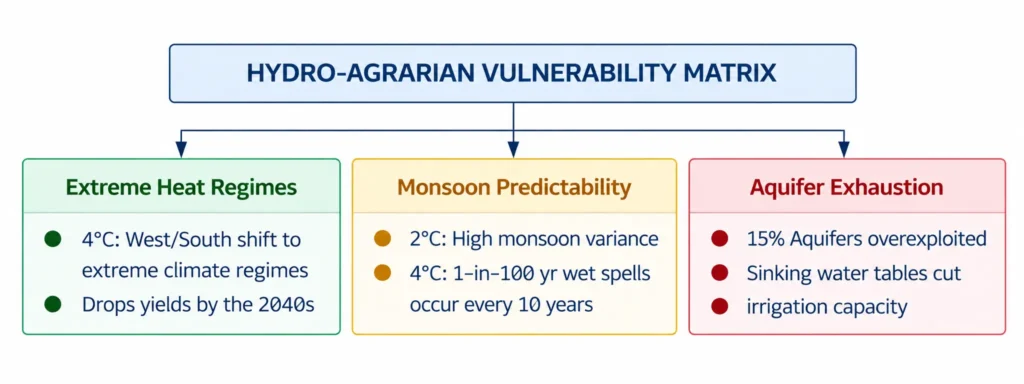
- Agronomic Impact: Under a projections framework of 4°C warming, the West Coast and Southern India are projected to shift to new, high-temperature climatic regimes. Extreme heat is expected to compress crop phenology, trigger pollen sterility, and cause a significant drop in crop yields by the 2040s.
II. Changing Rainfall Patterns and Monsoon Variance
- Monsoon Decline: A systematic drop in average monsoon rainfall has been documented since the 1950s.
- Agronomic Impact: A global temperature increase of 2°C is projected to make the Indian summer monsoon highly unpredictable. At 4°C warming, extreme wet monsoons—which historically occurred once in a century—are projected to return every 10 years by the end of the century. Dry years are expected to become drier and wet years wetter, complicating long-term cropping patterns.
III. Drought Proliferation
- Regional Aridity Spikes: Parts of South Asia have grown systematically drier since the 1970s, leading to a rise in total drought frequency.
- Agronomic Impact: Historical severe droughts (such as in 1987 and 2002–2003) affected more than half of India’s total crop area, causing immediate drops in food grain production. Future droughts are projected to concentrate across North-Western India, Jharkhand, Odisha, and Chhattisgarh, threatening regional food security.
IV. Groundwater and Aquifer Depletion
- Overexploitation Status: Approximately 15% of India’s groundwater resources are currently overexploited due to intensive tube-well irrigation.
- Agronomic Impact: Sinking water tables are expected to drop further due to rising competition from expanding populations, affluent lifestyles, and industrial growth. This depletion directly reduces the capacity of rain-fed areas to deploy protective irrigation during dry spells.
V. Himalayan Glacier Melt and River Influx
- Glacial Retreat: Most Himalayan glaciers have shown steady retreat over the past century.
- Agronomic Impact: Under a 2.5°C warming framework, accelerated glacial melt and loss of snow cover will threaten the reliability of Northern India’s perennial, glacier-fed rivers (Indus, Ganges, and Brahmaputra). Altered seasonal flows will reduce reliable irrigation water within these major river basins, disrupting the livelihoods of millions of smallholders.
VI. Equatorial Sea-Level Rise and Coastal Salinization
- Equatorial Elevation Bias: Due to its proximity to the equator, the Indian subcontinent will experience higher relative sea-level rises compared to higher latitudes.
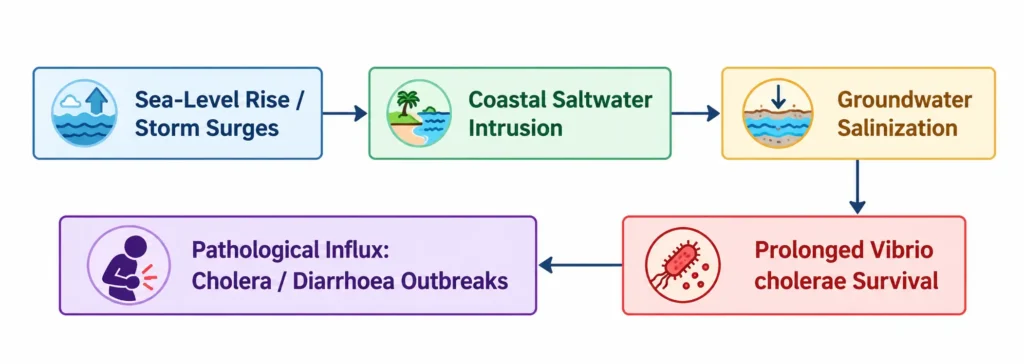
- Agronomic and Pathological Impacts: Sea-level rise and storm surges drive saltwater intrusion into coastal soils, causing secondary soil salinization and degrading groundwater quality. Densely populated, low-lying cities like Kolkata and Mumbai are highly vulnerable to riverine flooding and cyclones.
- Furthermore, increased water salinity extends the survival window of the Vibrio cholerae bacterium, increasing the risk of diarrhea cases and cholera outbreaks in rural coastal communities.
International Climate Accords and Environmental Financial Mechanisms – UPSC Agriculture Optional Notes
In agricultural governance and environmental economics, managing the impacts of global warming requires a combination of international legal treaties and specialized financial funding mechanisms. For a UPSC Agriculture Optional candidate, these international agreements are essential to understand how the global community enforces emission cuts, funds sustainable land management, and shapes climate-resilient agronomy.
1. The Rio Convention Triad and Institutional Cooperation
The foundational framework for modern global environmental governance was established at the Rio Earth Summit in 1992, which adopted three legally distinct agreements known as the Rio Conventions:
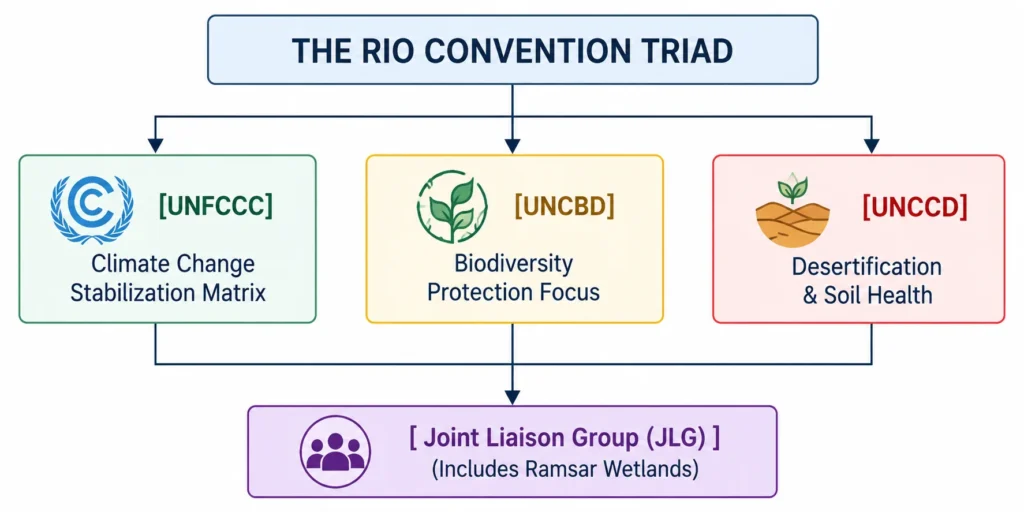
- The Three Pillars:
- UNFCCC: United Nations Framework Convention on Climate Change.
- UNCBD: United Nations Convention on Biological Diversity.
- UNCCD: United Nations Convention to Combat Desertification.
- The Joint Liaison Group (JLG): Established to ensure cross-cutting operational cooperation, policy alignment, and information exchange among the three Rio treaties. To strengthen wetland ecosystem conservation, the Ramsar Convention on Wetlands is also an active participant in this high-level working group.
2. Chronological Evolution of Global Climate Treaties
I. The Kyoto Protocol: Common but Differentiated Responsibilities (CBDR)
The Kyoto Protocol established a legally binding emission reduction framework based on historical emissions accountability:
- The Core Premise: It holds developed industrial nations (Annex-I parties) primarily accountable for the current high concentrations of greenhouse gases (GHGs) in the atmosphere, recognizing their dominant role in driving the industrial revolution.
II. The Paris Agreement: The Comprehensive Climate Framework
Signed in 2016, the Paris Agreement represents the world’s first universal, legally binding global climate framework designed to guide long-term mitigation and adaptation strategies:
- Temperature Stabilization Limits: Commits member nations to keep the rise in global average temperatures well below 2°C above pre-industrial levels, while pursuing active efforts to limit the temperature increase to 1.5°C.
- National Adaptive Capacity: Aims to strengthen the global capacity to handle and adapt to the adverse biophysical impacts of climate change while boosting climate-resilient investment streams.
- The Net-Zero Carbon Balance: Calls for achieving a balance between anthropogenic GHG emissions and natural planetary sinks. It aims to reduce human-driven emissions to a level equal to what the world’s trees, soils, and oceans can absorb naturally through biochemical cycles.
3. Specialized Forestry and Stratospheric Protection Initiatives
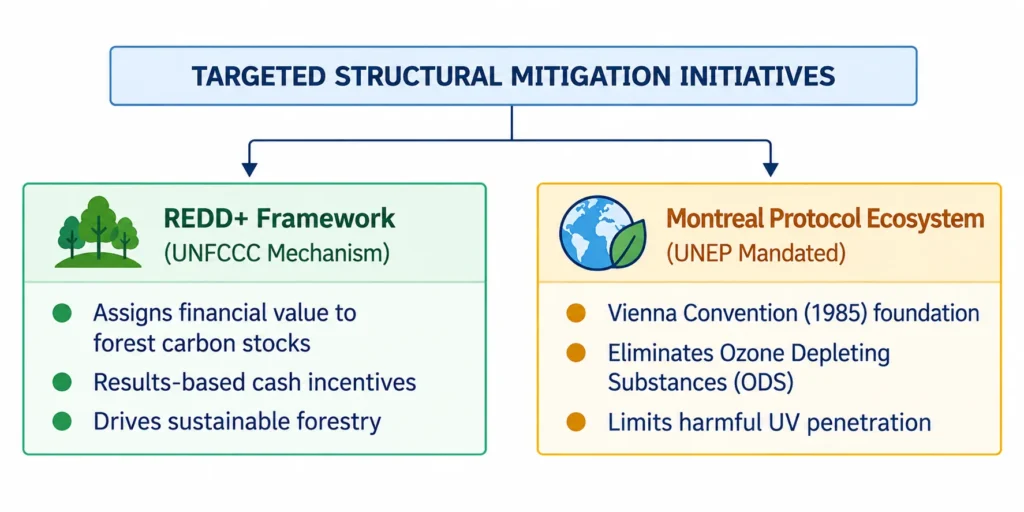
I. The REDD+ Mechanism (Reducing Emissions from Deforestation and Forest Degradation)
Developed by the Parties to the UNFCCC, REDD+ is an international climate mitigation framework that creates direct financial value for the carbon stored within forest ecosystems.
- Economic Incentives: Offers performance-based financial incentives to developing nations to reduce emissions from forested lands and invest in low-carbon development paths. These countries receive results-based payments for verified results-based actions.
- Expanded Scope: Moves past simple deforestation prevention to include the conservation of existing forests, sustainable management of forests, and the active enhancement of forest carbon stocks via social forestry.
II. The Vienna Convention and Montreal Protocol
Managed under the auspices of the United Nations Environment Programme (UNEP) since 1977, this framework protects the stratosphere from chemical degradation:
- The Vienna Convention (1985): A foundational framework agreement for the Protection of the Ozone Layer. It bound nations to co-operate in scientific research to improve the understanding of atmospheric processes and the consequences of ozone depletion, providing the legal structure for future binding modifications.
- The Montreal Protocol: A successful, legally binding treaty that regulates and phases out the industrial production and consumption of Ozone Depleting Substances (ODS) (like CFCs and halons). By protecting the ozone layer, it prevents high-energy ultraviolet (UV) radiation from reaching the Earth’s surface, protecting crop leaves from cellular damage and reducing mutation risks in livestock.
4. International Climate Finance: The Global Environment Facility (GEF)
The Global Environment Facility (GEF) is an independently operating financial organization that unites 183 member countries in partnership with international institutions, civil society organizations (CSOs), and the private sector to address global environmental issues.
- Grant Allocation: Provides dedicated grants and concessional funding for projects addressing biodiversity loss, climate change, international water conflicts, land degradation, ozone layer depletion, and persistent organic pollutants (POPs).
- Financial Mechanism Matrix: The GEF functions as the official core financial mechanism serving major international conventions:
- UNFCCC (Climate Change)
- UNCBD (Convention on Biological Diversity)
- UNCCD (Convention to Combat Desertification)
- Stockholm Convention on Persistent Organic Pollutants
- Minamata Convention on Mercury
Global Environmental Conventions and Indicators of Climate Disruption – UPSC Agriculture Optional
In agricultural meteorology, environmental economics, and global ecology, tracking biophysical indicators of climate change is essential to predict geographic risks. As global temperatures rise, these changes create complex socio-economic risks that threaten food security, strain resource availability, and challenge agricultural policy.
1. Expanded Statutory Financial Mechanism Matrix (GEF Scope)
The Global Environment Facility (GEF) serves as the operational financial engine for major international environmental agreements, providing grants to promote sustainable land and water management:
- Minamata Convention on Mercury: The GEF acts as the formal financial mechanism to help developing nations reduce industrial mercury emissions and prevent the accumulation of toxic Methylmercury in aquatic food webs.
- Stockholm Convention on Persistent Organic Pollutants (POPs): The GEF funds projects to phase out high-risk organic pollutants (such as old organochlorine pesticides like DDT and Heptachlor) to protect soil ecosystems from long-term chemical carryover.
- Support for Countries with Economies in Transition (CEITs): While the GEF is not the formal financial mechanism for the Montreal Protocol (which uses its own Multilateral Fund), it actively finances projects in transition economies. This funding helps these nations phase out ozone-depleting substances, protecting crops from harmful ultraviolet (UV) radiation.
2. Empirical Biophysical Indicators of Global Climate Disruption
Global scientific organizations, including NASA and NOAA, document significant structural shifts across the Earth’s biophysical systems:
I. Tropospheric and Oceanic Thermal Spikes
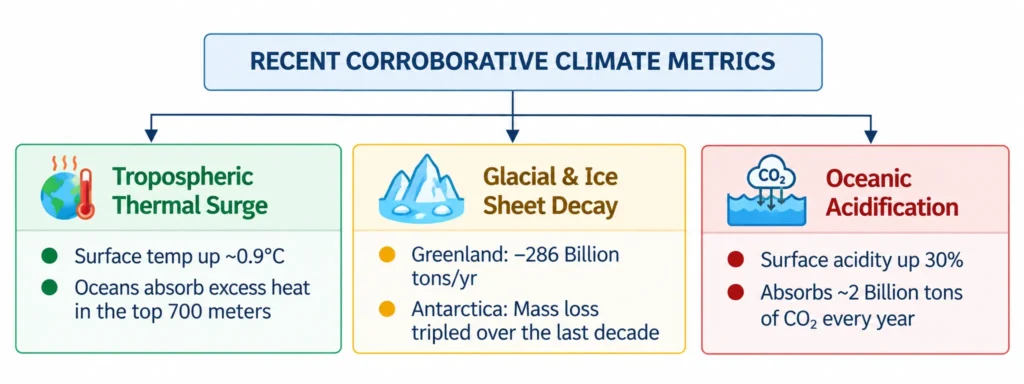
- Surface Temperature Rise: The Earth’s average surface temperature has increased by approximately 0.9°C (1.62°F) since the late 19th century, driven by rising concentrations of anthropogenic greenhouse gases. This warming trend has accelerated, with the warmest years on record occurring since 2010.
- Warming Oceans: The world’s oceans absorb over 90% of excess atmospheric heat. The top 700 meters of ocean water show a clear warming trend of more than 0.4°F since 1969, which increases the frequency of intense tropical cyclones and storm surges.
II. Cryospheric Meltdown and Deglagiation
- Ice Sheet Decay: Data from NASA’s Gravity Recovery and Climate Experiment (GRACE) reveals massive polar mass loss. Greenland lost an average of 286 billion tons of ice per year between 1993 and 2016, while Antarctica lost approximately 127 billion tons per year. The rate of ice mass loss in Antarctica has tripled over the last decade.
- Glacial Retreat and Declining Snow Cover: Mountain glaciers are retreating globally across major ranges, including the Himalayas, Alps, Andes, and Rockies. Concurrently, spring snow cover in the Northern Hemisphere has declined over the past five decades, leading to earlier spring melts that disrupt seasonal river flows.
- Arctic Sea Ice Depletion: Both the total geographic area and the average thickness of Arctic sea ice have declined rapidly, accelerating global warming through the ice-albedo feedback loop.
III. Sea-Level Rise and Weather Extremes
- Accelerating Sea-Level Rise: Global sea levels rose approximately 8 inches over the last century. Over the past two decades, the rate of increase has nearly doubled and continues to accelerate annually, increasing the risk of saltwater intrusion into coastal aquifers and agricultural fields.
- Extreme Weather Frequency: Meteorological records show a significant increase in high-temperature records and intense, concentrated rainfall events, which complicate traditional cropping patterns due to unpredictable weather.
IV. Marine Chemical Shifts (Ocean Acidification)
- The pH Collapse: The acidity of surface ocean waters has increased by approximately 30% since the industrial era. This change occurs as the upper layers of the ocean absorb roughly 2 billion tons of atmospheric Carbon Dioxide per year, forming carbonic acid which disrupts marine life and coastal aquaculture systems.
3. The G7 Climate-Fragility Matrix: Socio-Economic and Security Risks
The G7-commissioned independent report, “A New Climate for Peace: Taking Action on Climate and Fragility Risks,” outlines how biophysical climate disruptions create interconnected socio-economic risks that threaten regional stability:
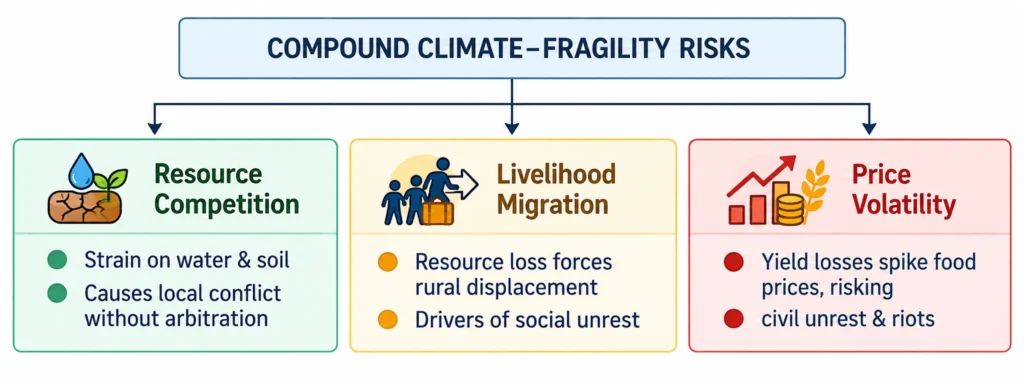
- Local Resource Competition: Declining soil quality and water availability compress agricultural margins. Without effective dispute resolution systems, intense competition over these shared natural resources can lead to local instability and social conflict.
- Livelihood Insecurity and Forced Migration: As climate volatility reduces crop yields, communities dependent on natural resources face high economic insecurity. This loss of income can force rural families to migrate into urban slums or turn to informal economic options.
- Extreme Disasters and Vulnerability: Intense droughts, flash floods, and cyclonic storms damage rural infrastructure. These disasters strain local institutional capacity and can increase social grievances, particularly in fragile regions.
- Volatile Food Prices and Supply Shocks: Climate change directly disrupts agricultural output, causing food supply shocks and market volatility. Sharp spikes in food prices increase the risk of public protests, food rioting, and civil conflict, turning agronomic shortfalls into national security concerns.
India’s Response to Climate Change – UPSC Agriculture Optional
Climate change impacts like water scarcity, health hazards, mass migration, and resource conflicts present immediate challenges to India’s development. Because agriculture stands at the direct interface of weather variations and food security, the Government of India has instituted comprehensive policy frameworks, green financing models, global coalitions, and targeted agronomic research programs to build long-term sustainability.
1. National Action Plan on Climate Change (NAPCC)
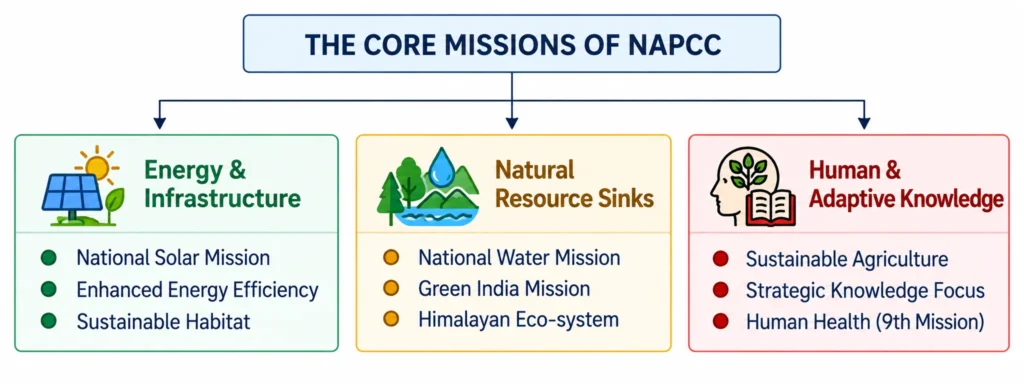
Launched on 30 June 2008, the NAPCC is India’s overarching framework designed to build climate resilience without compromising economic growth and poverty reduction. It has since expanded from its original eight core missions to nine national missions:
- National Solar Mission: Focuses on accelerating solar energy deployment and technological research.
- National Mission for Enhanced Energy Efficiency: Mandates specific energy consumption cuts in heavy industries and introduces energy-saving certificates.
- National Mission on Sustainable Habitat: Focuses on building eco-friendly urban spaces, solid waste management, and public transit.
- National Water Mission: Targets a 20% improvement in water-use efficiency through integrated water resource management.
- National Mission for Sustaining the Himalayan Eco-system: Focuses on monitoring glacial retreat, snow cover decline, and protecting mountain biodiversity.
- National Mission for a Green India: Aims to enhance forest and tree cover to restore degraded ecosystems and boost carbon sequestration.
- National Mission for Sustainable Agriculture (NMSA): Promotes climate-resilient farming, dryland agriculture, and soil health management.
- National Mission on Strategic Knowledge for Climate Change: Coordinates climate data sharing and funds scientific modeling of local climate impacts.
- National Mission on Climate Change and Human Health: Added recently to address vector-borne and heat-related public health risks.
2. Green Financing and Global Commitments
I. National Clean Energy Fund (NCEF)
- Genesis: Formed in 2010 to finance clean energy research and promote low-carbon technology initiatives across India.
- Corpus Mechanism: Funded by levying a clean energy cess per tonne of coal produced domestically or imported. The clean tax started at ₹50 per tonne in 2010 and was subsequently increased to ₹100 per tonne in 2014, providing reliable state-backed green finance.
II. India’s Updated Nationally Determined Contributions (NDCs)
Under the Paris Agreement Framework, India has updated its climate targets to align with its vision of Viksit Bharat and its commitment to hit Net-Zero emissions by 2070:
- Emissions Intensity Cut: Commit to reduce the emissions intensity of national GDP by 47% by 2035 compared to 2005 levels (advancing past the earlier 45% target for 2030).
- Non-Fossil Capacity Push: Achieve 60% cumulative electric power installed capacity from non-fossil fuel-based energy resources by 2035 (advancing past the previous 50% target for 2030).
- Forestry Carbon Sink: Create an additional carbon sink of 3.5 to 4.0 billion tonnes of CO₂ equivalent through expanded forest and tree cover by 2035.
III. International Solar Alliance (ISA)
- Launch: Jointly launched by India and France on 30 November 2015 during the UNFCCC COP21 meeting in Paris.
- Mandate: Headquartered in India, the ISA unites solar-resource-rich countries situated between the Tropics of Cancer and Capricorn to scale up solar energy deployment, lower technology costs, and advance the global grid vision of “One Sun, One World, One Grid”.
3. Targeted Automotive Controls: Bharat Stage (BS) Leapfrogging
Vehicular emissions are a major source of air and particulate pollution. To accelerate emission reductions, India implemented a strict regulatory strategy:
- Regulatory Timeline: Introduced BS-I norms in April 2000, followed by BS-II in 2005, and a nationwide rollout of BS-III in 2010.
- The BS-V Leapfrog: In 2016, the government decided to align directly with global best practices. It chose to skip the BS-V stage entirely and leapfrog directly to BS-VI norms, forcing automobile manufacturers and fuel refineries to quickly upgrade their technologies to lower particulate matter and nitrogen oxide emissions.
4. National Initiative on Climate Resilient Agriculture (NICRA)
Launched in February 2011 by the Indian Council of Agricultural Research (ICAR) with core funding from the Ministry of Agriculture, NICRA is a targeted program designed to protect the farming sector from immediate climate hazards.
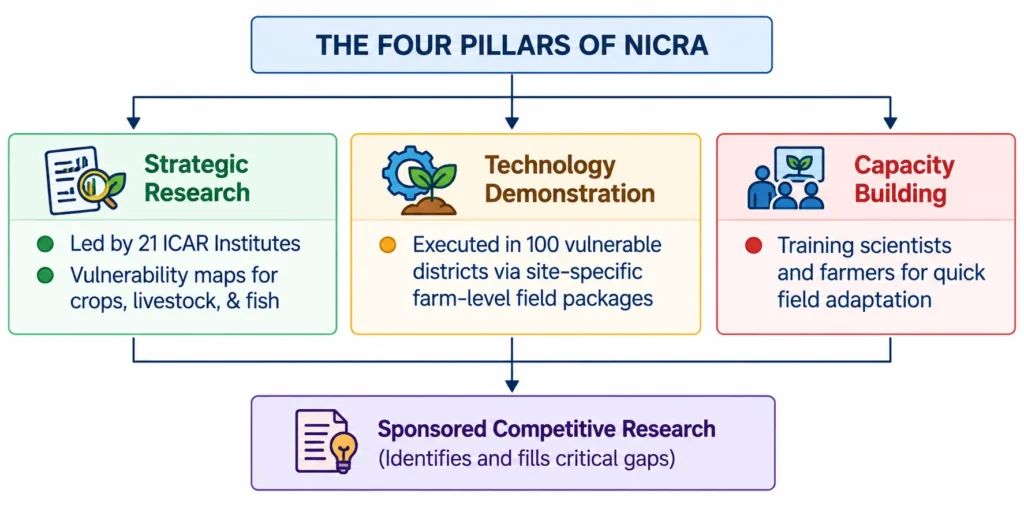
Core Scheme Components
- Strategic Research: Conducted across 21 specialized ICAR institutes, focusing on long-term climate modeling, stress-tolerant crop breeding, and emission reduction strategies.
- Technology Demonstration: Deploying site-specific technology packages directly in farmers’ fields across 100 vulnerable districts to help rural communities adapt to climate risks.
- Capacity Building: Conducting targeted training programs for scientists, extension officers, and farming groups to build long-term research skills and field adaptation.
- Sponsored Competitive Research: Funding external research projects to address critical scientific gaps in climate change adaptation.
Unique Features and Assessment Mandates
NICRA stands out due to its comprehensive vulnerability assessment framework. It evaluates how intra-seasonal rainfall variability, sudden dry spells, and intense heatwaves impact different crops and agro-ecological zones. This data allows scientists to design tailored risk-management technologies, crop calendars, and micro-irrigation systems to protect smallholder yields from climate shocks.
Previous Year Question based on it
- Discuss response of crop plants to rising temperature and carbon dioxide levels in relation to climate change, with suitable examples. (10M 150W CSE 2023)
- Explain the agronomic approaches to reduce the impact of climate change on crops. (15M, IFoS-2022)
- Discuss various international conventions and recent global initiatives pertaining to climate change. (10M, CSE 2021)
- Discuss the impact of climate change on livestock and fisheries. (8M, IFoS 2020)
- What are the effects of ozone layer depletion? (10M, CSE 2019)
- Discuss the global initiatives and international conventions on climate change. What does NICRA stand for?What are the initiatives taken by the Indian Government in this regard? (20M, CSE 2017, 2016)
- Explain Indian efforts towards environmental problem at international level (10M, 150W, CSE 2014)
- What are the impacts of climatic change in agriculture? How can the impacts be mitigated in crop environment? (20M, 250W, CSE 2013)
- Bring out the possible impact of climate change on Indian agriculture. What are the possible mitigation options? Comment on any National and or International Regulatory Mechanisms in this regard? (60M, CSE 2010)