

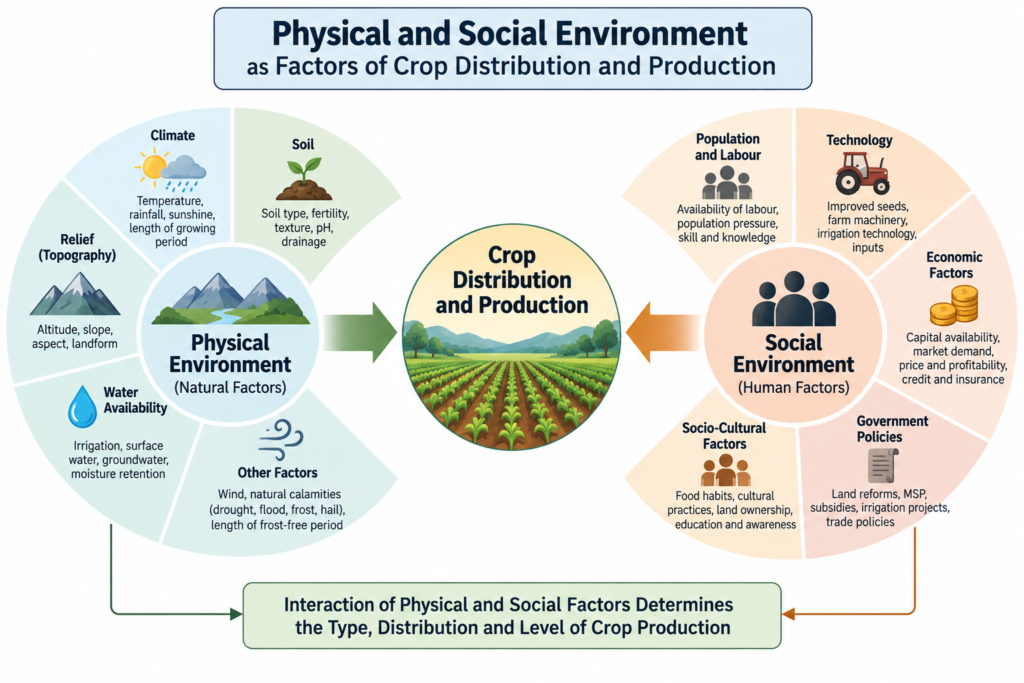
Crop production and distribution are fundamentally shaped by external surroundings. When discussing physical and social environments as factors, we are looking at how the natural constraints of the Earth and the cultural choices of human society determine where crops can grow and how they reach consumers.
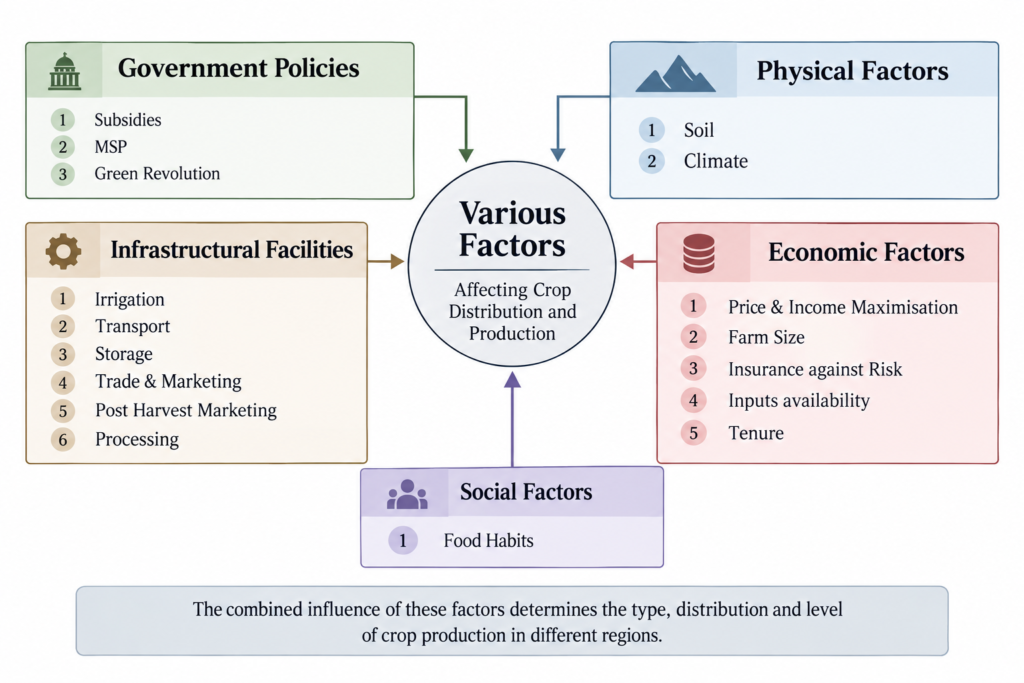
Factor responsible for Crop production and distribution
Crop production and distribution are driven by a dynamic interplay between natural boundaries and human systems. Agricultural geography is fundamentally shaped by environmental factors, divided into physical and socioeconomic dimensions:
|
Physical / Geographical Factors |
|
|---|---|
|
Economic Factors |
|
|
Historical Factor |
|
|
Government Policies |
|
|
Technological Factors |
|
|
Social Factors |
|
Some Other Important Factor
Climatic Factors Influencing Crop Production – UPSC Agriculture Optional
In agricultural ecology, nearly 50% of total crop yield variance is directly attributed to climatic factors. While edaphic (soil) and biotic variables define the localized growth medium, atmospheric weather variables dictate the macro- and micro-environments governing all physiological processes. Understanding these parameters is essential for agro-ecological zoning, crop modeling, and developing climate-resilient cropping systems.
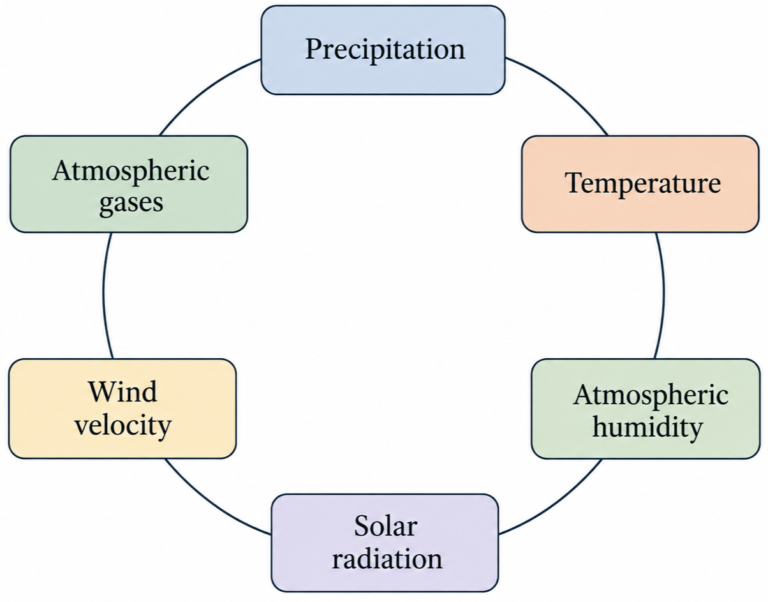
1. Precipitation and Moisture Regimes
Precipitation is the primary source of soil moisture, acting as the universal solvent for nutrient uptake and translocation. Both the absolute quantum (amount) and the temporal distribution of rainfall govern regional crop distribution.
Agro-Ecological Variations Based on Precipitation
- Heavy, Evenly Distributed Rainfall Zones: Characterised by high moisture availability.
- Plain Regions: Intensive lowland rice cultivation.
- Hilly Terrains (e.g., Western Ghats, Northeast India): Plantation crops like tea (Camellia sinensis), coffee (Coffea arabica), and rubber (Hevea brasiliensis) which require high moisture but demand excellent soil drainage to prevent root rot.
- Low, Skewed/Unevenly Distributed Rainfall Zones: Characterised by chronic or intermittent moisture stress. Farming shifts to Dryland Agriculture. Cultivation is restricted to drought-hardy, C4 morphotypes like Pearl Millet (Pennisetum glaucum), Sorghum (Sorghum bicolor), and various minor millets (e.g., finger millet, foxtail millet).
- Arid/Desert Ecosystems: Extreme moisture deficits result in natural vegetation dominated by xerophytic shrubs, ephemeral grasses, and halophytes.
The Criticality of Spatial-Temporal Distribution
The distribution of rainfall across physiological growth stages is far more vital than the cumulative seasonal volume.
- Deficit Stress: Dry spells during critical crop growth stages (e.g., panicle initiation in cereals, flowering, pod filling) lead to drastic yield reductions.
- Excess Precipitation: Torrential or unseasonal rain induces soil waterlogging, creating anaerobic root environments. This stalls active nutrient transport, triggers denitrification, and causes physical lodging or post-harvest spoilage.
2. Thermal Regime (Temperature)
Temperature measures the kinetic energy driving cellular and enzymatic biochemistry. The standard temperature range for optimal vegetative and reproductive development in most agricultural crops lies between 15°C and 40°C.
Macro-Environmental Determinants
The thermal regime of an agro-ecosystem is primarily governed by two geographical variables:
- Latitude (Distance from the Equator): Determines the angle of incidence of solar radiation, dividing crops into tropical, subtropical, and temperate distinct zones.
- Altitude (Elevation): Due to the environmental lapse rate, temperature drops with altitude, allowing temperate crops to thrive in tropical latitudes at higher elevations.
Physiological Significance and Cardinal Temperatures
Every plant species displays specific Cardinal Temperatures—a trio of distinct thermal points that dictate its lifecycle:
- Minimum Temperature: The lower thermal threshold below which metabolic activity drops to basal levels and growth ceases.
- Optimum Temperature: The narrow thermal band where metabolic efficiency, photosynthetic rates, and net assimilation hit maximum velocity.
- Maximum Temperature: The upper thermal limit beyond which enzyme denaturation occurs, photosynthetic machinery fails, and irreversible physiological injury ensues.
These parameters govern critical phenological stages, including seed germination kinetics, leaf area index (LAI) expansion, vascular differentiation, anthesis, and grain filling.
3. Atmospheric Humidity (Relative Humidity – RH)
Relative Humidity (RH) represents the ratio of the actual water vapor pressure in the air to the saturation vapor pressure at a given temperature, expressed as a percentage. It dictates the atmospheric vapor pressure deficit (VPD), which regulates the transpirational pull of plants.
Physiological Interactions
- The 40–60% Paradigm: An RH range of 40% to 60% is optimal for most agricultural crops. It maintains a healthy balance between leaf-to-air water vapor gradients, promoting steady transpiration without inducing dehydration or stomatal closure.
- Saturation Threshold (100% RH): When the atmosphere is fully saturated, the VPD drops to zero. Consequently, net soil evaporation and plant transpiration stall completely. This disrupts the passive translocation of essential nutrients (like calcium and boron) which rely heavily on the transpiration stream.
Biotic Interactions & Disease Epidemics
Prolonged high relative humidity (>80%) alters the microclimate within the crop canopy, acting as a catalyst for pest infestations and disease outbreaks:
- Mycological Vectors: Accelerates spore germination and hyphal proliferation of devastating fungal pathogens (e.g., Late Blight of Potato, Downy Mildew, and Powdery Mildew).
- Entomological Vectors: Triggers rapid multiplication of sucking pests like Brown Plant Hopper (BPH) in rice and aphids in mustard.
4. Solar Radiation
Solar radiation is the fundamental energy input driving the biosphere. It influences crops through three distinct dimensions: Intensity (Energy quantum), Quality (Wavelength), and Duration (Photoperiod).
Photosynthetically Active Radiation (PAR)
Not all light is utilized by plants. The specific band of the electromagnetic spectrum falling between 400 nm and 700 nm (0.4 – 0.7 µm) is classified as Photosynthetically Active Radiation (PAR).
- Chlorophyll pigments absorb light primarily in the blue and red bands of PAR.
- This absorbed energy splits water molecules (photolysis) to generate ATP and NADPH, driving the Calvin cycle to convert CO2 into carbohydrates and structural biomass.
Photoperiodism
Photoperiodism is the physiological response of plants to the relative length of day and night within a 24-hour cycle. It determines the transition from vegetative to reproductive phases and is mediated by the phytochrome pigment system.
- Short-Day Plants (SDP): Require a day length shorter than a critical threshold (long uninterrupted dark period) to trigger flowering. Generally grown in Kharif season. Examples: Rice (Oryza sativa), Sorghum, Soyabean (Glycine max).
- Long-Day Plants (LDP): Require a day length longer than a critical threshold (short dark period) to trigger flowering. Generally grown in Rabi season. Examples: Wheat (Triticum aestivum), Barley (Hordeum vulgare), Oat.
- Day-Neutral Plants (DNP): Flowering is independent of day length; photoperiod does not dictate the reproductive switch. Examples: Maize (Zea mays), Sunflower (Helianthus annuus), Tomato, Cotton.
5. Wind Velocity
Wind functions as an atmospheric mixing agent, driving the convective transport of heat, moisture, and gases across agricultural landscapes.
Beneficial Agricultural Impacts
- Gas Exchange: Moderate wind speeds (4 to 6 km/hr) refresh the crop canopy microclimate by dispersing stagnant air and replenishing CO₂ concentrations necessary for optimal photosynthesis.
- Reproductive Biology: Acts as the primary agent for anemophilous (wind) pollination in key staple crops like maize, millets, and wild grasses, while aiding natural seed dispersal mechanisms.
Detrimental Impacts of High-Velocity Wind
- Mechanical Damage: Wind speeds exceeding critical thresholds cause lodging (bending/breaking of stems) in tall, shallow-rooted crops like sugarcane and banana. It causes defoliation, twig fracturing, and premature fruit/flower drop.
- Physiological Stress: High winds strip the boundary layer of air around leaves, elevating the vapor pressure deficit and accelerating desiccation.
- Erosional & Pathogenic Risks: High-velocity winds drive aeolian soil erosion (topsoil loss) and transport fungal spores, weed seeds, and small insect vectors across long distances.
6. Atmospheric Gases
The tropospheric gaseous composition acts as both substrate and regulator for vital plant metabolic pathways. Standard composition includes 78.09% Nitrogen (N2), 20.95%, Oxygen (O2), 0.93% Argon, and approximately 0.04% Carbon Dioxide (CO2).
Carbon Dioxide (CO2)
- Photosynthetic Substrate: CO2 is the primary carbon source assimilated via diffusion through stomatal pores. It is fixed into phosphoglycerate (C3 plants) or oxaloacetate (C4 plants).
- Atmospheric Cycles: Resupplied to the atmosphere through the respiration of living organisms, microbial decomposition of soil organic matter, and burning of agricultural residues.
Oxygen (O2)
- Cellular Respiration: Essential for aerobic respiration in all plant tissues. It acts as the terminal electron acceptor in the mitochondrial electron transport chain, generating ATP for growth and maintenance.
- Rhizospheric Oxygen: Soil air must maintain adequate O2 levels; root hypoxia (caused by waterlogging) blocks active nutrient transport and causes root decay.
Nitrogen (N2)
- Elemental Fixation: Inert atmospheric dinitrogen (N2) cannot be directly assimilated by plants. It must be converted into plant-available forms (NH4+ NO3–) through atmospheric fixation (lightning), industrial fixation (Haber-Bosch process), or Biological Nitrogen Fixation (BNF) via symbiotic (e.g., Rhizobium) and non-symbiotic (e.g., Azotobacter) microorganisms.
Edaphic Factors Influencing Crop Production – UPSC Agriculture Optional
In agricultural geography and plant ecology, edaphic factors define the physical, chemical, and biological properties of the soil matrix that directly govern root dynamics and crop yield. While the atmospheric regime determines macro-climatic potential, the rhizosphere (root zone) acts as the immediate structural and biochemical medium for nutrient assimilation, moisture storage, and anchorage.
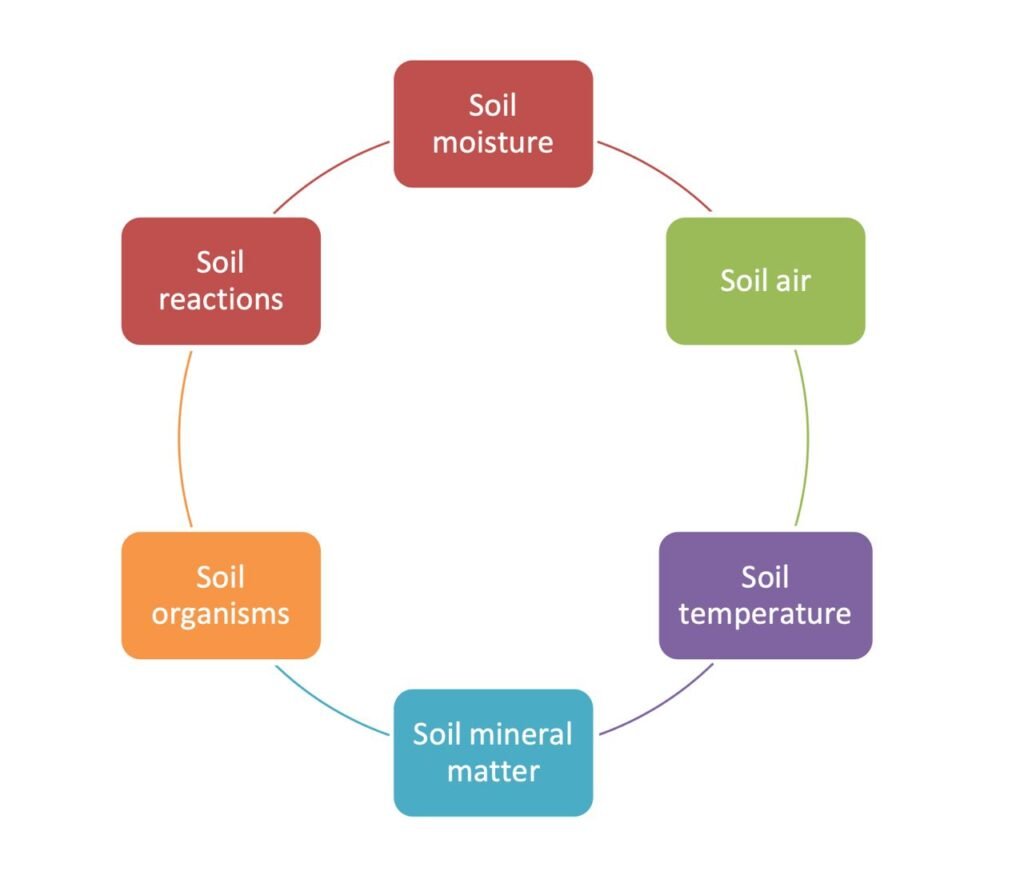
1. Soil Moisture Regimes
Soil water acts as the universal solvent facilitating nutrient transport, cellular turgidity, and biochemical pathways within the plant system. It is the primary transport vehicle moving mineral ions from the bulk soil to the root surface via mass flow and diffusion.
The Available Water Content (AWC) Paradigm
Not all water present in the soil is accessible to the plant. Agricultural water management relies on specific energy-status milestones:
- Field Capacity (FC): The volume of water retained in the soil matrix after excess gravitational water has drained away (usually at a suction pressure of -0.33 bar).
- Permanent Wilting Point (PWP): The soil moisture content where the matric suction is so high (-15 bars) that plant roots can no longer extract water, leading to irreversible cell plasmolysis and wilting.
- Available Soil Moisture: The moisture fraction held between Field Capacity and Permanent Wilting Point constitutes the usable water reservoir for crops.

Soil Texture Interactions
- Heavy-Textured Soils (Clay): Display significantly higher Available Water Capacity due to smaller micropore networks and vast surface areas, though they run a higher risk of aeration deficits.
- Light-Textured Soils (Sandy): Characterized by dominant macropores that promote rapid gravitational drainage, resulting in low available water storage and high drought vulnerability.
Functional Matrix Roles
Beyond hydration, soil moisture modulates the soil microclimate by buffering the land against extreme diurnal temperature spikes due to its high specific heat capacity. It also drives the mineralization of organic matter by providing a fluid medium for microbial extracellular enzymes.
2. Soil Air and Aeration Dynamics
Soil aeration refers to the continuous gaseous exchange between the macroscopic atmosphere and the soil pore space. The composition of soil air differs from the troposphere, typically displaying elevated Carbon Dioxide (CO2) and depleted Oxygen (O2) concentrations due to subterranean respiration.
Metabolic Significance of Oxygen (O2)
- Root Respiration: Active nutrient absorption is an energy-dependent process requiring ATP. Roots demand sufficient oxygen to sustain aerobic respiration; in its absence, metabolic output switches to anaerobic pathways, severely restricting nutrient and water uptake.
- Seed Germination: The initial metabolic activation of dormant embryo reserves relies entirely on aerobic respiration. Soil compaction or waterlogging inhibits germination by cutting off oxygen access.
- Microbial Nutrient Transformations: Nitrefying bacteria (Nitrosomonas and Nitrobacter) and aerobic decomposers require oxygen to break down complex organic matrices and convert insoluble minerals into plant-available soluble salts.
Crop-Specific Sensitivity to Rhizospheric Oxygen
- High Oxygen Demand (Aerophilic Crops): Potato, tobacco, cotton, linseed, tea, and most legumes are highly sensitive to poor aeration. Oxygen deficits quickly induce root decay, functional chlorosis, and rapid yield loss.
- Low Oxygen Tolerance (Hydrophilic Crops): Rice (Oryza sativa) thrives under prolonged waterlogged, anaerobic conditions. It bypasses soil oxygen deficits using specialized aerenchyma tissues in its stems and roots, which channel atmospheric oxygen directly down to the rhizosphere.
3. Soil Temperature
Soil temperature is a critical thermodynamic driver governing the physical, chemical, and biological kinetics of the rhizosphere.
Biochemical and Physiological Impacts
- Nutrient and Water Viscosity: Low soil temperatures increase water viscosity and reduce the permeability of root cell membranes, drastically lowering the passive and active absorption rates of water and essential solutes.
- Subterranean Organ Development: Soil thermal regimes dictate the cell division and cell elongation rates of underground harvestable crop portions, such as tapioca (Manihot esculenta) and sweet potato (Ipomoea batatas).
- Microbial Kinetics: The biochemical transformation of elements (e.g., ammonification, nitrification) peaks within a specific thermal band (25°C to 35°C). Cold or frozen soils stall microbial enzyme systems, locking nutrients into unavailable organic forms.
4. Soil Mineral Matter and Organic Matter (SOM)
Soil Mineral Matter
Derived directly from the physical and chemical weathering of parent rocks, the mineral fraction serves as the primary reservoir of essential plant nutrients. It supplies key structural and metabolic elements, including Calcium (Ca2+), Magnesium (Mg2+), Sulfur (SO42-), Iron (Fe2+/Fe3+), Manganese (Mn2+), and Potassium (K+)
Soil Organic Matter (SOM)
Soil Organic Matter acts as the cornerstone of sustainable soil health and structural integrity.
- Comprehensive Nutrient Reservoir: SOM functions as a slow-release storehouse supplying major, minor, and micro-nutrients through the steady process of mineralization.
- Physical Structural Enhancer: It serves as a natural cementing agent that binds individual soil particles into stable aggregates, improving soil texture/structure and increasing the overall water holding capacity (WHC).
- Biological Catalyst: SOM is the primary carbon and energy source for heterotrophic soil microorganisms. During its decomposition, organic acids (such as fulvic and humic acids) are liberated, lowering micro-localized pH to solubilize and release otherwise fixed, unavailable mineral complexes.
5. Soil Organisms (Biotic Edaphic Component)
The soil biota constitutes a complex food web that transforms the soil from an inert geological layer into a living, dynamic ecosystem.
- Decomposition and Mineralization: Saprophytic bacteria, fungi, and actinomycetes break down raw, complex organic materials (like crop residues and animal wastes), releasing plant-assimilable inorganic ionic forms.
- Biological Nitrogen Fixation (BNF): Specialized diazotrophic microbes bridge the gap between atmospheric nitrogen and plant needs through distinct lifestyles:
- Symbiotic Association: Rhizobium bacteria form root nodules in legume crops, directly exchanging fixed ammonia for plant carbohydrates.
- Non-Symbiotic / Associative Symbiotic: Microbes like Azospirillum and Azotobacter fix atmospheric dinitrogen independently within the rhizosphere, boosting the nitrogen profile of non-legume crops like millets and cereals.
6. Soil Reaction (pH Dynamics)
Soil reaction refers to the degree of acidity or alkalinity of the soil solution, measured by the negative logarithm of hydrogen ion concentration (pH). It is the primary master variable governing nutrient availability and chemical toxicities.

Analytical Breakdown of pH Zones
- Neutral Soils (pH 6.5 – 7.5): This narrow band represents the ideal chemical environment for most agricultural crops. Nutrient solubility is maximized, and microbial activity hits peak efficiency.
- Acidic Soils (pH < 6.0): Commonly found in high-rainfall zones due to the leaching of base cations (Ca2+, Mg2+, K+).
- Toxicity Risks: Low pH induces high, toxic concentrations of soluble Iron (Fe) and Aluminum (Al), which cause severe root cell damage.
- Nutrient Deficiencies: Strongly fixes phosphorus into insoluble aluminum and iron phosphates, while suppressing the activity of beneficial nitrifying bacteria.
- Saline and Alkaline Soils (pH > 7.8): Characterized by high accumulations of soluble salts or exchangeable sodium. High pH drives the fixation of phosphorus into insoluble calcium compounds and induces deficiencies in essential micronutrients like zinc, iron, and manganese.
Biotic Factors Influencing Crop Production – UPSC Agriculture Optional
In agricultural ecosystems, biotic factors encompass the complex web of inter-organismal relationships—ranging from plant-plant interfaces to micro- and macro-faunal interactions—that directly alter crop growth, reproductive success, and net yield. While physical and edaphic conditions provide the structural baseline, biotic interactions dynamically regulate resource partitioning, reproductive efficiency, and crop health within the agro-ecosystem.
1. Plant-Plant Interactions (Inter-Crop and Weed Dynamics)
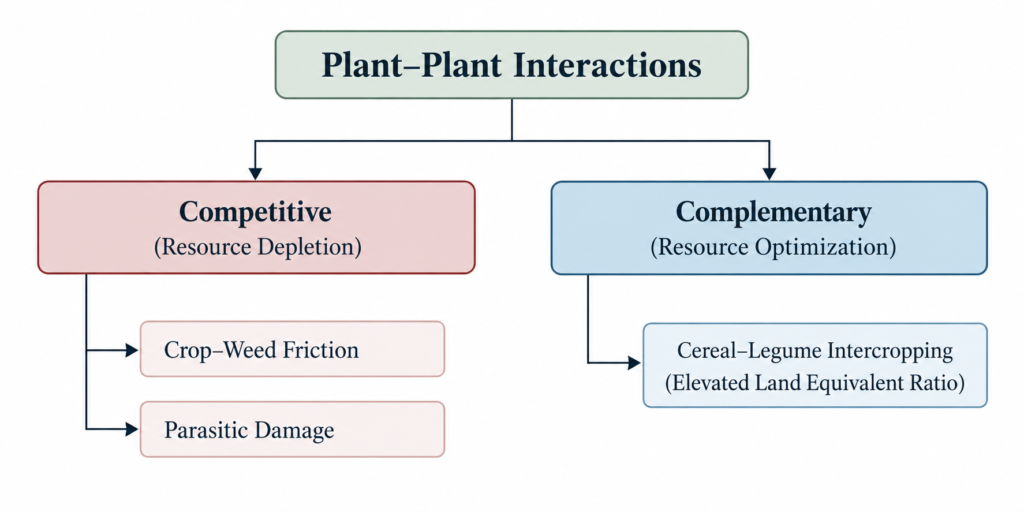
When multiple plant species share an ecological niche, their growth habits lead to either competitive (detrimental) or complementary (synergistic) relationships.
The Mechanics of Crop Competition
Competition occurs when the collective demand of the plant population for essential growth factors exceeds the immediate supply of the environment. Plants primarily compete for three critical resources: Nutrients, Moisture, and Sunlight.
- Intra-specific Competition: Occurs between individuals of the same crop species, typically accelerated by over-dense planting configurations that cause mutual shading and restricted root development.
- Inter-specific Competition: Occurs between different species, most severely demonstrated in crop-weed ecosystems. Weeds possess aggressive root systems and rapid early vegetative growth, stripping vital inputs away from the main crop.
Complementary and Synergistic Relationships
Strategic crop associations can eliminate negative competition, replacing it with mutual benefit:
- Cereal-Legume Intercropping: When cereals (e.g., Maize) and legumes (e.g., Cowpea) are cultivated together, they utilize different soil strata due to distinct rooting depths. Furthermore, legumes enrich the soil via Biological Nitrogen Fixation, while the companion cereal crop benefits from current-season nitrogen transfer. This produces a clear synergistic effect, elevating the Land Equivalent Ratio (LER).
Biotic Parasitism
Certain higher plant species have evolved to survive as obligate or facultative parasites on commercial crops, directly hijacking their vascular systems:
- Example: Witchweed (Striga spp.) acts as a devastating root parasite on sugarcane, maize, and sorghum. It penetrates the host root system via specialized structures called haustoria, draining water, nutrients, and photosynthates, which causes severe stunting and crop failure.
2. Animal-Crop and Faunal Interactions
The animal kingdom interacts with agricultural crops across multiple trophic levels, functioning as vital decomposers, reproductive catalysts, or destructive economic pests.
Subterranean and Soil Fauna
The soil matrix houses a diverse faunal community that directly modifies the edaphic environment:
- Micro- and Meio-Fauna (Protozoa, Nematodes, Micro-arthropods): These organisms ingest raw organic debris for energy. In doing so, they shred organic residues, exponentially increasing the surface area available for subsequent microbial decomposition and nutrient mineralisation.
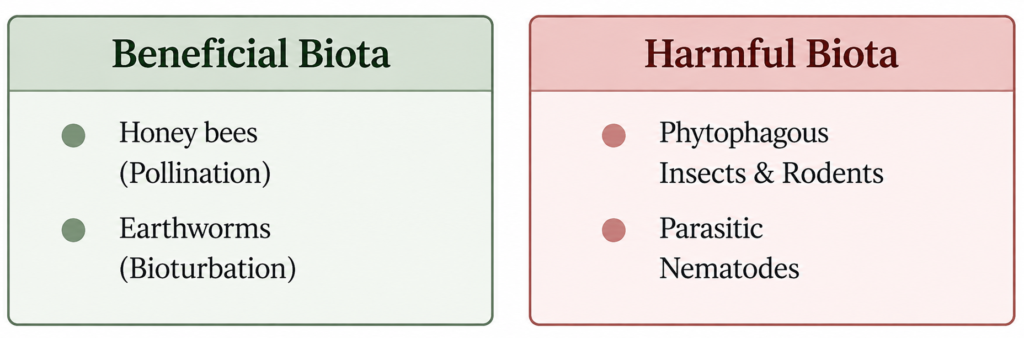
- Macro-Fauna (Earthworms): Often termed “ecosystem engineers,” burrowing earthworms continuously ingest organic litter and mineral soil. Their movement creates permanent macropores that drastically improve soil aeration and hydraulic conductivity (drainage), while their nutrient-rich fecal castings create stable soil aggregates.
Beneficial Entomological Interactions
Insects are indispensable structural components of crop reproductive biology:
- Pollination Catalysts: Anthophilous insects, specifically honey bees (Apis spp.), solitary bees, and wasps, serve as primary vectors for cross-pollination in entomophilous crops (e.g., mustard, sunflower, cucurbits, and orchards). Efficient pollination directly translates into higher fruit-set percentages, superior seed quality, and elevated economic yields.
Destructive Biotic Agents (Pests and Herbivores)
- Phytophagous Insect Pests: Sucking, chewing, and boring insects damage crop structural integrity and metabolic capacity. They defoliate canopies, tunnel through vascular tissues, and act as primary vectors for devastating plant viruses.
- Plant-Parasitic Nematodes (PPNs): Microscopic roundworms (e.g., Root-knot nematode, Meloidogyne spp.) infect root systems, inducing giant cell formations that block vascular transport and leave the crop highly vulnerable to secondary soil-borne pathogens.
- Macro-Herbivores: Large feral or domestic animals (e.g., cattle, goats) exert heavy biotic pressure via unchecked grazing and physical trampling, causing mechanical defoliation, soil compaction, and destruction of the crop canopy.
Socio-Economic and Institutional Factors Influencing Crop Production and Distribution – UPSC Agriculture Optional
While physical, edaphic, and biotic factors establish the ecological boundaries of what can grow in a region, socio-economic and institutional factors act as the ultimate decision-making drivers. They determine what will be grown, how intensely it will be cultivated, and where the final produce will be distributed. In modern agriculture, human systems regularly modify environmental limitations through capital deployment, technological innovation, and policy frameworks, shifting the agricultural landscape from environmental determinism to cultural possibilism.
1. Capital Availability and Economic Conditions
Agriculture is a highly resource-dependent enterprise. The financial status of the farmer and the broader economic environment directly dictate input-use efficiency and cropping intensity.
- Access to Operational Credit: Capital availability determines a farmer’s capacity to purchase high-yielding, high-value inputs such as High-Yielding Variety (HYV) seeds, premium chemical fertilizers, advanced plant-protection chemicals, and micro-irrigation machinery. Cheap institutional credit enables capital-intensive farming, whereas a lack of credit traps smallholders in low-input, low-yield subsistence farming.
- Market Demand and Price Liquidity: Farmers naturally optimize their acreage toward crops that offer the highest net economic returns. Rising urbanization and changing dietary preferences create strong market pulls for high-value commodities like fruits, vegetables, and dairy. This shifts land-use patterns away from traditional coarse cereals toward commercial horticulture.
- Input-Output Price Parity: The ratio between the cost of production inputs (seed, diesel, fertilizers, labor) and the market price of the harvested crop determines the net profit margin. Adverse price parity often forces farmers to shift to low-input crops or completely abandon traditional cropping systems.
2. Institutional Frameworks and Government Policies
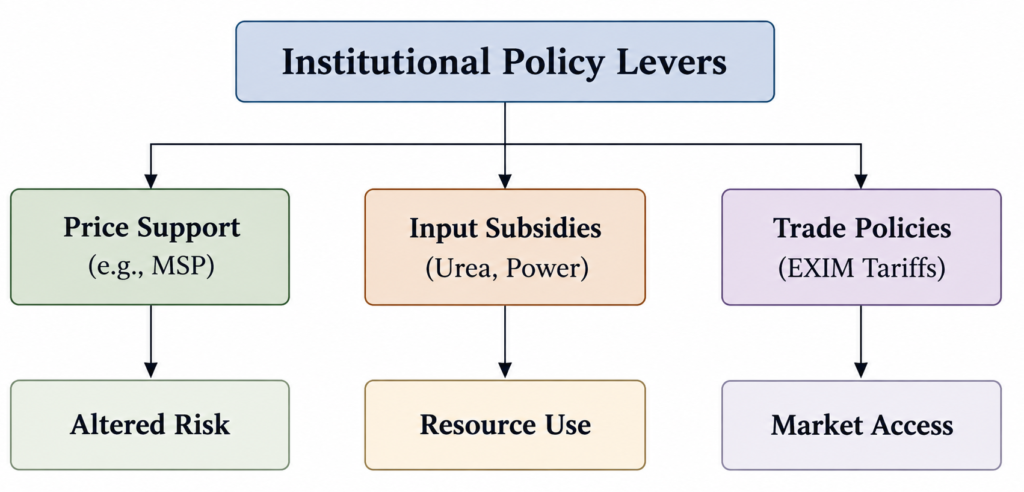
Government interventions act as powerful structural levers that alter the financial viability of specific crops, heavily influencing regional crop distribution.
- Price Support Mechanisms (MSP): Government pricing policies, such as the Minimum Support Price (MSP) in India, provide price assurance to farmers. This significantly reduces market risk.
- The Green Revolution Legacy: Continuous, skewed procurement of wheat and paddy under the MSP framework heavily distorted traditional cropping patterns in the Indo-Gangetic plains. It incentivized resource-intensive monoculture, displacing ecologically sustainable legumes and oilseeds.
- Input Subsidies: Heavily subsidized electricity, irrigation water, and fertilizers (especially urea) alter a farmer’s perception of natural resource scarcity. For instance, free or subsidized electricity for agricultural tube wells led to the expansion of water-guzzling crops like sugarcane and paddy into semi-arid, hydrologically vulnerable regions (e.g., parts of Punjab and Maharashtra).
- Trade Policies and Tariffs: Import duties, export bans, and quantitative trade restrictions directly insulate or expose domestic farmers to international price volatility. Sudden shifts in export-import (EXIM) policies for commodities like pulses or onions alter immediate cropping choices and domestic supply chains.
3. Land Tenure Systems and Holding Size
The legal and structural operational size of agricultural land plays a foundational role in determining resource optimization and mechanization efficiency.
- Operational Land Holding Size: The structural layout of Indian agriculture is heavily dominated by small and marginal farmers (holding < 2 ha of land). Small, fragmented fields restrict the operational efficiency of heavy machinery like combine harvesters, tractors, and laser land levelers. This leaves smallholders dependent on labor-intensive traditional practices. Conversely, large, consolidated holdings allow for economies of scale and the adoption of precision agriculture.
- Tenancy Security and Land Rights: Tenant farmers or sharecroppers who lack formal, long-term land titles are naturally disincentivized from investing in long-term farm development. Practices critical to sustainable crop production—such as constructing sub-surface drainage systems, applying heavy organic manures, or implementing green manuring—are routinely ignored due to insecure land tenure.
4. Labor Dynamics and Mechanization
The availability and cost structure of agricultural labor determine the operational feasibility of labor-intensive cropping systems.
- Labor Scarcity and Peak-Season Crises: Peak agricultural operations, such as transplanting paddy or harvesting cotton/sugarcane, require a massive influx of manual labor within a very narrow time window. Rural-urban migration and rural employment guarantee schemes (like MGNREGA) have induced localized peak-season labor deficits and escalating wage rates.
- The Mechanization Push: Rising labor costs and scarcity serve as direct catalysts for agricultural mechanization. Where labor is expensive or unavailable, farmers either transition to highly mechanizable crops (e.g., direct-seeded rice or maize) or heavily deploy custom hiring centers for specialized machinery, transforming traditional cultural practices.
5. Infrastructure, Logistics, and Supply Chains
The physical connection between the farm gate and the final consumer is a primary determinant of crop distribution and post-harvest survival.
- Transportation Networks: Reliable, all-weather road connectivity and specialized transport systems (like refrigerated rail/truck chains, e.g., Kisan Rail) allow perishable, high-value crops to be distributed far from their production zones.
- Post-Harvest Cold Chain Infrastructure: The presence of cold storage units, pack-houses, and modern grain silos minimizes post-harvest losses. Without this logistical support, farmers are forced to grow durable, low-value staple grains instead of highly perishable, high-profit horticultural crops, preventing effective market integration.

6. Socio-Cultural Dimensions and Traditions
Human preferences, dietary habits, and historical legacies form the baseline socio-cultural layer of regional agriculture.
- Dietary Preferences and Consumption Patterns: Historical consumption habits play a vital role in baseline crop selection. For example, the preference for parboiled rice in southern and eastern India, or wheat-based diets in northern India, ensures a stable domestic market for these staples in their respective geographies.
- Traditional Agrarian Knowledge: Indigenous technical knowledge passed down through generations often dictates the choice of companion crops in multi-cropping systems, seed preservation habits, and community-driven resource sharing, preserving regional crop diversity against complete commercial homogenization.
Shelford’s Law of Tolerance: Principles of Plant Distribution and Adaptation – UPSC Agriculture Optional
In agricultural ecology and crop geography, Shelford’s Law of Tolerance serves as a foundational ecological principle explaining why specific crop species and native vegetation occupy distinct geographic zones. While early ecological concepts focused exclusively on minimum resource deficits, the Theory of Tolerance establishes that biological processes can be limited by both the deficiency and the excess of any environmental factor.
This dual-boundary concept explains the physiological adaptations of crops and maps the global distribution of agro-ecological zones.
1. The Theory of Tolerance: Theoretical Framework
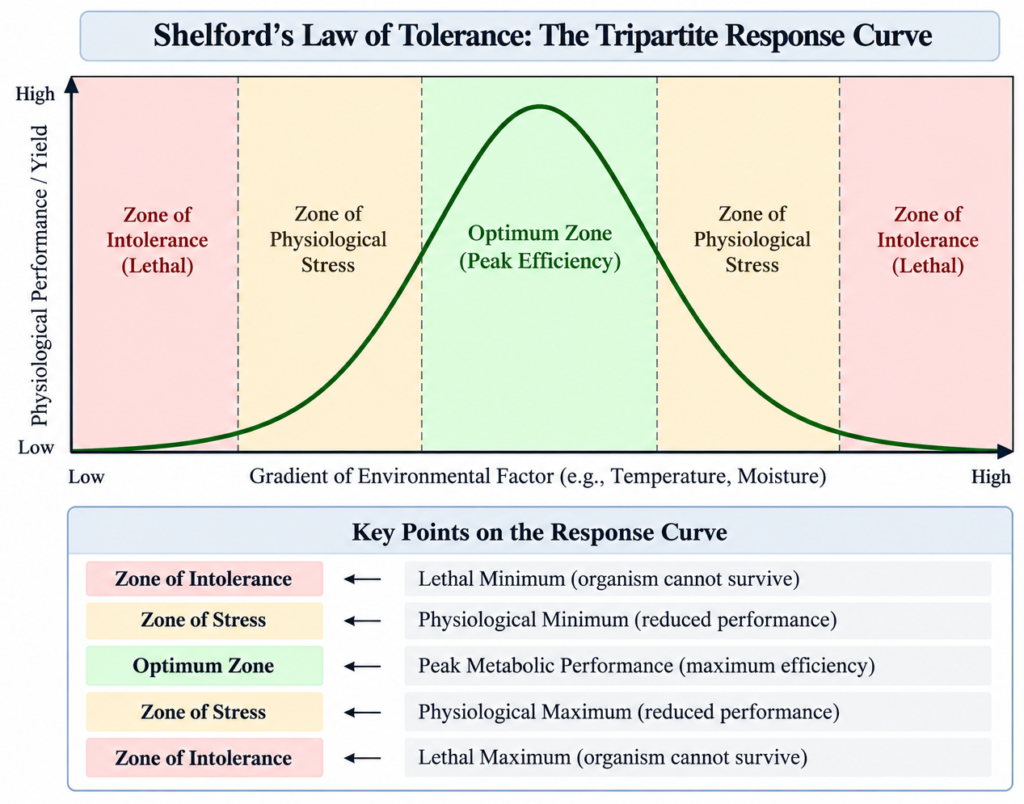
Formulated by Victor Ernest Shelford in 1913, the law states that the presence, abundance, and distribution of an organism in an ecosystem are determined by whether the levels of environmental factors fall within the range of tolerance of that organism.
The Tripartite Response Curve
When plotted against physiological performance (such as net photosynthetic rate, biomass accumulation, or reproductive output), the response of a crop plant to an environmental factor (e.g., temperature, water, nutrients) forms a bell-shaped curve divided into three distinct zones:
- Optimum Zone: The narrow, central band where conditions are ideal. Enzymatic kinetics and metabolic pathways operate at peak efficiency, resulting in maximum growth, anthesis, and economic yield.
- Zones of Physiological Stress: Flanking the optimum zone on either side (both low and high intensities). The plant can survive, but must divert metabolic energy toward homeostatic maintenance or stress-mitigation mechanisms, resulting in stunted vegetative growth and poor reproductive output.
- Zones of Intolerance (Lethal Zones): The extreme outer limits where the environmental factor is either completely deficient or excessively toxic. Crucial biochemical processes cease entirely, leading to irreversible cellular damage and death.
2. Ecological Terminology and Niche Plasticity
To evaluate crop adaptation under this theory, agronomists use specific prefixes to classify a plant’s degree of tolerance:
- Steno- (Narrow Range): Denotes organisms with a highly restricted range of tolerance for a given factor.
- Example: Stenothermal crops (e.g., Cocoa and Bananas) cannot tolerate fluctuating thermal regimes and require a stable, warm tropical environment.
- Eury- (Wide Range): Denotes organisms possessing a broad range of tolerance, indicating high environmental plasticity.
- Example: Eurythermal crops (e.g., Barley and Maize) can grow across highly diverse climatic zones because their internal biochemical systems tolerate wider temperature variations.
Key Operational Corollaries of the Law
- A crop may have a wide range of tolerance for one environmental factor (e.g., euryhydric regarding moisture) but a narrow range for another (e.g., stenohaline regarding soil salinity).
- Plants are most vulnerable to environmental stress during their reproductive phases. While a mature crop might tolerate a wide thermal stress band during vegetative growth, its range of tolerance contracts sharply during flowering and anthesis (e.g., heat stress causing pollen sterility in rice).
3. Relating Tolerance to the Principles of Plant Distribution
The spatial distribution of major crops across the globe is a visible expression of Shelford’s Law. When environmental variables exceed a crop’s genetic threshold of tolerance, that species is naturally excluded from the region.
The Thermal Gradient (Latitudinal and Altitudinal Distribution)
- Tropical Crop Belts: Crops like Sugarcane (Saccharum officinarum) and Cassava are genetically adapted to high base temperatures. They are excluded from temperate zones because freezing temperatures cross their lethal minimum threshold, causing cellular membrane crystallization.
- Temperate Crop Belts: Wheat (Triticum aestivum) and Sugar beet require a cool vegetative phase. If planted in equatorial lowlands, high temperatures cross their physiological maximum, triggering high photorespiration rates and preventing proper grain filling.
The Moisture Gradient (Hydrological Zoning)
- Hydrophytes: Rice possesses an exceptionally wide tolerance for high water levels (euryhydric for excess). However, it has a narrow tolerance for moisture deficits.
- Xerophytes / Xeromorphic Crops: C4 crops like Pearl Millet and Sorghum have a shifted tolerance curve; they function efficiently under extreme moisture deficits but experience physiological stress or root rot in waterlogged, saturated soils.
4. Mechanisms of Agronomic Adaptation
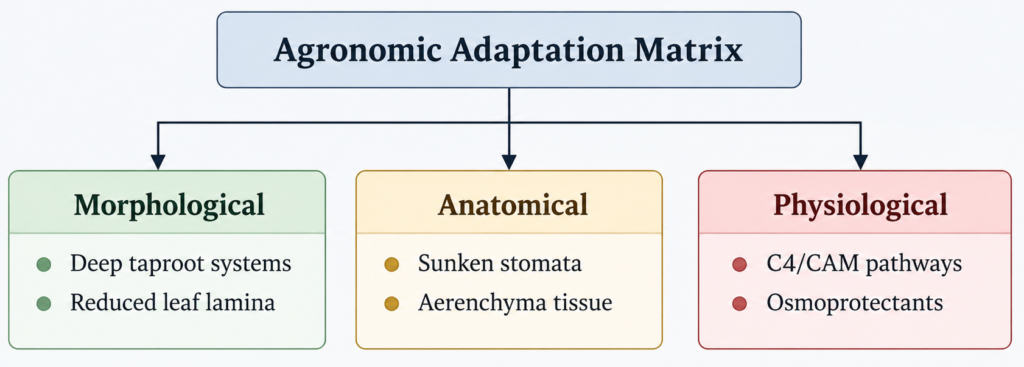
To align their growth with local ranges of tolerance, plants have evolved complex morphological, anatomical, and physiological adaptations. These strategies enable them to survive in environments that would otherwise cause severe physiological stress.
Morphological Adaptations
- Root Architecture: In arid environments, crops develop extensive, deep taproot systems to access deep groundwater tables, shifting their moisture extraction footprint.
- Foliar Modifications: Xerophytic plants reduce their leaf lamina or develop a thick, waxy cuticle layer to increase boundary layer resistance, lowering transpirational water loss.
Anatomical Adaptations
- Sunken Stomata: Many drought-hardy plants confine their stomata to the lower epidermis within protective pits, trapping humid air and reducing the vapor pressure deficit (VPD) at the leaf interface.
- Kranz Anatomy: Distinctive internal leaf architecture found in C4 plants (e.g., Maize, Sugarcane) that physically separates light-dependent reactions from carbon fixation, optimizing photosynthesis under high light intensities and hot conditions.
Physiological and Biochemical Adaptations
- Alternative Carbon Fixation Pathways (C4 and CAM): Plants in hot, dry environments utilize the C4 or CAM pathway instead of the classic C3 mechanism. This modification allows them to maximize water-use efficiency (WUE) and completely suppress photorespiration under thermal stress.
- Osmotic Adjustment: Under drought or salinity stress, adapted crops accumulate compatible solutes (e.g., proline, glycine betaine, and soluble sugars) within their cytoplasm. This action lowers cellular water potential, allowing the roots to continue absorbing water even from dry or saline soils.
Previous Year Question based on it
- Write down the physical environmental factors affecting the crop production. Discuss the effects of changing rainfall pattern on crop production in India. (20M, CSE 2024)
- Illustrate with examples the abiotic components in the ecosystem that influence crop growth. (10M, IFoS 2020)
- Indian farmers usually choose crops and their varieties based on their socio-economic aspects and resources at their disposal. Critically comment. (10M, 150W, CSE 2020)
- Write different element of weather affecting crop production with suitable examples. (10M, 150W, CSE 2020)
- Discuss the effect of environmental factors on crop distribution and production. (150W, 8M, IFoS-2018)
- Define the theory of tolerance and relate it to the principle of plant distribution and adaptation (20M, CSE 2014)
- Discuss the climatic parameters in relation to agro-ecosystem. What are the major threats to agro-ecosystem? (10M, 150W, CSE 2013)
- Discuss Factors of production (15M, CSE 2007)
- Short critical note on Cardinal temperature (20M, 200W, CSE 1999)
- Cardinal temperature (200W, CSE 1995)