

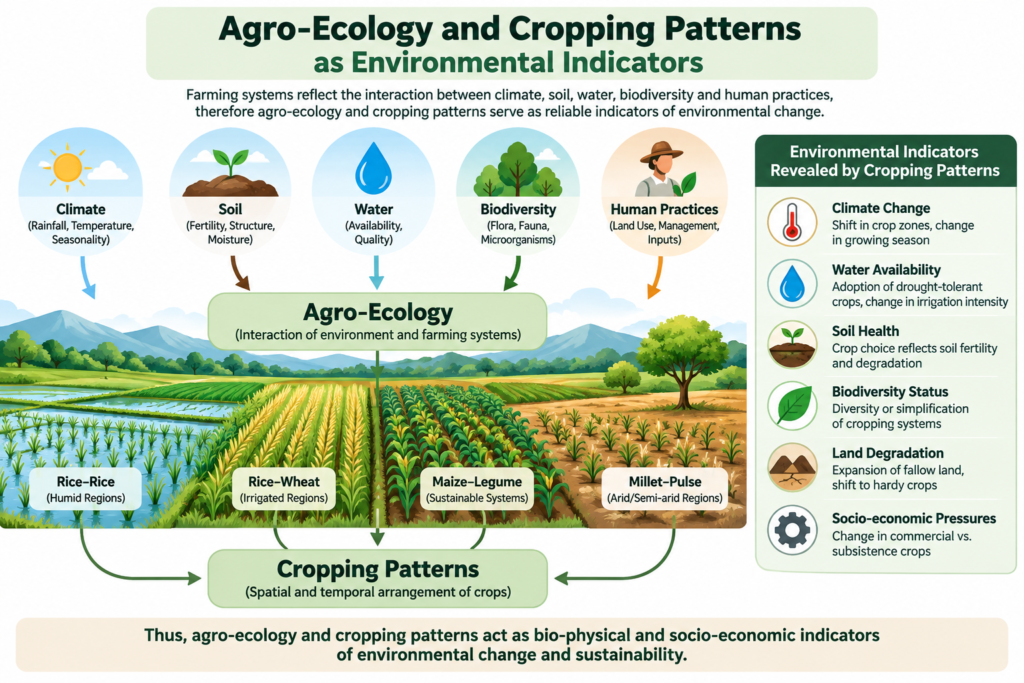
Agro-ecology is the scientific discipline that applies ecological concepts and principles to the design, management, and evaluation of sustainable agricultural systems. Rather than viewing farms merely as industrial units for biomass extraction, agro-ecology treats agricultural landscapes as complex socio-ecological ecosystems where crops, soil biota, livestock, humans, and microclimatic variables interact.
Within this systemic framework, cropping patterns—defined as the spatial and temporal arrangement of crops in a given area over a sequence of time—serve as highly sensitive environmental bio-indicators. Because agriculture exists at the direct interface of human decisions and biophysical realities, shifts in cropping profiles provide immediate, measurable diagnostic signals regarding underlying ecosystem degradation, climate destabilization, and resource scarcity.
1. How Cropping Patterns Indicate the Physical Environment
Because agricultural crops operate under rigid genetic boundaries and cardinal thresholds, regional cropping arrangements function as living thermometers, rain gauges, and soil sensors.
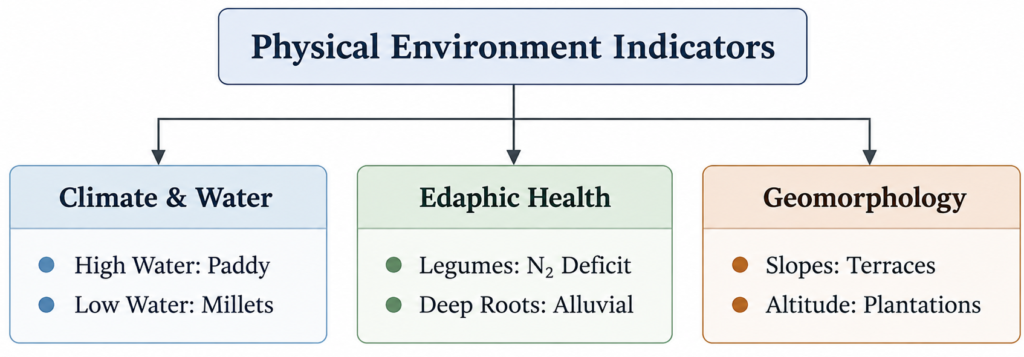
Climate and Seasonality Indicators
The geographic concentration of specific crop species reveals the macro-climatic and hydrological stability of a region:
- High-Moisture Indicators: The extensive cultivation of lowland paddy rice (Oryza sativa) or sugarcane serves as a direct indicator of high monsoon reliability, dense river basin geography, or heavily developed canal infrastructure.
- Aridity and Stress Indicators: Conversely, a dominance of Sorghum (Sorghum bicolor), Pearl Millet, or minor millets immediately signals an arid or semi-arid environment characterized by high evapotranspiration rates, low annual rainfall, and frequent moisture stress.
Soil Health and Fertility Markers (Edaphic Indicators)
The choice and rotation of crops provide clear diagnostic signs regarding subterranean chemical and structural properties:
- Nutrient Deficit Signals: Intercropping patterns that feature a high density of puluses and legumes (e.g., Pigeonpea, Chickpea) indicate nutrient-depleted soils with a strong biological need for Nitrogen Fixation to restore soil fertility.
- Structural Formations: The cultivation of deep-rooted, intensive cash crops like cotton (Gossypium hirsutum) indicates deep, well-drained, nutrient-dense alluvial profiles or expansive, moisture-retentive Vertisols (Black Cotton Soils) capable of supporting deep root systems.
Topography and Microclimatic Indicators (Geomorphology)
Landscape structures impose severe physical constraints that alter farming layouts:
- Hilly and Mountainous Profiles: The presence of terraced farming systems or specialized plantation crops like tea (Camellia sinensis) and coffee serves as a direct geomorphic indicator of highland topography and steep slopes.
- Drainage and Acidity Signals: This configuration indicates an environment with high rainfall combined with excellent natural drainage—which prevents root waterlogging—and naturally developed acidic, iron-rich Laterite soils.
2. How Cropping Patterns Indicate Socioeconomic and Cultural Environments
Cropping patterns are shaped as much by human institutions, capital, and technology as they are by nature. They serve as reliable, visible indicators of the underlying socio-economic fabric of a nation.
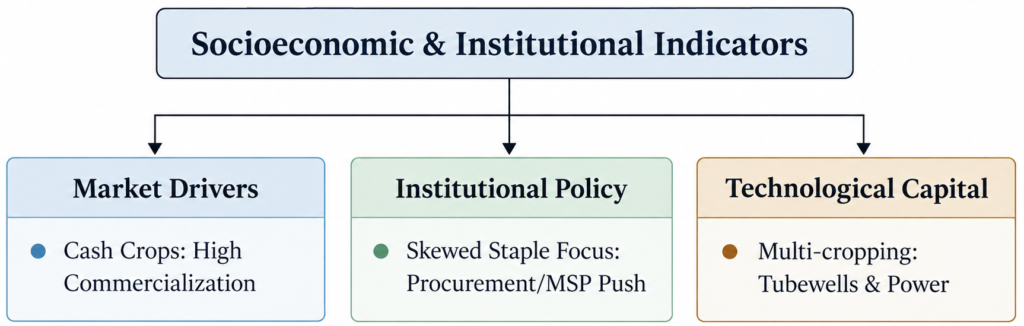
Market and Economic Drivers
The complexity of a crop matrix reflects the commercial sophistication and capital status of the local farming community:
- Commercial Integration: A systematic shift from traditional subsistence food grains to high-value commercial cash crops (such as cotton, sugarcane, oilseeds, or exotic vegetables) indicates high market integration.
- Value-Chain Maturity: This transition serves as an indicator of a profit-driven farming system backed by operational processing industries, reliable agro-logistics, and fluid cash injection.
Policy and Institutional Health Indicators
Agricultural landscapes mirror the regulatory and financial priorities of state machinery:
- Procurement Distortions: An overwhelming concentration of specific staple crops (such as wheat and rice in non-traditional zones) indicates the footprint of targeted government interventions.
- Subsidized Monocultures: This pattern highlights the influence of Minimum Support Prices (MSP), state-backed procurement guarantees, and heavily distorted fertilizer/input subsidies that artificially insulate farmers from market-driven crop selection.
The Core Principles of Agro-Ecology
To transition an agricultural system from energy-intensive, chemically dependent monoculture to an ecologically self-sustaining unit, agro-ecology relies on six fundamental biophysical and structural principles:
- Biomass and Nutrient Recycling: Maximizing the internal recycling of organic matter and optimizing nutrient availability over time. This process maintains steady, balanced biogeochemical cycles and minimizes reliance on synthetic, external inputs.
- Enhancing Soil Biotic Activity: Cultivating a dynamic soil food web (composed of mycorrhizae, diazotrophic bacteria, and macro-fauna) to improve soil structural aggregation, expand Available Water Capacity (AWC), and accelerate natural element mineralization.
- Resource-Use Efficiency: Minimizing resource losses—such as solar radiation bypass, water runoff, and nutrient leaching—by optimizing the spatial and temporal architectures of the crop canopy and root systems.
- Functional Species Diversification: Maximizing genetic, taxonomic, and structural diversity across time and space. This strategy leverages biological insurance through multi-species configurations like intercropping, agro-forestry, and crop-livestock integration.
- Biological Control Networks: Enhancing synergistic, multi-trophic interactions within the agro-ecosystem to promote natural pest suppression, reduce pathogen loads, and eliminate reliance on synthetic chemical plant-protection agents.
- Environmental Matrix Optimization: Designing farm borders, windbreaks, and ecological corridors to conserve wildlife habitats, preserve local biodiversity, and regulate the surrounding landscape.
The Ten Elements of Agroecology: An Analytical Framework for Sustainable Food Systems
Developed by the Food and Agriculture Organization (FAO), the Ten Elements of Agroecology serve as an advanced, multi-dimensional analytical tool designed to guide policymakers, agronomists, and rural communities in transitioning toward sustainable food systems. Far from being a mere set of on-farm biophysical guidelines, this framework bridges the gap between ecological science, institutional governance, and socio-economic equity.
These elements are highly interlinked and must be adapted dynamically to localized social, cultural, and agro-ecological contexts under the guidance of rural and Indigenous producers.
1. Structural Architecture of the Ten Elements
The FAO categorizes these ten elements into a progressive hierarchy that moves from operational field dynamics to macro-level structural transformations:
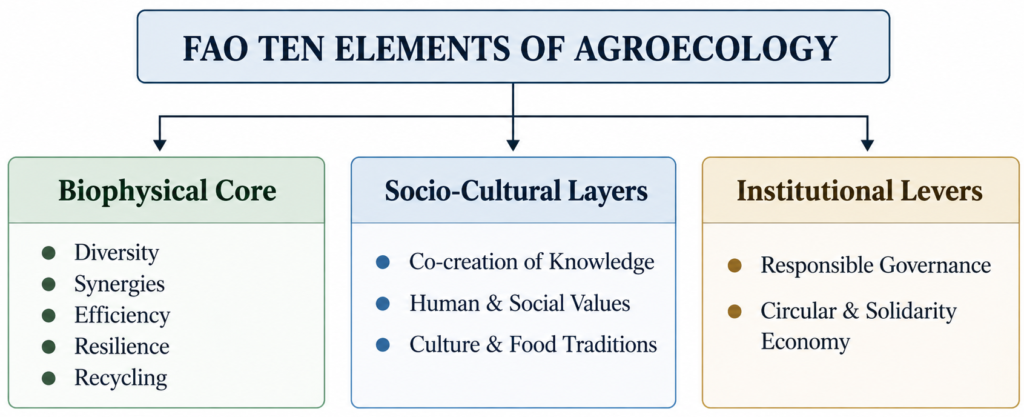
2. Comprehensive Breakdown of the Ten Elements
1. Diversity
Diversification is the foundational engine of agro-ecological transitions. By shifting away from industrial monocultures to highly diversified farming systems (e.g., polycultures, agro-forestry, and integrated crop-livestock-aquaculture systems), agroecology ensures food security and multi-tier nutrition while simultaneously conserving, protecting, and enhancing the natural resource base.
2. Synergies
Building synergies involves designing agricultural systems where the components work together harmoniously to enhance key ecological functions. By managing the interactions between crops, animals, trees, soil, and water, agroecology supports agricultural production and maximizes multiple ecosystem services (such as natural pest control, pollination, and soil water regulation).
3. Efficiency
Innovative agro-ecological practices prioritize resource optimization, allowing farmers to produce more biomass while utilizing fewer external, synthetic inputs. By maximizing the use of natural assets (like solar radiation, biological nitrogen fixation, and localized microclimates), agroecology drives down production costs and curtails environmental degradation.
4. Resilience
Enhanced ecological and socioeconomic resilience is vital for building sustainable food systems. A highly diversified agro-ecosystem possesses superior buffering capacity and adaptive potential, allowing rural communities and land matrices to resist and recover quickly from climate shocks (droughts, floods), market volatility, and pest epidemics.
5. Recycling
Agroecology mimics natural ecosystems by closing nutrient and energy loops. Increasing the internal recycling of organic waste, crop residues, and animal manures reduces reliance on commercial inputs. This leads to agricultural production with significantly lower economic costs for the farmer and reduced environmental impacts (such as groundwater leaching and greenhouse gas emissions).
6. Co-creation and Sharing of Knowledge
Agricultural innovations respond far better to local field challenges when they are cocreated through horizontal, participatory processes. This element emphasizes combining peer-reviewed academic science with the indigenous technical knowledge (ITK) of traditional farmers, accelerating the spread of innovation through farmer-to-farmer networks.
7. Human and Social Values
Protecting and improving rural livelihoods, gender equity, and social well-being is essential for sustainable development. Agroecology places the needs, rights, and dignity of food producers at the absolute center of the agricultural model, ensuring fair wages, labor safety, and the long-term viability of rural societies.
8. Culture and Food Traditions
Food is more than a simple commodity; it is a vital part of human culture. By supporting healthy, diversified, and culturally appropriate diets, agroecology aligns culinary traditions with seasonal ecology. This approach combats malnutrition and preserves agro-biodiversity while maintaining the long-term health of local ecosystems.
9. Responsible Governance
Transitioning to sustainable food and agriculture requires transparent, accountable, and effective governance mechanisms across all scales—from local panchayats and sub-national jurisdictions to national frameworks and global trade bodies. Responsible governance ensures equitable access to land, water, and seed resources for smallholders.
10. Circular and Solidarity Economy
Circular and solidarity economies reconnect producers and consumers, shortening value chains to reduce post-harvest waste and corporate middleman distortions. By fostering local markets, fair trade, and community-supported networks, this element provides innovative solutions for living within our planetary boundaries while securing an inclusive economic foundation for rural development.
Global Case Studies and Examples of Agroecology – UPSC Agriculture Optional
Evaluating the structural success of agroecology requires studying diverse, real-world examples. Across the global South and North, smallholders and Indigenous communities have successfully applied agroecological principles to resolve food insecurity, manage erratic water resources, and re-engineer broken supply chains.
These high-yielding case studies offer excellent references for substantiating answers in the UPSC Agriculture Optional exam.
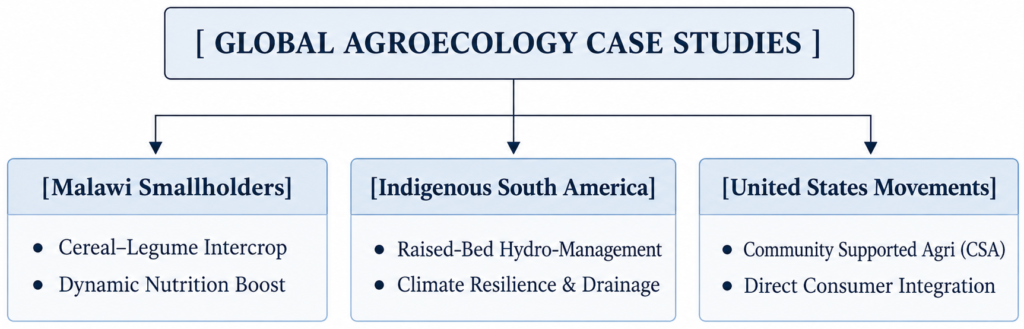
Case Study 1: Crop Diversification and Nutritional Security in Malawi
In Southeast Africa, smallholder communities in Malawi faced chronic food insecurity, nutrient deficiencies, and shifting rainfall patterns driven by climate change.
- Agroecological Intervention: Farmers moved away from continuous maize monoculture and integrated a diversified cereal-legume intercropping matrix. They introduced deep-rooted, nitrogen-fixing legumes like Pigeonpea (Cajanus cajan) and Groundnut (Arachis hypogaea) alongside staple crops.
- Ecological and Social Yields: This intervention optimized natural Biological Nitrogen Fixation (BNF), which restored soil organic matter and reduced the need for synthetic fertilizers. By diversifying the crop matrix, communities secured a reliable, balanced supply of plant-based proteins and micronutrients, significantly improving rural health and child nutrition.
Case Study 2: Indigenous Hydro-Management via Raised-Bed Systems in South America
Across the Andean and lowland regions of South America—specifically within Venezuela, Colombia, Ecuador, and Peru – ancient Indigenous knowledge has provided the blueprint for resilient, climate-smart farming.
- Agroecological Intervention: Communities deployed traditional raised-bed cultivation networks (historically known as Waru Waru or Camellones). These structures consist of elevated agricultural soil platforms surrounded by deep, interconnected water channels.
- Ecological and Social Yields: This design provides exceptional seasonal water management. During intense monsoon spikes, the channels act as drainage networks that prevent crop waterlogging. Conversely, during dry spells, they retain moisture to sustain the root zone via capillary lift. Additionally, the thermal mass of the water buffers the crop canopy against harsh diurnal temperature swings and frost, showing how Indigenous Technical Knowledge (ITK) can successfully manage environmental extremes.
Case Study 3: Market Re-engineering via Community-Supported Agriculture (CSA) in the United States
In the United States, industrial agriculture models have caused widespread topsoil erosion, chemical contamination of aquifers, and deep economic divides between producers and consumers.
- Agroecological Intervention: To counter this, rural communities pioneered Community-Supported Agriculture (CSA) movements, operationalizing the FAO element of a Circular and Solidarity Economy. Under a CSA model, local consumers buy seasonal “shares” of a farm’s harvest before the planting season begins, sharing both the agricultural risks and the bounties directly with the farmer.
- Ecological and Social Yields: By eliminating corporate middlemen and long-distance transport, this framework significantly lowers the carbon footprint and post-harvest waste of the food system. The steady financial backing allows farmers to move away from intensive chemical inputs and implement diverse, long-term soil health management practices, ensuring strong socio-ecological sustainability.
The Strategic Benefits of Agroecology: Comprehensive Analysis for Food System Transformation
Agroecology offers a multi-dimensional framework capable of addressing the ecological, economic, and ethical crises facing modern industrial agriculture. By prioritizing intersectional design over extraction, it delivers measurable improvements across four core areas: environmental sustainability, farm economics, social equity, and biological welfare.
1. Biophysical Resilience and Climate Sustainability
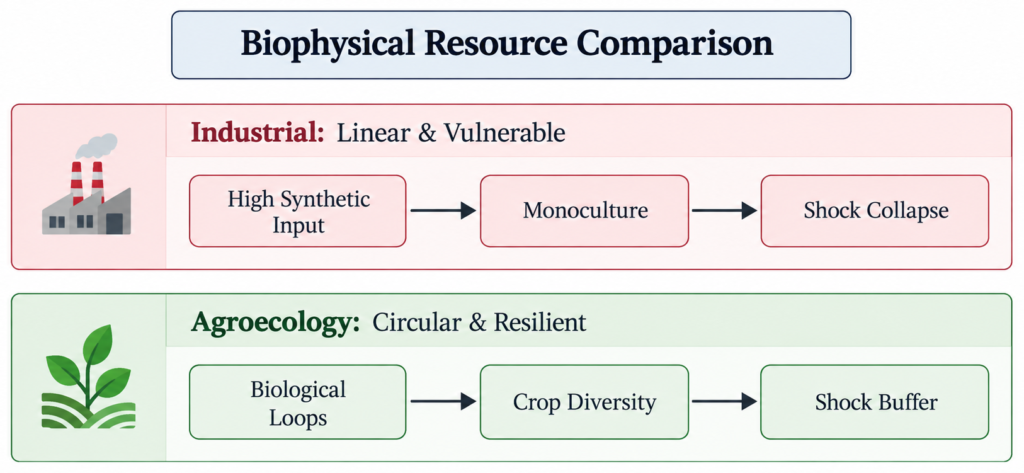
Conventional, input-heavy monocultures remain fragile when exposed to environmental instability. Agroecology restructures fields to behave like balanced natural ecosystems, offering significant climate benefits:
- Climate Shock Buffering: Diversified agroecological configurations show superior structural recovery following extreme weather events.
- Evidence: Multi-country assessments across Central America and Cuba revealed that when hit by severe natural disasters (such as hurricanes), farms managed under agroecological guidelines suffered significantly lower crop damage, topsoil erosion, and economic losses compared to neighboring conventional single-crop systems.
- Biotic Resistance: Multi-species environments prevent the rapid build-up of specialized economic pests and pathogens. This layout eliminates the risk of pesticide resistance by supporting diverse populations of natural predators.
- De-carbonizing the Troposphere: Agroecology lowers agricultural greenhouse gas emissions by closing nutrient loops on-site. It sequesters carbon into the ground by maintaining a high Soil Organic Carbon (SOC) fraction and eliminates the high carbon footprint linked to chemical manufacturing and long-distance shipping.
2. Autonomous Livelihoods and Micro-Economic Stability
Industrial farming often traps smallholders in a cycle of debt due to rising input prices and volatile commodity markets. Agroecology addresses this by focusing on on-farm input generation and resource independence.
- Breaking the Input-Debt Cycle: By replacing corporate, agribusiness-controlled inputs with localized resources (such as farm-saved open-pollinated seeds, green manures, bio-fertilizers, and botanical extracts), farmers reduce their reliance on cash advances. This structure lowers production costs and shields rural families from high-interest debt traps.
- The Synergy Profit Dividend: Empirical data proves that moving away from high-input systems does not sacrifice profits. Synthesis studies demonstrate that farms implementing comprehensive agroecological transitions achieved an average 61% expansion in total crop yields alongside a 66% surge in net farm profitability, driven by reduced input costs and diverse harvest channels.
3. Food Justice, Sovereignty, and Social Equity
Agroecology views food as a fundamental human right rather than a simple global trade commodity. It reorganizes value chains to favor local farming communities over corporate entities.
- Reclaiming the Value Chain (Food Sovereignty): By prioritizing local distribution networks and transparent pricing models, this system shifts the control of food supplies away from multinational traders and returns it to regional production hubs.
- Rural Employment Multipliers: Moving away from heavy, capital-intensive mechanization toward labor-focused agroecological methods alters cash flows. Capital that once left the community to pay for fossil fuels and industrial machinery is reinvested directly into the rural economy, creating steady local employment opportunities and reducing unsafe migration to urban slums.
- Socio-Ecological Cohesion: Horizontal learning mechanisms—such as participatory Farmer Field Schools (FFS)—build strong local relationships, preserve traditional farming knowledge, and improve the adaptive capacity of rural populations.
4. Ethical Animal Welfare and Multi-Trophic Synergies
Industrial livestock systems rely heavily on Confined Animal Feeding Operations (CAFOs), which depend on resource extraction and animal exploitation. Agroecology rejects this industrial approach.
- Circular Livestock Integration: When domesticated animals are integrated into an agroecological framework, they exist in a cooperative relationship with the land. Livestock utilize crop residues for fodder and graze on cover crops. In return, their manure provides essential nutrients to the soil, eliminating the pollution risks caused by concentrated industrial feedlots.
- Plant-Based System Adaptability: Agroecology is uniquely flexible and works perfectly within strictly plant-based cropping patterns. It utilizes green manures, nitrogen-fixing legumes, and active soil microbes to maintain high productivity without requiring animal inputs.
Comprehensive Conclusion: The Transformation Paradigm
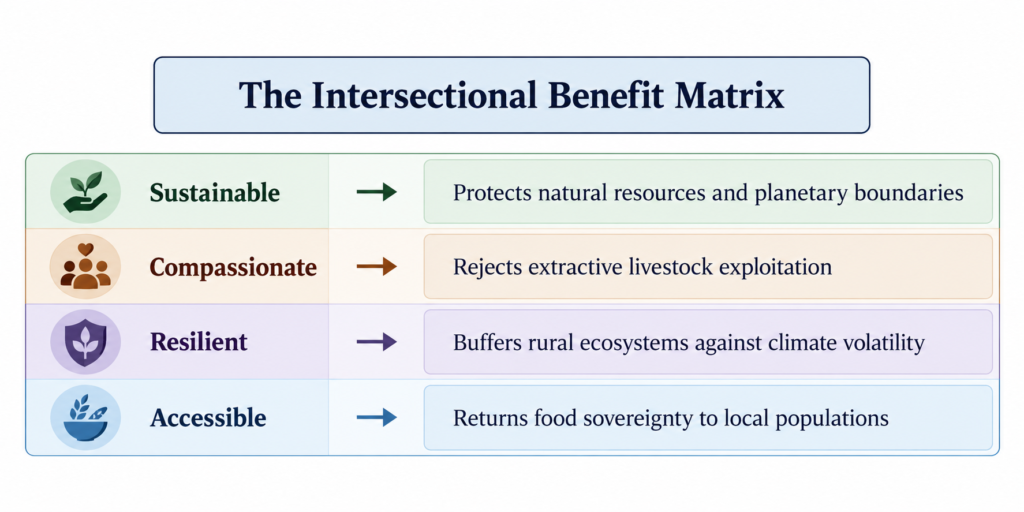
Industrial agriculture models face severe structural limitations due to topsoil loss, aquifer depletion, and rural economic distress. Resolving these challenges requires a complete redesign of global food systems to provide intersectional benefits for people, animals, and the environment.
Agroecology offers a proven, scientifically sound strategy to achieve this transition. By combining traditional indigenous knowledge with modern ecological science, it transforms agricultural landscapes from spaces of resource extraction into resilient, sustainable food systems worldwide.
Previous Year Question based on it
- Briefly discuss the principles of agro-ecology. (10M, CSE 2024)
- What do you understand by agroecology? How does Agroecology help in distribution and sustainable food production. (20M CSE 2023)
- Discuss the impact of changing climate on cropping pattern and agriculture production. (150W, 8M, IFoS-2019)
- Explain suitable agro-ecological management strategies (10M, CSE 2014)
- Discuss the climatic parameters in relation to agro-ecosystem. What are the major threats to agro-ecosystem? (10M, 150W, CSE 2013)
- Why are agro-ecosystems losing diversity? Give characteristics of crop land ecosystem (12M, 150W, CSE 2012)
- Short note on Importance of agro-ecological factors in land use planning (15M, 150W, CSE 2011)