

Agriculture Optional 2025 PYQP – Paper I
खण्ड A / SECTION A
Q1.
निम्नलिखित प्रश्नों में से प्रत्येक का उत्तर लगभग 150 शब्दों में दीजिए:
Answer the following questions in about 150 words each: (10x5=50)
- प्राकृतिक संसाधनों का वर्गीकरण कीजिए। पारिस्थितिकी संरक्षण के संदर्भ में प्राकृतिक संसाधन प्रबंधन पर चर्चा कीजिए।
Classify natural resources. Discuss the natural resource management with reference to ecological conservation.(10 Marks) - फसल प्रणाली (क्रॉपिंग सिस्टम) एवं सस्यक्रम (क्रॉपिंग पैटर्न) के बीच अंतर स्पष्ट कीजिए तथा फसल प्रणाली के सिद्धांतों का वर्णन कीजिए।
Differentiate between cropping system and cropping pattern, and describe the principles of cropping system.(10 Marks) - कृषि वनसंवर्धन एवं कृषि वनचरागाह प्रणाली के बीच अंतर स्पष्ट कीजिए। घटक फसलों के उपयुक्त उदाहरण दीजिए।
Differentiate between agrisilviculture and agrisilvipasture system. Give suitable examples of component crops.(10 Marks) - विभिन्न वन नीतियों और उनके लक्ष्यों को स्पष्ट कीजिए।
Elucidate different forest policies and their aims.(10 Marks) - खरपतवार नियंत्रण दक्षता (डब्ल्यू० सी० ई०) की व्याख्या कीजिए। दिए गए आँकड़ों से खरपतवार नियंत्रण दक्षता की गणना कीजिए और अपनी समीक्षात्मक टिप्पणी दीजिए:
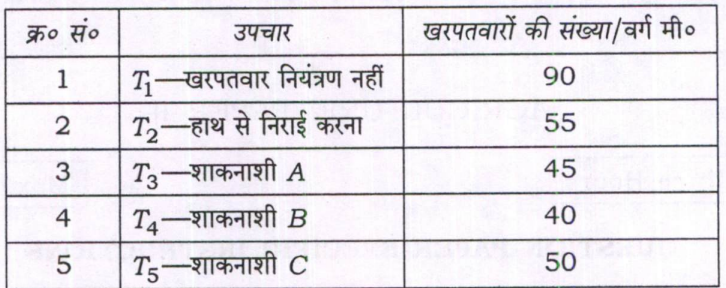
Explain weed control efficiency (WCE). Work out WCE from the given data and offer your critical comment :(10 Marks)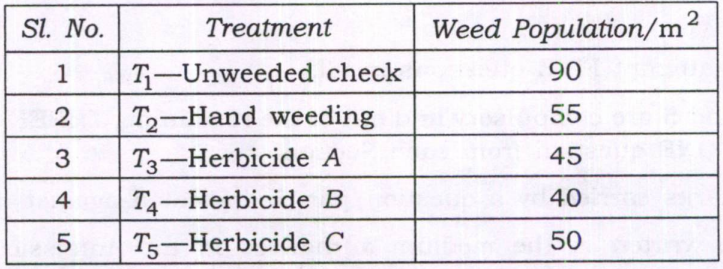
Q2.
- कृषि उत्पादन के संदर्भ में जलवायु परिवर्तन के प्रभावों का उल्लेख कीजिए। जलवायु परिवर्तन पर जनता की राय प्रस्तुत कीजिए।
Enumerate the impact of climate change with reference to agricultural production. Present the opinion of public on climate change.(20 Marks) - वर्षा-आधारित क्षेत्रों में जलवायु-अनुकूल (लचीली) फसल उत्पादन के लिए सस्य उपायों को लिखिए।
Write down the agronomic measures for climate-resilient crop production in rainfed areas.(20 Marks) - भारत की प्रमुख मृदाओं पर एक संक्षिप्त टिप्पणी लिखिए।
Write a brief note on the major soils of India.(10 Marks)
Q3.
- मृदा प्रकार और सिंचाई की उपलब्धता के आधार पर भारत में प्रचलित धान्य एवं मोटे अनाज (मिलेट) आधारित फसल प्रणालियों की सूची बनाइए।
List out the cereal- and millet-based cropping systems practised in India based on soil type and irrigation availability.(20 Marks) - निम्नलिखित शीर्षकों के अंतर्गत वर्षा-आधारित कपास की फसल की उत्पादन तकनीक का वर्णन कीजिए :
Discuss the production technology of rainfed cotton crop under the following heads :(20 Marks)- जलवायु और मृदा की आवश्यकता
Climate and soil requirement - बुवाई की विधियाँ एवं बीज दर
Methods of sowing and seed rate - खाद एवं उर्वरक
Manures and fertilizers - अंतःकर्षण क्रियाएँ
Inter-culture operations - पादप सुरक्षा
Plant protection
- जलवायु और मृदा की आवश्यकता
- शुष्क भूमि क्षेत्रों हेतु संस्तुत स्व स्थाने (इन सिटू) नमी संरक्षण की विभिन्न क्रियाओं का वर्णन कीजिए।
Discuss different in situ moisture conservation practices recommended in dryland areas.(10 Marks)
Q4.
- भारतीय वनों के उत्पादक, सुरक्षात्मक, सुधारात्मक, मनोरंजक, शैक्षिक और विकासात्मक कार्यों की व्याख्या कीजिए।
Explain the productive, protective, ameliorative, recreational, educational and developmental functions of Indian forests.(20 Marks) - खरपतवार बीज बैंक की व्याख्या कीजिए। मृदा में खरपतवारों के बीजों को कम करने की रणनीतियों का वर्णन कीजिए।
Explain weed seed bank. Describe the strategies to reduce weed seeds in soil.(20 Marks) - एकीकृत पोषक तत्त्व प्रबंधन (आइ० एन० एम०) की क्या आवश्यकता है? रोपाई वाले धान के लिए आइ० एन० एम० का सुझाव दीजिए।
What is the need for integrated nutrient management (INM)? Suggest INM for transplanted rice.(10 Marks)
खण्ड B / SECTION B
Q5.
निम्नलिखित प्रश्नों में से प्रत्येक का उत्तर लगभग 150 शब्दों में दीजिए:
Answer the following questions in about 150 words each: (10x5=50)
- वायु क्षरण के संदर्भ में उछाल (साल्टेशन), पृष्ठीय सर्पण (सरफेस क्रीप) और निलंबन (सस्पेन्शन) की व्याख्या कीजिए।
Explain saltation, surface creep and suspension with reference to wind erosion.(10 Marks) - अनाज और दलहनों में सूखा और उच्च तापमान के प्रति संवेदनशील अवस्थाओं का वर्णन कीजिए।
Discuss the sensitive stages for drought and high temperature in cereals and pulses.(10 Marks) - ‘फसल पूर्व कमी और कटाई उपरान्त प्रचुरता’ को उपयुक्त उदाहरणों के साथ स्पष्ट कीजिए, तथा भारतीय संदर्भ के अंतर्गत ऐसी स्थिति के पीछे कोई दो वैध कारण बताइए।
‘Pre-harvest scarcity and post-harvest glut’-elucidate with suitable examples, and give any two valid reasons behind such situation under Indian context.(10 Marks) - ‘बाजार बुद्धिमत्ता’ पद की व्याख्या कीजिए। संक्षेप में बाजार बुद्धिमत्ता की भूमिका पर प्रकाश डालिए और बताइए कि यह सरकार, व्यापारियों, किसानों, उपभोक्ताओं और शोधकर्ताओं के लिए कैसे उपयोगी है।
Explain the term ‘market intelligence’. Briefly point out the role of market intelligence and how it is useful to the Government, traders, farmers, consumers and researchers.(10 Marks) - ‘किसान प्रथम (फार्मर फर्स्ट)’ को समझाइए। ‘फार्मर फर्स्ट’ के उद्देश्यों का संक्षेप में वर्णन कीजिए।
Explain ‘Farmer FIRST’. Briefly discuss the objectives of ‘Farmer FIRST’.(10 Marks)
Q6.
- मृदा में शाकनाशियों के अवशेष के हानिकारक प्रभावों का उल्लेख कीजिए। उक्त समस्या के निवारण हेतु उपचारात्मक उपायों की विवेचना कीजिए।
Enumerate the harmful effects of herbicide residues in soil. Discuss the remedial measures to overcome the above problem.(20 Marks) - मृदा-निर्माण को प्रभावित करने वाले कारकों का स्पष्ट वर्णन कीजिए।
Give a lucid account on the factors influencing soil formation.(20 Marks) - पलवार के प्रकारों एवं मृदा नमी संरक्षण में उनकी भूमिका पर एक संक्षिप्त टिप्पणी प्रस्तुत कीजिए।
Present a brief note on the types of mulches and their role in soil moisture conservation.(10 Marks)
Q7.
- ‘जल के संयुक्त उपयोग’ पद की व्याख्या कीजिए। लवणता संबंधी खतरों के संदर्भ में खराब गुणवत्ता वाले सिंचाई जल को सुधारने के लिए प्रबंधन क्रियाओं को सुझाइए।
Explain the term ‘conjunctive use of water’. Suggest the management practices to improve poor quality irrigation water with reference to salinity hazards.(20 Marks) - जलभराव के कारणों को स्पष्ट कीजिए तथा जलभराव को कम करने के लिए विभिन्न प्रबंधन रणनीतियों का वर्णन कीजिए।
Enunciate the reasons for waterlogging and describe various management strategies to mitigate waterlogging.(20 Marks) - प्रक्षेत्र नियोजन क्यों आवश्यक है? प्रक्षेत्र नियोजन की सीमाओं को संक्षेप में बताइए।
Why is farm planning necessary? Brief the limitations of farm planning.(10 Marks)
Q8.
- आंशिक एवं पूर्ण प्रक्षेत्र बजट के बीच अंतर स्पष्ट कीजिए। कृषि योजना एवं बजट तैयार करते समय अपनाए गए चरणों पर प्रकाश डालिए।
Differentiate between partial and complete farm budget. Highlight the steps adopted while preparing farm planning and budgeting.(20 Marks) - भारत में कृषि प्रसार कार्मिकों के लिए उपयुक्त विभिन्न प्रशिक्षण विधियों का वर्णन कीजिए।
Discuss various training methods suitable for agricultural extension personnel in India.(20 Marks) - बेनेट के पदानुक्रम प्रसार कार्यक्रम मूल्यांकन मॉडल के बारे में सविस्तार वर्णन कीजिए।
Explain in detail about Bennett’s hierarchy extension programme evaluation model.(10 Marks)