

Definition and Core Dynamics
- Cropping Pattern refers to the spatial and temporal proportion of land area allocated to different crops at a given point in time. It reflects the dynamic distribution, seasonal shifts, and structural variations in crop cultivation driven by agro-ecological, socioeconomic, and technological factors.
- In sustainable land-use planning, a shifting cropping pattern acts as an indicator of agrarian modernization and changes in water-use efficiency (WUE) across diverse agro-ecological conditions.
High-Yielding Varieties (HYVs) and Food Security
- The production and distribution of genetically improved seeds, particularly High-Yielding Varieties (HYVs), are systematically prioritized across state departments, central research stations (ICAR), and agricultural universities.
- HYV seeds serve as the bedrock of national food security, driving surplus food grain production to mitigate famine and rural poverty.
Morphological and Physiological Traits of HYVs
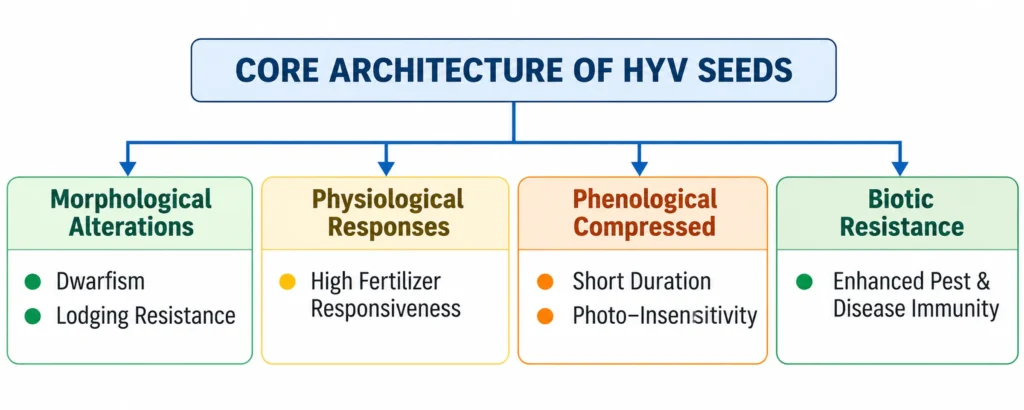
In contrast to conventional landraces, High-Yielding Varieties possess distinct ideotypic and physiological architectures optimized for intensive agriculture:
- Higher Crop Yield Per Unit Area: They drastically increase grain-to-straw ratios, maximizing biomass conversion efficiency per hectare.
- Dwarfism: The incorporation of specific dwarfing genes reduces vegetative height. This makes the plants structurally robust and more able to withstand high winds and heavy rain without lodging.
- Improved Input Responsiveness: They display a linear, positive yield response to chemical fertilizers, converting nutrients efficiently into reproductive sinks rather than excessive vegetative growth.
- Early Maturation (Short Duration): They exhibit a compressed growth cycle, which frees up land quickly and increases overall cropping intensity.
- Enhanced Biotic Immunity: Modern HYVs are selected for strong genetic resistance to fight off destructive insects, fungal phytopathogens, and systemic diseases.
- Photo-Insensitivity: Many HYVs are insensitive to day-length variations, allowing them to be grown across non-traditional seasons and geographic regions.
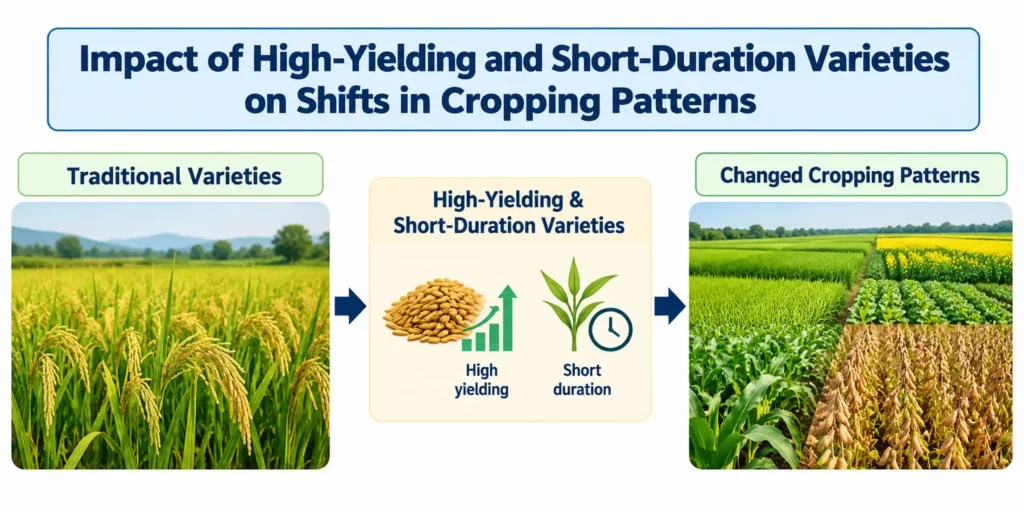
Impact of HYVs and Short-Duration Varieties on Shifts in Cropping Patterns
The widespread adoption of HYVs—sparked by the Green Revolution in India —fundamentally transformed traditional, subsistence-based cropping patterns into highly commercialized, intensive systems.
1. Sharp Rise in Cropping Intensity
Traditional long-duration crops typically occupied the field for 6 to 9 months, limiting farmers to a single crop per year (monoculture). The introduction of short-duration HYVs allowed for quick harvesting, enabling double, triple, or relay cropping systems. This structural shift significantly advanced land utilization efficiency across multiple states.
2. The Shift Toward Specialized Monoculture
The high profitability of specific food grains triggered a major shift away from diverse mixed-cropping systems (which included coarse cereals, oilseeds, and pulses) toward high-input crop duopolies.
- The Rice-Wheat System: In regions like the Trans-Gangetic Plain, traditional diverse crop rotations were largely replaced by a continuous Rice (Oryza sativa) – Wheat (Triticum aestivum) rotation.
- Cash Crop Proliferation: Commercial plantations and mechanized farms increasingly shifted acreage toward responsive crops like Corn (Zea mays), Soybean (Glycine max), Potato (Solanum tuberosum), and Cotton (Gossypium spp.).
3. Geographic Expansion of Crops into Non-Traditional Belts
- Wheat Expansion: Exotic Mexican semi-dwarf wheat varieties, including Lerma Rojo-64-A and Sonora 64, were directly introduced and adapted. This pushed wheat cultivation deep into non-traditional areas of eastern India.
- Rice Expansion: Short-duration, photo-insensitive rice varieties allowed states like Punjab and Haryana—historically wheat-growing areas—to adopt rice as a dominant Kharif cash crop.
Socioeconomic Evaluation of HYV Adoption
|
Advantages |
Disadvantages |
|---|---|
|
Famine Elimination: Drastically boosted food production, eliminating systemic food scarcity and reducing structural vulnerabilities to famine. |
High Production Costs: HYVs demand heavy investments in chemical fertilizers, chemical pesticides, and energy-intensive machinery. |
|
Enhanced Lodging Resistance: Shorter crop stature prevents plant lodging during heavy monsoonal rain and high wind events. |
High Hydrological Dependence: Demands a highly reliable, continuous source of artificial irrigation, restricting success in rainfed blocks. |
|
Increased Farm Revenue: Higher yields per hectare maximize marketable surpluses, driving up net profit margins for farmers. |
Socioeconomic Disparity: Small and marginal farmers often lack the capital to purchase expensive HYV seed packages, widening the wealth gap. |
Impact on Soil Health and Environmental Degradation
The Concept of Soil Health
Soil health is the functional capacity of soil to operate as a vibrant, living ecosystem. Healthy soils sustain diverse microbial communities that naturally control plant pathogens, pests, and weeds. These beneficial soil organisms form essential symbiotic associations with plant roots, recycle vital macro- and micronutrients, and improve soil aggregation—which enhances water-use efficiency (WUE) and nutrient-holding capacity.
Edaphic Deterioration Under Intensive Cropping
Unscientific cultivation methods paired with continuous, high-input short- and long-duration crop cycles have caused widespread soil degradation across intensive farming belts:
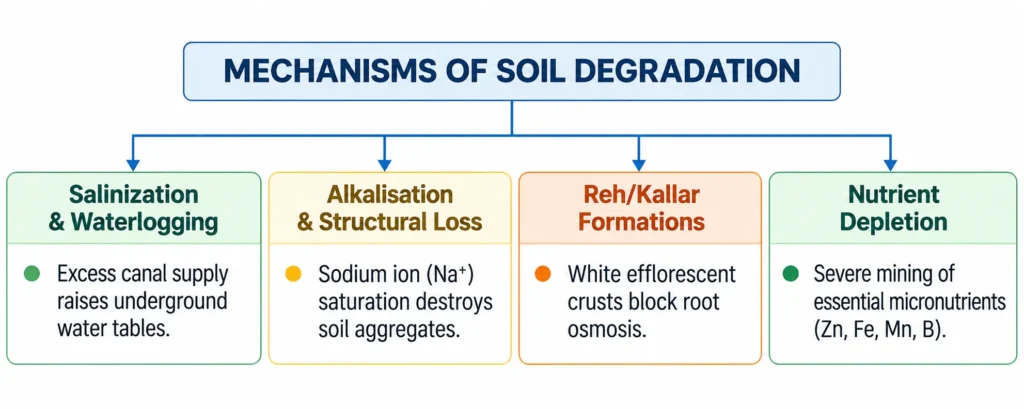
- Secondary Salinization: Over-irrigation of high-input HYV systems in arid and semi-arid tracts causes underground water tables to rise, bringing dissolved salts to the surface.
- Alkalisation: Excessive accumulation of exchangeable sodium ions (Na+) damages soil structure, lowers permeability, and restricts root zone aeration.
- Formation of Reh and Kallar: Intense evaporation leaves behind sterile, white saline-alkali crusts (locally termed Reh or Kallar), rendering large areas of arable land barren.
- Nutrient Mining and Soil Fatigue: Continuous double or triple cropping without adequate organic recycling severely depletes soil organic carbon (SOC) and strips out critical micronutrients (such as Zinc, Iron, and Boron).
Determinants of Cropping Pattern Dynamics
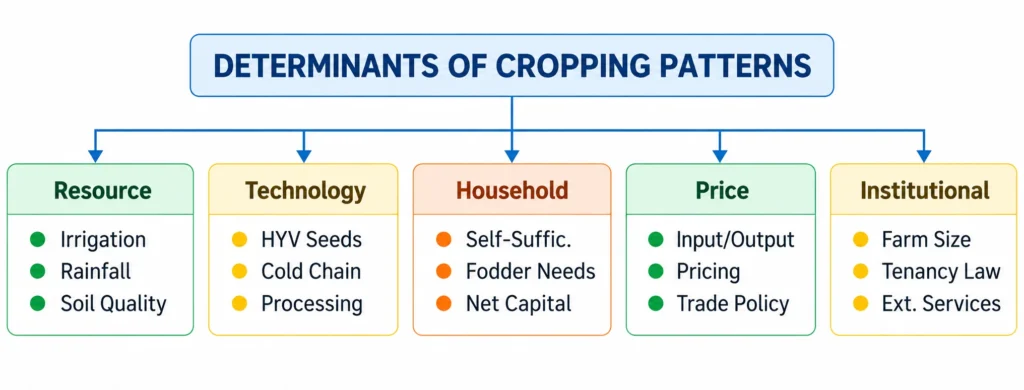
The cropping pattern in India underwent fundamental, structural changes following the introduction of modern agricultural technologies in the late 1960s and early 1970s. The shift away from traditional subsistence crops toward input-responsive short-duration varieties is driven by the complex interaction of five major systemic forces:
1. Resource-Related Factors
- The availability, source, and reliability of irrigation facilities.
- The spatial distribution and volumetric patterns of annual rainfall.
- The baseline soil fertility status and physical properties of the local land profile.
2. Technology-Related Factors
- The availability of biochemical innovations, including seed, fertilizer, and water technologies.
- Post-harvest infrastructure, encompassing modern storage facilities, cold chain logistics, and specialized food-processing industries.
3. Household-Related Factors
- The domestic consumption mandates for family food and fodder self-sufficiency.
- The financial savings and disposable investment capacity of the farming household.
4. Price-Related Factors
- The market value of agricultural outputs vs. the cost of operational inputs (e.g., fertilizers, diesel, seeds).
- Macroeconomic indicators, including national trade policies, export-import regulations, and minimum support prices (MSP).
5. Institutional and Infrastructure-Related Factors
- The physical farm size and prevailing legal tenancy arrangements.
- The quality of agricultural research extension centers and organized marketing networks (APMC mandis).
- Statutory government regulatory policies, land ceiling acts, and input subsidy distributions.
Impact of Short and Long-Duration Varieties on Soil Health Deterioration
While the introduction of high-yielding, short-duration varieties drastically increased the national cropping intensity, it also caused long-term agronomic challenges. The continuous cultivation of these intensive crops disrupted the biological equilibrium of soil health—the capacity of soil to function as a living ecosystem.
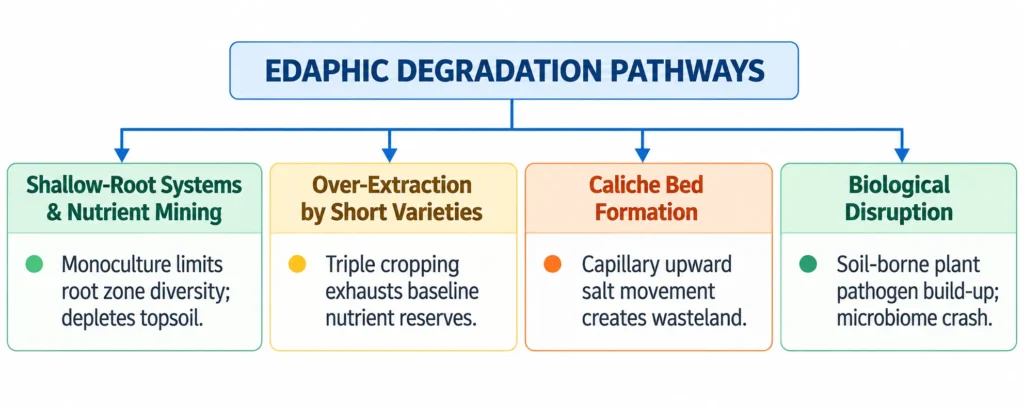
1. Edaphic Degradation via Short-Duration Varieties
- Nutrient Exhaustion: Short-duration varieties of rice enable intensive double and triple cropping systems. This continuous cultivation takes soil nutrients excessively, exhausts natural macro- and micronutrient reserves, and degrades long-term soil productivity.
- Microbial Disruption: The rapid sequence of identical crop cycles leads to soil-borne plant pathogen accumulation and breaks down beneficial soil microbial communities, which reduces the soil’s natural suppressiveness against root diseases.
2. Edaphic Degradation via Long-Duration Varieties
- Soil Structural Fatigue: Continuous cultivation of long-duration crops damages the physical architecture of the soil profile through the repetitive use of uniform chemical fertilizers, synthetic pesticides, and herbicides.
- Toxic Chemical Accumulation: High-input systems lack appropriate Integrated Nutrient Management (INM). This causes the accumulation of unwanted chemical residues, leading to the toxication of soil and a sharp drop in soil organic carbon (SOC).
- Hydrological Waste Zones: Poorly managed irrigation in these intensive systems causes widespread waterlogging and salt build-up. Capillary action brings dissolved ions to the surface, forming sterile white crusts (Reh or Kallar) that turn highly fertile fields into an agricultural wasteland.
3. Landscape and Ecological Disruptions
- Forest Clearing: Expanding the acreage for these high-yielding varieties caused large-scale deforestation, particularly in the pristine ecosystems of Punjab, the Tarai, and the Bhabhar regions.
- Risks of Monoculture: The widespread reliance on a few varieties led to a strict crop monoculture, especially with wheat. Critics frequently argue that India’s agricultural shift was more of a narrow “Wheat Revolution” than a broad-based green revolution. This structural uniformity makes crops highly vulnerable to widespread pest outbreaks and accelerates long-term environmental degradation.
Positive Trends in Long-Term Land Use Patterns
- Acreage Expansion: Over the last 50 years, India’s land-use and cropping patterns show a steady increase in land dedicated to active cultivation, with minor seasonal variations.
- Production Reliability: The expansion of the total net sown area under reliable irrigation commands has stabilized food production, successfully protecting the country from historical drought-induced famines.
The Green Revolution: Framework and Milestones
Conceptual Definition
- The Green Revolution refers to the multiple, rapid growth in agricultural crop production achieved across developing nations through the systematic integration of modern inputs, advanced biochemical technologies, High-Yielding Varieties (HYVs), intensive farm mechanization, and managed irrigation facilities.
- Geographic Nucleus: Within India, this transformative shift catalyzed a dramatic surge in agricultural production. It was heavily concentrated across the high-potential alluvial tracts of Punjab, Haryana, and Western Uttar Pradesh.
- Genetic Breakthroughs: The primary technical milestones centered on the adoption of semi-dwarf, high-yielding wheat selections containing the Norin-10 gene, alongside the development of locally adapted, rust-resistant strains of wheat. These developments effectively protected the nation’s food security from devastating fungal epidemics.
Historical Evolution and Foundations of the Green Revolution – UPSC Agriculture Optional
Historical Genesis of the Green Revolution in India
The Swaminathan-Borlaug Collaboration
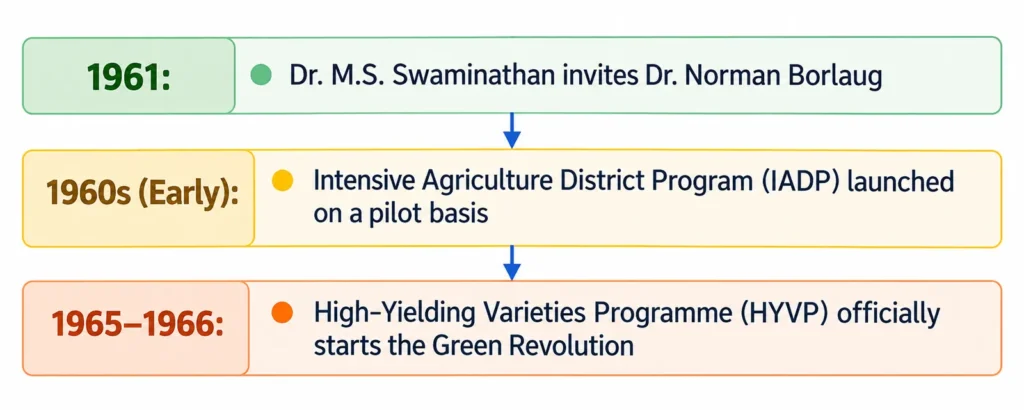
- The Historic Invitation: In 1961, the eminent Indian cytogeneticist Dr. M.S. Swaminathan invited the Nobel Laureate Dr. Norman E. Borlaug to India. Borlaug suggested implementing a comprehensive agricultural transformation based on high-yielding, semi-dwarf wheat germplasm.
- The Experimental Pilot: The strategy began with the Intensive Agriculture District Program (IADP) on an experimental basis to test input-intensive farming across selected districts.
- The Official Launch: In 1965–1966, the government launched the High-Yielding Varieties Programme (HYVP). This marked the official starting point of the Green Revolution in India.
Production Milestones and Macroeconomic Impact
- Breaking Production Bottlenecks: National food grain production sat at a low 25 Million Tonnes (MT) in 1950–51 and rose to only 33 MT by 1965–66, leaving India vulnerable to severe food shortages.
- The Production Surge: By 1980, national food grain production reached 100 MT, a threefold increase over a single decade.
- The Wheat Revolution: The growth was highly concentrated in wheat production, which expanded 2.5 times within 5 years. This remarkable trajectory established India’s food self-sufficiency and transformed its global image from a food-insecure nation into a self-reliant agricultural exporter.
The Technological and Structural Bedrock
The success of the Green Revolution relied on a package of interconnected technologies, policy changes, and institutional frameworks:
1. High-Yielding Varieties (HYVs)
- Modern HYVs are genetically selected strains that produce 2 to 3 times more yield than conventional landraces.
- They feature a distinct dwarf architecture with a dense leaf canopy. This shape prevents the plant from lodging under the weight of heavy grain heads.
- These varieties have delicate, fragile tissue profiles that require precise seedbed preparation, reliable water inputs, and targeted protection from insect pests and competing weeds.
- Their compressed growth cycle reduces the crop’s field duration. This allows farmers to clear land quickly for subsequent crops, driving a major increase in cropping intensity.
2. Hydrological and Energy Infrastructure
- Irrigation Expansion: In 1960, India’s net irrigated area was only 30 million hectares, making the rapid expansion of canal commands and groundwater tubewells a critical priority.
- Rural Electrification: Providing grid power to rural areas was an essential pre-condition to run the electric pump-sets needed for mechanized groundwater extraction.
3. The Command Area Development Program (CADP)
Launched in 1974, the CADP was introduced to maximize the efficiency of available water resources through two structural strategies:
- On-Farm Development (OFD) Activities: This focused on engineering field channels, deep ploughing, land levelling, and constructing contour bunds to manage water distribution.
- Off-Farm Development Activities: This involved building rural roads, improving connectivity, establishing APMC mandis, and streamlining transportation networks to reduce post-harvest losses.
4. Agrochemical Inputs and Nutrient Imbalances
- Chemical Fertilizers: Indian soils are naturally deficient in nitrogen. To address this, the government promoted synthetic NPK fertilizers.
- The Nutrient Ratio Imbalance: While agronomic recommendations advise a standard NPK ratio of 4:2:1, actual field use skewed heavily to 3.8:1 (with over-application of nitrogenous inputs like Urea), which caused long-term soil health degradation.
- Plant Protection Chemicals: The delicate canopy of HYVs required regular applications of broad-spectrum insecticides, synthetic pesticides, and chemical weedicides to prevent yield losses.
5. Institutional Reforms and Financial Support
- Land Holding and Land Reforms: States initiated the consolidation of land holdings to build larger, viable farm plots. This was backed by structural land reforms, including the abolition of intermediaries (Zamindari system) and tenancy protection acts.
- Rural Credit Networks: The government expanded formal banking networks and micro-financing to help smallholders purchase expensive modern input packages.
- Commercialization of Agriculture: Introducing the Minimum Support Price (MSP) gave farmers an assured price for their produce, providing a strong economic incentive to grow high-input staple crops.
Socioeconomic Advantages of the Green Revolution
|
Dimension |
Positive Agronomic & Macroeconomic Outcomes |
|
Food Security |
Met the food needs of a rapidly growing population, eliminated structural famines, and mitigated chronic starvation. |
|
Agrarian Economy |
Transitioned subsistence agriculture into market-driven, capitalistic farming practices. |
|
Capital Generation |
Generated large marketable surpluses, driving commercialization across rural communities. |
|
Infrastructure Growth |
Built essential rural infrastructure, including all-weather roads and centralized storage facilities. |
|
Fiscal Relief |
Reduced the financial burden of importing food grains, allowing the government to reallocate capital into targeted poverty alleviation programs like the Integrated Rural Development Programme (IRDP) and the Tribal Area Development Program. |
|
Rural Income |
Increased real agricultural wage rates, bringing more cash income to rural households. |
Socioeconomic and Ecological Repercussions of the Green Revolution – UPSC Agriculture Optional
The Strategic Imperative of the Green Revolution
Demographic Pressures and Food Security
- Exponential Population Growth: Between the 1960s and 1980s, India experienced an unprecedented demographic expansion. The national population doubled from 33 crores to 66 crores within a 25-year window.
- The Food Security Imperative: This explosive growth created an urgent need for an increased food supply. Traditional subsistence farming could not meet this demand, making the introduction of the Green Revolution a necessity to avert systemic starvation.
Structural Transformations in Agriculture
- Agronomic Mechanisation: The adoption of high-input systems catalyzed the rapid mechanisation of agriculture. Traditional draft animal power was replaced by tractors, combine harvesters, and diesel tube wells.
- Institutional Land Reforms: To maximize the efficiency of capital-intensive inputs, state governments prioritized land consolidation and targeted land reforms in early adoption zones. This reduced structural land fragmentation.
Forward and Backward Industrial Linkages
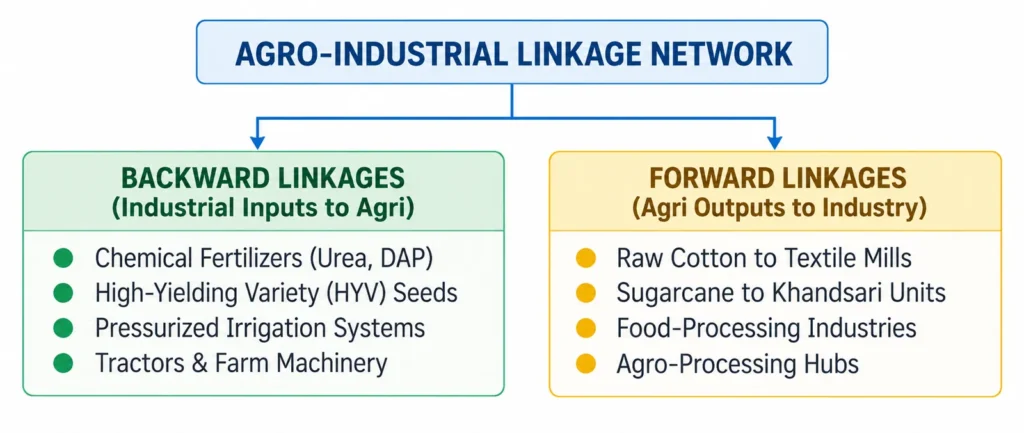
The Green Revolution strengthened the bidirectional relationship between agriculture and the industrial sector, driving economic changes in Tier-II and Tier-III towns.
- Backward Linkages: This refers to the agricultural sector’s demand for raw materials and capital inputs produced by industries. It stimulated growth in sectors like chemical fertilizers, synthetic pesticides, mechanical implements, and energy infrastructure.
- Forward Linkages: This refers to the agricultural sector supplying raw materials to secondary industries. Increased production of cash crops fueled textiles, sugar mills, and commercial food-processing industries.
- Rural Urbanisation: The growth of these agro-processing industries sparked local industrialisation in Tier-II and Tier-III towns. This attracted rural surplus labor and led to a higher rate of urbanisation across agricultural hubs.
Socioeconomic Repercussions and Disparities
While the Green Revolution achieved its primary goal of food self-sufficiency, its unscientific deployment created deep socio-economic divisions.
1. Multidimensional Economic Disparities
- Inter-Personal Disparity: A wealth gap emerged between resource-rich large farmers and capital-constrained small or marginal farmers. Large landowners could afford the expensive seed-chemical-water packages, while smaller farmers faced rising operational debts.
- Inter-Regional Disparity: Striking imbalances emerged between well-irrigated alluvial plains and rainfed semi-arid zones. For example, a stark economic divide developed between highly mechanized Western UP and predominantly subsistence-based East UP.
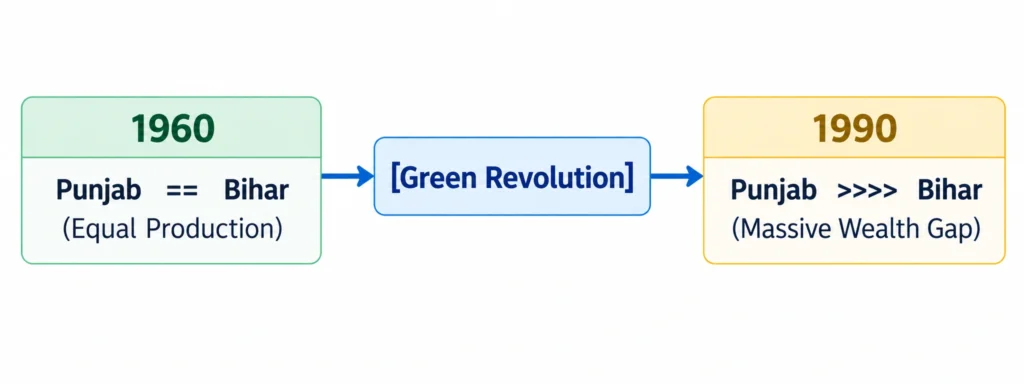
- Inter-State Disparity: In 1960, Punjab and Bihar contributed comparable shares to national crop production. However, targeted state support and canal networks caused a significant production and income gap between the two states by 1990.
2. Social Inequalities and Rural Distortions
- The Debt-Trap Cycle: The rising costs of modern inputs, combined with an expansion of unregulated informal credit services, forced vulnerable smallholders into a persistent vicious cycle of debt-trap.
- Rural Landlessness: Many small and marginal farmers, unable to compete or service debts, were forced to sell their holdings. This led to increased rural landlessness, turning independent cultivators into agricultural labourers exposed to occupational health hazards.
- Technological Displacement: Rapid mechanical automation caused greater unemployment among landless rural laborers, accelerating unsafe migrations to urban slums.
- Strengthening of Patriarchy: The commercialization of the rural economy concentrated financial control in male hands, which inadvertently strengthened patriarchy. This socio-economic shift correlated with a rise in gender discrimination, dowry demands, and an increase in female foeticide across several high-adoption zones.
Ecological Repercussions and Environmental Cost
The intensive input model severely damaged the environment, ecology, soil, land, and water of North-western India. This has led many experts to conclude that the initial phase of the Green Revolution was neither futuristic nor visionary and was unsustainable.
1. Edaphic Degradation and Soil Toxication
- Secondary Salinization and Alkalisation: Poorly managed surface irrigation in arid regions caused water tables to rise, bringing dissolved salts to the topsoil. This created barren, white saline-alkali crusts known locally as Reh or Kallar.
- Chemical Soil Toxication: Widespread over-application of synthetic fertilizers disrupted the soil’s natural chemical balance. This toxication of soil reduced organic carbon levels, altered beneficial C:N ratios, and killed essential earthworm and microbial populations.
2. Hydrological Disruptions and Eutrophication
- Waterlogging: Excessive, unscientific canal supply outpaced natural drainage, causing widespread waterlogging that starved plant roots of oxygen.
- Aquifer Depletion: Deep tubewell extraction significantly exceeded natural groundwater recharge, causing water tables to drop at an unsustainable rate.
- Water Pollution and Eutrophication: Agrochemical runoff washed residues into aquatic ecosystems, leading to severe water pollution in rivers, tanks, and reservoirs.
Nitrogen/Phosphorus Runoff Nutrient Enrichment Algal Bloom Anoxoff Ecosystem Collapse
- This triggered Eutrophication, a process where nutrient enrichment causes a rapid population boom of specific aquatic plants. For instance, excess nitrogen and phosphorus in ponds fuel explosive water-hyacinth (Eichhornia crassipes) growth. This thick surface canopy blocks sunlight and prevents oxygenation of lower water layers, causing the underlying aquatic ecosystem to collapse.
3. Loss of Agrobiodiversity and Deforestation
- Landscape-Scale Deforestation: To expand arable acreage, large-scale deforestation was carried out across Punjab, the Tarai, and the Bhabhar regions, destroying native carbon sinks.
- Disruption via Monoculture: Replacing diverse multi-crop systems with a strict crop monoculture (chiefly a continuous wheat-rice cycle) eroded genetic agrobiodiversity. This uniformity made crops more vulnerable to large-scale pest outbreaks and led critics to label the movement a “Wheat Revolution” rather than a comprehensive agricultural transformation.
Impact of High-Yielding and Short-Duration Varieties on Shifts in Cropping Patterns Across Agro-Climatic Regions – UPSC Agriculture Optional
Determinants of Cropping Patterns in India
Biophysical and Ecological Controls
- The cropping pattern of any region represents the spatial and temporal distribution of crops. It is primarily governed by a matrix of biophysical factors: rainfall, climate, temperature, and baseline soil type.
Technological Interventions
- The Green Revolution Catalyst: Modern technology acts as a primary driver of shifts in cropping patterns. The large-scale adoption of High-Yielding Varieties (HYVs) and short-duration seeds, paired with synthetic fertilizers in the mid-1960s, changed traditional farming.
- This packaging significantly increased wheat production across high-potential zones such as Punjab, Haryana, and Western Uttar Pradesh. It shifted the region from diverse polycultures to intensive, market-driven food grain duopolies.
Agro-Climatic Region-wise Shifts in Cropping Patterns
The introduction of input-responsive HYVs and early-maturing seed traits caused significant structural shifts across the diverse Agro-Climatic Regions of India:
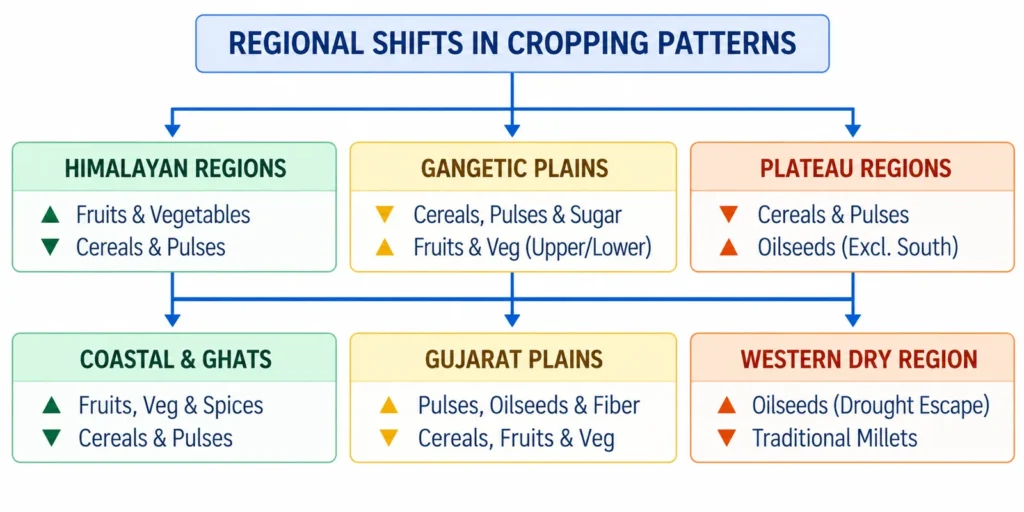
1. Himalayan Regions (Zone I & II)
- Horticultural Shift: The availability of cold-tolerant, short-duration cultivars led to an increase in the proportion of farmers cultivating high-value fruits & vegetables.
- Declining Staples: Concurrently, the proportion of farmers engaged in the cultivation of subsistence cereals and pulses declined sharply.
2. All Gangetic Plains Regions (Zone III, IV, V & VI)
- Staple Attrition: Across the Gangetic landscape, the relative area managed by farmers for traditional cereals, pulses, and sugar crops declined.
- Horticultural Pockets: However, targeted short-duration varieties helped expand high-value fruits & vegetable cultivation across both the Lower Gangetic and Upper Gangetic plain regions.
3. All Peninsular Plateau Regions (Zone VII, VIII, IX & X)
- Pulse and Cereal Retreat: The proportion of farmers cultivating subsistence cereals, pulses, and fruits & vegetables declined.
- Oilseed Dominance: Driven by price incentives and drought-hardy genotypes, the proportion of farmers cultivating oilseeds increased significantly between 2002–03 and 2012–13 (except in the Southern Plateau region).
4. East Coast Plains and Hills Region (Zone XI)
- Diversification Matrix: Traditional cultivation of cereals, pulses, sugar, and oilseeds decreased.
- Commercial Gains: Farmers shifted acreage toward specialized fruits & vegetables and high-value spices to maximize farm revenue.
5. Western Ghats and West Coast Region (Zone XII)
- Staple and Spice Integration: Unlike other zones, this region saw an increase in the proportion of farmers cultivating cereals alongside commercial spices.
6. Gujarat Plains and Hills Region (Zone XIII)
- Industrial Crop Shift: Cultivation of cereals as well as fruits and vegetables declined.
- Cash Crop Dominance: Total acreage shifted toward industrial pulses, oilseeds, and fiber (Cotton) production.
7. Western Dry Region (Zone XIV)
- Arid Cash Cropping: Traditional, risky non-cash millets saw a decline, while the cultivation of drought-evading oilseeds increased.
Field Evidence: High-Yield Case Studies
Case Study 1: Green Gram (Mungbean) in Odisha
- Farmer Profile: Pradeep Sahu; Chopara village, Ganjam district, Odisha.
- Intervention: Adopted the early-maturing, short-duration green gram variety TARM-1.
- Agronomic Outcome: Realized an impressive yield of 7.8 q/ha and secured an additional income of Rs. 5,400/ha compared to local landraces, despite experiencing severe water shortages during critical crop vegetative growth phases.
Case Study 2: Groundnut Variety GG-5 in Gujarat
- Location Matrix: Maharwada village, Rajkot, Gujarat.
- Scale of Adoption: 20 farmers across an aggregated 8-hectare command area.
- Agronomic Outcome: Harvested an average yield of 11.3 q/ha. This represented a 10% yield advantage over traditional local varieties, despite suffering from late-season planting constraints.
Case Study 3: Early Soybean in Maharashtra
- Location & Context: Amravati district during the severe drought season of 2012.
- Intervention: Deployment of elite short-duration soybean genotypes.
- Agronomic Outcome: The crops matured early within 87–93 days, safely escaping terminal moisture stress and outperforming traditional long-duration varieties.
Physiological and Biochemical Effects of Low Temperature on Seed Germination
Low temperature represents a major abiotic stress factor that severely restricts plant growth, limits structural productivity, and shapes the geographical distribution of agricultural crops, often leading to significant seasonal crop losses.
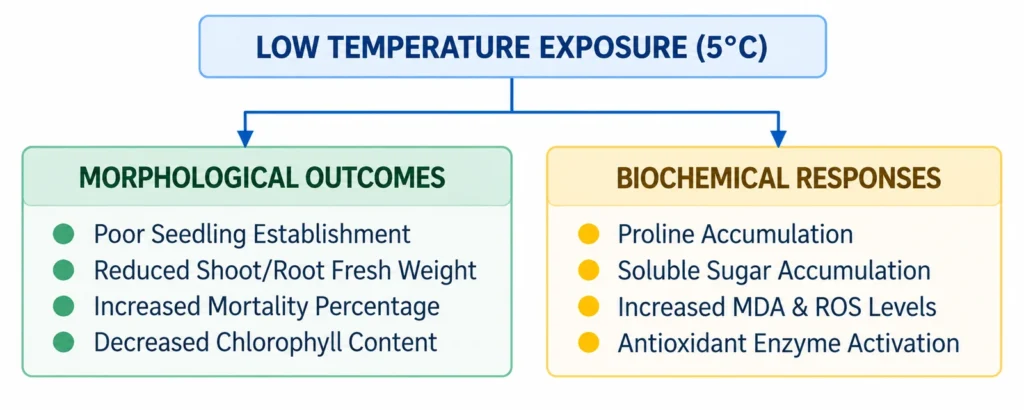
1. Morphological and Biomass Alterations
- Poor Establishment: Seeds of tropical or subtropical origin suffer severe chilling injury when exposed to low, non-freezing temperatures. This causes poor seedling establishment and lower final yields.
- Growth Retardation: Exposure to a cold treatment of 5°C for 29 days significantly reduces the length, as well as the fresh and dry weight, of both shoots and roots.
- High Mortality: Extreme cold significantly increases the Mortality Percentage compared to control plants grown at an optimal temperature of 25°C.
2. Cellular and Biochemical Adaptations
To survive cold stress, plants trigger specific physiological and biochemical changes to protect cellular integrity:
- Membrane Composition Reconfiguration: Cold stress alters lipid membrane fluidity, causing rigidification. This stimulates intracellular signaling cascades.
- Osmoprotectant Accumulation: Plants increase their internal levels of compatible solutes, such as proline and soluble sugars. These act as osmoprotectants to stabilize cellular proteins and prevent dehydration.
- Lipid Peroxidation Indicator: Cold stress accelerates reactive oxygen species (ROS) production, leading to membrane damage. This is marked by an increase in Malondialdehyde (MDA) levels.
- Antioxidant Defense Induction: Plants boost the activity of antioxidant enzymes (e.g., SOD, POD, CAT) to clean out toxic free radicals.
- Chlorophyll Degradation: Cold stress reduces overall chlorophyll content, which slows down photosynthetic capacity and reduces biomass production.
Previous Year Question based on it
- Give an elaborate account of agronomic practices for managing the problems of environmental pollution. (15M, IFoS-2023)
- Describe concept of microbial consortia and its role in crop residue management. (10M CSE 2023)
- Environmental pollution is hazardous to crops. Describe with examples. (15M, IFoS 2021)
- Discuss the effect of environmental pollution on animals and humans. (8M, IFoS 2020)
- Describe environment pollution. Write the role of afforestation in minimizing the effects of envi-ronmental pollution. (10M, CSE 2020)
- Describe in-situ and ex-situ management of Paddy Crop residue (Parali) in India. (10M, 150W, CSE 2020)
- Explain the effects of climate change on crop production (10M, CSE 2019)
- Highlight the effects of environmental pollution on living beings. (10M, IFoS-2018)
- Phyto stabilisation (10M, CSE 2016)
- Elaborate the environmental pollutions along with the role of a forestation in minimizing their effects (20M, CSE 2015)
- Environment pollution and its effect on crop productivity. (15M, CSE 2008)
- Short note on modernisation in agriculture & environmental pollution (20M, 200W, CSE 2005)
- Short notes on Environmental pollution hazards to crops (20M, 200W, CSE 2003)
- Short critical notes on Environmental Pollution (20M, 200W, CSE 2000)
- Discuss environmental pollution and its hazards to men, animals, and crops. Suggest concrete measures to mitigate it in a developing country like India. (60M, CSE 1999).