


Concepts of Cropping Pattern and Cropping System – UPSC Agriculture Optional
What is a Cropping Pattern?
- Cropping Pattern refers to the spatial and temporal proportion of land area allocated to the cultivation of various crops at different points in time. It explicitly indicates the structural time sequence and physical arrangement of crops during a particular calendar year on a specific acreage.
- A dynamically changing cropping pattern results in:
- Alterations within the baseline proportion of land allocated to different crops.
- Shifts in the spatial sequence and sequential timing of crop cultivation.
- The cropping pattern in India is fundamentally determined by a matrix of environmental and technological factors: average rainfall, atmospheric temperature, macro-climate, available technology, and the specific soil type utilized for agriculture.
What is a Cropping System?
- Cropping System represents the foundational management unit of modern agriculture, encompassing the continuous arrangement and operational management of crops grown on a particular piece of land over time.
- It comprises the active cropping pattern plus all management components required to produce a particular crop, including the complex interrelations between the crops, the farm resources, and the external environment.
Cropping System = Cropping Pattern + Management - System Diagnostics: An optimized cropping system provides an expert farm manager with precise operational ideas regarding:
- Deciding exactly what crop should be cultivated on a specific farm unit based on agro-ecological conditions.
- Delineating the exact amount of area that should be allocated for a particular component crop.
- Designing the crop matrix as per the available infrastructure for power, irrigation, inputs, labor, and transport.
- Optimizing the water-use efficiency (WUE) and input utilization of all resources available on the farm without wastage.
- Formulating a precise economic budget and input-output estimation for each crop enterprise.
Direct Comparison: Cropping Pattern vs. Cropping System
|
Parameter / Basis |
Cropping Pattern |
Cropping System |
|
Core Definition |
The spatial and temporal proportion of area under various crops at a specific point in time. |
The cropping pattern of a farm plus its interaction with farm resources, technologies, and environment. |
|
Systemic Nature |
It is a descriptive, static indicator reflecting land allocation trends. |
It is a dynamic, functional management system that integrates biophysical variables. |
|
Core Equation |
Determined by the percentage share of individual crops in the Gross Cropped Area. |
Cropping System = Cropping Pattern + Management Components. |
|
Analytical Scope |
Focuses heavily on the geographic distribution of crops and land-use shifts over time. |
Focuses on resource-use efficiency, waste recycling, and ecological sustainability. |
|
Determinants |
Driven primarily by macro-climate, rainfall, soil type, and market prices. |
Driven by resource constraints, technology, input availability, labor, and integrated nutrient management (INM). |
Basic Principles of Cropping Systems
To achieve optimal resource efficiency and ecological stability, a cropping system must be designed around these core agronomic principles:
- Complementary Dynamics: Choose component crops that complement each other rather than competing directly for the same ecological niches.
- Resource Optimization: Select crops and a structured crop rotation that utilize available water, nutrients, and solar radiation efficiently.
- Fertility Enhancement: Prioritize crops and structural rotations that maintain and actively enhance long-term soil fertility (e.g., legume inclusion).
- Growth Cycle Diversity: Choose component crops that have a diversity of growth cycles to minimize simultaneous peak resource demands.
- Species Biodiversity: Integrate a diverse species composition of crops to disrupt insect-pest and weed reproduction cycles.
- Continuous Soil Mantle: Keep the soil covered permanently with vegetative structures or residue to eliminate erosion and lower evaporation.
- Adaptive Management: Strategically plan, evaluate, and dynamically modify the cropping system layout as environmental or market needs shift.
Objectives and Practical Benefits
System Objectives
The primary objective of an advanced cropping system is to maximize the efficient utilization of all key inputs—namely land, water, and solar radiation—while maintaining long-term stability in overall crop production and obtaining higher net monetary returns.
Systemic efficiency is measured quantitatively by the volume of marketable produce obtained per unit of resource consumed in a specific unit of time:

Agronomic and Ecological Benefits
- Enhancement of Soil Health: Maintains and improves baseline soil fertility by optimizing nutrient cycling and organic matter aggregation.
- Vegetative Acceleration: Enhances individual crop growth kinetics through reduced underground allelopathic and nutrient competition.
- Phytosanitary Control: Minimizes the spread of soil-borne plant diseases and actively controls aggressive weed flushes by shifting canopy shades.
- Pest Suppression: Inhibits insect and pest growth by breaking their continuous host-plant synchronization through diverse crop rotations.
- Erosion Mitigation: Increases permanent soil cover, shielding the topsoil from mechanical droplet impacts and wind erosion.
- Risk Diversification: Significantly reduces the structural risk of total crop failure during severe meteorological droughts or sudden pest epidemics.
- Factor Productivity Maximization: Uses vital farm resources more efficiently, ensuring high total factor productivity and long-term sustainability.

Monocropping (Continuous Cropping) – UPSC Agriculture Optional

Conceptual Framework of Monocropping
Definition and Core Features
- Monocropping (also known as continuous cropping) is the agricultural practice of cultivating a single crop species year after year on the same piece of land without incorporating crop rotation or multi-species polycultures.
- Staple Crop Models: The system forms the foundation of commercialized agriculture. It is most frequently applied to three major globally produced commodities: corn (Zea mays), soybeans (Glycine max), and wheat (Triticum aestivum).
- Agronomic Objectives: Proponents of this method prioritize short-term profit maximization over structural crop diversity. It is designed to provide uniform harvests over an entire farm area by specializing in the region’s most lucrative cash crop.

The Operational and Financial Strategy
Monocropping transitions traditional, risk-mitigating subsistence farms into highly specialized, industrial production units through three main strategies:
1. Capital-Intensive Farm Mechanisation
- This strategy relies heavily on high-capacity, expensive, and specialized farm equipment (such as specific seed drills and automated combine harvesters).
- Mechanisation is crucial for hitting its high efficiency and quick turnaround objectives across large areas.
2. Financial Restructuring
- The heavy reliance on heavy machinery increases the demand for expensive equipment that cannot be manufactured locally.
- This changes regional farm economics by forcing farmers to secure external financing and credit lines, which alters the structure of communities accustomed to self-sufficiency.
3. Supply Chain Consolidation
- Farmers save time and management capital by handling only one crop type. This streamlines purchasing and distribution since seed, fertilizer, tool, and chemical requirements remain constant over multiple seasons.
Socioeconomic Evaluation of Monocropping
|
Advantages (Short-Term Focus) |
Disadvantages (Long-Term Risk) |
|
Maximized Marketable Returns: Enables farmers to choose and scale the single crop that yields the highest financial return given their local land and market environment. |
High Capital Barriers: Demands large investments in specialized machinery, increasing rural debt and locking out resource-poor smallholders. |
|
Management Simplicity: Streamlines farm operations. It allows managers to save time and reduce labor tracking by repeating identical cultivation techniques across all fields. |
Macroeconomic Instability: Strips away agricultural self-sufficiency, exposing local economies to extreme global market and price volatility. |
|
Bulk Purchase Savings: Reduces overall seed, tool, and fertilizer procurement costs by leveraging large-scale, single-item bulk orders. |
Ecological Collapse: Delivers high yields initially, but can cause catastrophic environmental and soil degradation over consecutive seasons. |
Ecological and Environmental Impact of Monocropping – UPSC Agriculture Optional
Impact on Soil Ecology and Biophysical Homeostasis
Nutrient Depletion and Soil Fatigue
- Resource Depletion Matrix: Monocropping continuous growth patterns repeatedly extract the exact same mineral ions from the identical root zone layer. This practice diminishes the diversity of soil nutrients and triggers severe soil fatigue.
- Chemical Degradation: Heavy applications of synthetic chemical fertilizers, toxic chemical pesticides, and factory farm waste degrade the soil microbiome. This process reduces the soil’s capacity to host and support life.
- Loss of Resilience: The soil profile becomes less biodiverse and mineral-rich. This structural decline forces a steep dependency on expensive external inputs like chemical fertilizers to artificially maintain crop productivity.
Biotic Vulnerability and Epidemic Risks
- Unbuffered Ecological Niches: Eliminating plant diversity creates a highly vulnerable environment with an unbuffered niche for parasite species. This leaves fields open to opportunistic insects, competing weeds, and virulent microbes.
- Genetic Uniformity Breakdown: Planting a single cultivar means the entire crop shares a single genetic resistance strategy. This uniformity allows a single opportunistic pathogen to mutate and quickly destroy the entire harvest.
- Historical Warning: The Great Famine in Ireland (1845–1849) serves as a classic historical example, where a massive reliance on a single potato cultivar led to complete national crop destruction by Late Blight (Phytophthora infestans).
Hydrological Disruptions
- Reduced Rainwater Absorption: Impoverished, structurally degraded soils lose their natural aggregate stability. This drop reduces their capacity to absorb rainwater, leading to increased field flooding, topsoil erosion, and a higher reliance on artificial irrigation.
Impact on Global Deforestation and Rural Displacement

Forest Clearing for Acreage Expansion
- Pristine Canopy Loss: The drive to optimize machinery efficiency leads to large-scale land consolidation. Local commercial farmers clear wide areas of native forests to expand crop boundaries.
- The Amazon Model: For example, the Amazon Rainforest has lost approximately 5% of its total forest cover since 1970, driven in large part by corporate clearing for commercial Glycine max (Soybean) monocultures.
Social Displacements
- Peasant Evictions: This land consolidation frequently causes the eviction of native populations and smallholders. Large numbers of peasants are displaced due to the lack of available farmland, which worsens rural landlessness and deepens income disparities.
Impact on Regional Environments and Climate Systems
Climate Change Vulnerability
- Altered Hydrological Retention: By reducing the land’s organic content and capacity to hold soil and water, monocropping increases the farm’s vulnerability to extreme weather events driven by climate change.
The Pesticide Treadmill Vicious Cycle
- Resistance Evolution: Monocultures require intensive pesticide use. Over time, target insects and weeds evolve genetic resistance to widely used chemical formulations. This drop in efficacy traps farmers in a vicious cycle of increasing pesticide applications.
- Threat to Keystone Pollinators: According to a Food and Agriculture Organization (FAO) research report, intensive monocropping and its high pesticide use endanger wild plant diversity and threaten key pollinators (such as Apis mellifera), putting global agricultural reproduction at risk.
Hydrological Pollution and Eutrophication
- Aquifer Contamination: Excessive fertilizer applications introduce high concentrations of toxic nitrates, nitrites, and phosphates into local drinking water supplies and deep aquifers.
- Aquatic Ecosystem Collapse: These leached agricultural nutrients flow into rivers, lakes, and reservoirs, triggering severe Eutrophication. This nutrient boom fuels explosive water-hyacinth growth, which blocks sunlight and reduces oxygen layers, causing the underlying aquatic ecosystem to collapse.

The Sustainability Debate: Short-Term Yields vs. Long-Term Stewardship
The policy debates surrounding monocropping are complex. Agricultural planners must balance its short-term benefit for increasing food production in areas with high hunger against its long-term damage to resource stewardship, local economic independence, and sustainable agriculture. While designed to fight global hunger by scaling supply, its unintended consequences risk driving long-term food insecurity and worsening environmental challenges.
Multiple Cropping (Intensive Cropping) – UPSC Agriculture Optional
Conceptual Framework of Multiple Cropping
Definition and Scope
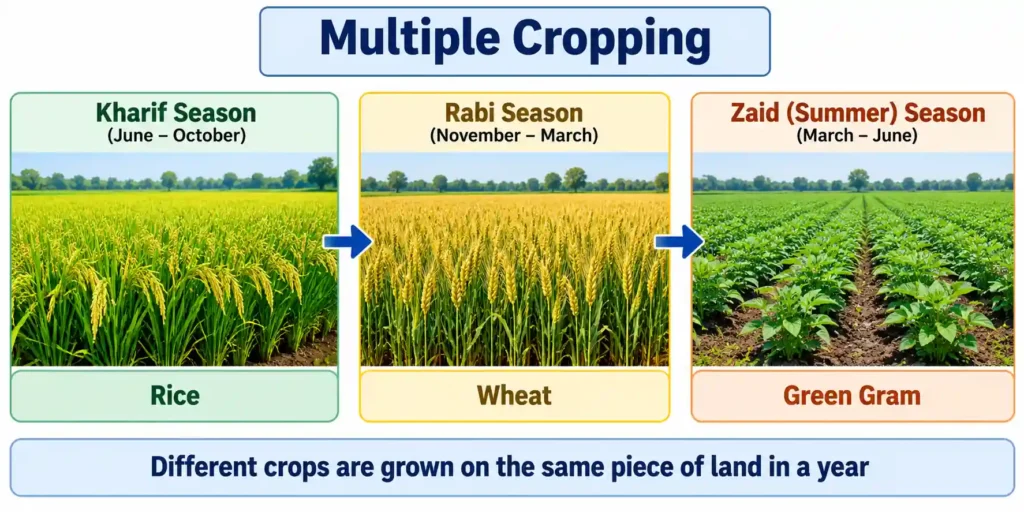
- Multiple Cropping is an intensive agricultural technique where farmers cultivate two or more crops on the same piece of land within a single calendar year. It stands in direct contrast to the ecological uniformity of monocropping.
- Often termed intensive cropping, this strategy aims to maximize food production per unit of land and time.
- Systemic Scope: Multiple cropping serves as an umbrella category. It encompasses diverse advanced spatial and temporal arrangements, including relay cropping, mixed cropping, and intercropping.
Resource and Environmental Dependencies
- Resource Matrix: Transitioning to an intensive system is only possible when a specific mix of farm resources is available: reliable irrigation, abundant farm labor, adequate working capital, and nutrient-rich land.
- Risk Mitigation: This method spreads production risk across multiple species. It acts as an agronomic insurance policy, reducing the likelihood of complete crop failure brought on by unpredictable weather conditions or erratic rainfall.
- Agronomic Compatibility: The selection of component crops depends heavily on how well their growth cycles, resource demands, and canopy architectures complement one another. A classic structural example is growing wheat (Triticum aestivum) and gram (Cicer arietinum) simultaneously on the same piece of land.
Design Principles of an Intensive System
To build a successful multiple cropping or mixed cropping pattern, component crops must display distinct differences in resource extraction and phenology:
- Varying Maturity Times: Crops must have different growth durations to separate their peak nutrient and water demands.
- Varying Water Demands: The crops should demand different amounts of moisture, maximizing overall water-use efficiency (WUE).
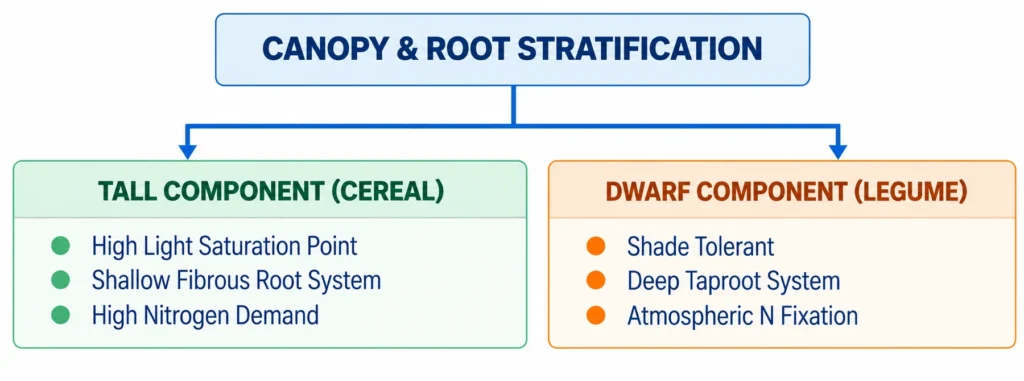
- Canopy Stratification: It is ideal to match one tall crop with one dwarf crop to optimize vertical solar radiation interception.
- Nutrient Stratification: The quantity of nutrients needed by one crop should be significantly lower than or complementary to the amount needed by another.
- Root Zone Stratification: One crop should feature a deep taproot architecture, while the other uses a shallow, fibrous root network. This ensures the plants extract water and minerals from entirely different soil layers.
Socioeconomic and Agronomic Advantages
1. Food Security and Revenue Maximization
- Mitigating Food Crises: Practiced on a broad scale, multiple cropping directly resolves national food shortages and provides year-round food and feed stability.
- Increased Total Productivity: It maximizes output per unit area, time, and biological input, leading to a steady increase in total farm income.
- Value-Chain Expansion: Continuous harvesting distributes labor and capital requirements evenly throughout the year, opening up on-farm micro-enterprises like seed processing, packaging, and localized marketing.
2. Cost Efficiencies and Operational Synchronization
- Input Cost Reduction: Cultivating multiple crops simultaneously reduces total input expenses per crop. It shares overhead costs for field labor, fertilizer applications, and irrigation cycles across multiple harvests.
- Residual Resource Exploitation: Succeeding crops efficiently utilize the residual effects of manures, fertilizers, moisture, and tillage left behind by the preceding crop.
3. Ecological Stability and Soil Restoration
- Biotic Regulation: Diverse plant canopies create natural biological barriers that reduce the spread of pests, pathogens, and weed growth.
- Soil Fertility Enhancement: Integrating leguminous components enables biological nitrogen fixation, naturally maintaining soil fertility and correcting nutrient imbalances.
- Soil Erosion Control: Maintaining a continuous, dense vegetative cover protects the soil surface from heavy rainfall impact, reducing topsoil erosion and preventing edaphic degradation.
Comparative Matrix: Cultivation Systems
|
Technical Dimension |
Monocropping |
Multiple Cropping |
|
Cropping Intensity |
Strictly fixed at 100%. |
Easily exceeds 200% to 300%. |
|
Water-Use Efficiency (WUE) |
Low; heavy evaporation from bare soil. |
High; optimized transpiration via dense cover. |
|
Nitrogen Economy |
Relies entirely on synthetic chemical inputs. |
Leverages biological nitrogen fixation. |
|
Pest Dynamics |
High vulnerability; triggers pesticide treadmill. |
Low vulnerability; breaks pest life cycles. |
Systemic Disadvantages and Operational Vulnerabilities
While multiple cropping maximizes temporal land utilization, its intensive nature introduces specific agronomic, physical, and economic liabilities if managed unscientifically.

1. Rapid Nutrient Exhaustion and Soil Fatigue
- Nutrient Depletion Matrix: Continuous cropping places immense pressure on the soil’s nutrient reserves. If Integrated Nutrient Management (INM) and proper soil stewardship are not maintained, baseline soil fertility and land productivity collapse rapidly.
- Micronutrient Mining: The high frequency of harvesting can deplete both macro-nutrients (N, P, K) and critical trace elements (such as Zn, Fe, B, and Mn), leading to severe soil fatigue.
2. Soil Structural Degradation
- Compaction and Aerion Loss: Constant cultivation, seedbed preparation, and continuous irrigation cycles can degrade the physical structure of the soil.
- Hardpan Formation: Frequent irrigation without adequate drying phases alters soil aggregate stability. This can cause surface crusting, subsoil compaction, and the formation of a dense tillage pan that restricts root growth.
3. Complex Biotic Stress Management
- The Continuous Green Bridge: Controlling pests, pathogens, and weeds becomes highly complex in a multi-species environment. The constant presence of plant tissue creates a “green bridge” that supports pest survival across seasons. If a pest population cannot thrive on the primary crop, it can transition to a secondary component crop and multiply.
- Weed Control Obstacles: Applying chemical weedicides is difficult because a herbicide designed to kill weeds in a narrow-leaf monocot crop (like wheat) can be phytotoxic to an intercropped broad-leaf dicot legume (like chickpea).
4. Structural Barriers to Farm Mechanisation
- Technological Alignment Lag: Because multiple cropping often relies on intricate row arrangements and traditional hand-planting, it is difficult to integrate modern mechanisation of agriculture.
- Machinery Restrictions: Standard large-scale tractors, boom sprayers, and combine harvesters cannot navigate fields with mixed crop heights and varied row spacings. This creates a technical gap that keeps the system dependent on labor-intensive, manual methods.
Strategic Management to Mitigate Systemic Risks
To counter the inherent disadvantages of intensive multiple cropping, agricultural planners use three primary management tools:
- Precision Nutrient Component Tracking: Using regular soil testing to apply targeted fertilizers that match the specific uptake rates of each component crop.
- Pressurized Micro-Irrigation Alterations: Replacing flood irrigation with automated drip or sprinkler systems to protect soil structure, maintain soil aeration, and prevent waterlogging.
- Integrated Pest Management (IPM): Mixing chemical controls with biological strategies (such as trap cropping and releasing natural predators) to break the pest carryover cycle.
Intercropping UPSC Agriculture Optional
Conceptual Framework of Intercropping
Definition and Core Architecture
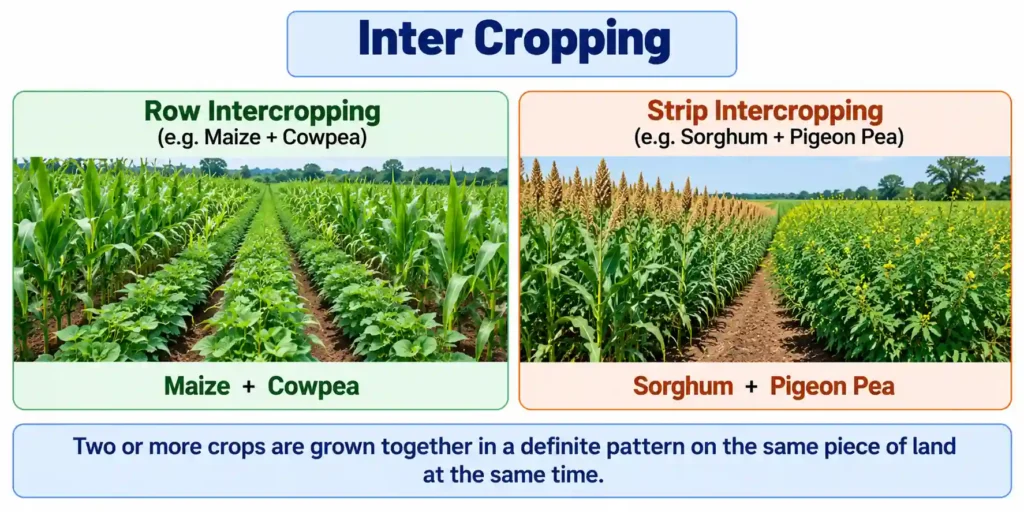
- Intercropping is an advanced agricultural method designed to optimize spatial cropping intensity by planting two or more crops simultaneously on a specific plot of land in a distinct, structured row pattern.
- Unlike mixed cropping, intercropping relies on a predefined spatial row geometry—such as 1:1, 1:2, or 2:1—where the primary crop occupies specific rows and the subsidiary or component crops are organized in the remaining rows.

Strategic Objectives
- Inter-Row Spatial Exploitation: The primary goal of this technique is to maximize the utilization of radiant energy, horizontal space, and soil volume within the rows of the main crop, increasing total grain yield per unit area.
- Smallholder Risk Management: It serves as a foundational risk-mitigation tool for small and marginal farmers, particularly those operating under rainfed agro-ecological conditions who depend entirely on erratic rainfall.
- Nutrient Gradient Optimization: Component crops are selected with distinct, non-overlapping nutrient needs. This ensures the best possible use of applied fertilizers and natural minerals across different root zones.
- Biotic Barriers: The row spatial layout acts as a physical barrier, preventing the rapid spread of specialized insect pests and host-specific fungal pathogens across the entire plant community.
Fundamental Principles of Intercropping Selection
To design an agronomically viable and highly profitable intercropping system, crop combinations must be selected according to strict physiological and ecological principles:
1. Spatiotemporal and Growth Complementarity
- Non-Competitive Coexistence: Component crops grown in tandem must exert complementary rather than competitive effects, maximizing positive interactions (facilitation) while minimizing resource crowding.
- Differential Growth Phenology: The subsidiary crop must feature a significantly shorter growth duration and fast-growing initial habits. This allows it to exploit resources during the main crop’s early, slow-growing vegetative phase. The subsidiary crop is harvested just as the main crop enters its peak growth stage.
2. Architectural and Canopy Stratification
- Erect vs. Cover Crop Pairing: Tall, erect-growing crops should be systematically intercropped with low-stature, dense cover crops like pulses.
- This multi-tiered arrangement provides three primary benefits:
- Forms a live mulch that drastically reduces weed population densities through shading.
- Minimizes topsoil erosion by reducing raindrop impact.
- Lowers direct water evaporation from the soil surface, boosting water-use efficiency (WUE).
3. Below-Ground Root Zone Decoupling
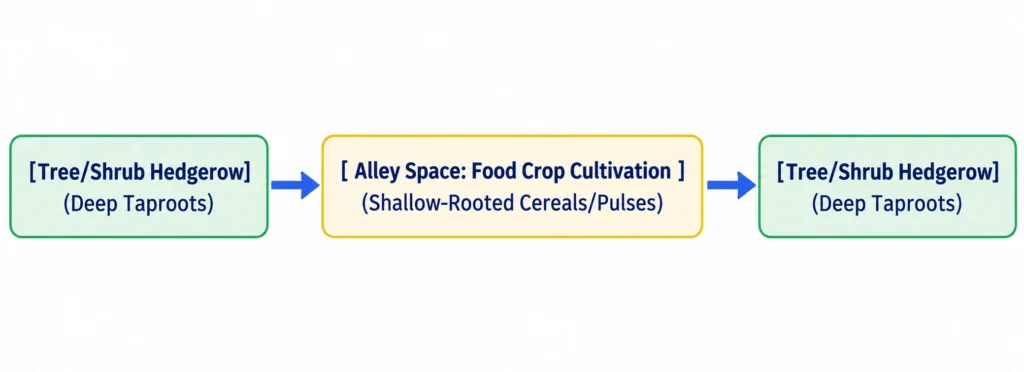
- Divergent Rooting Depths: The component crops must have completely different root depths (e.g., shallow, fibrous roots paired with deep taproots). This configuration prevents direct architectural competition for soil moisture, macro-nutrients, trace minerals, and root zone oxygen respiration.
4. Phytosanitary Isolation
- Dissimilar Pest Profiles: Component crops that host identical insect pests, fungal/bacterial pathogens, or nematodes must never be paired. Misalignment breaks the system’s natural ability to suppress disease cycles.
5. Operational and Economic Viability
- Management Simplicity: The planting layouts and crop management practices must remain simple, less time-consuming, and highly economical to encourage wide adoption by smallholders.
- Optimized Spacing: Each crop requires sufficient row and intra-row space to optimize cooperation, maximize light interception, and prevent structural crowding.
Agronomic Design Matrix for High-Yield Intercropping
|
Design Attribute |
Main Crop Characteristics |
Subsidiary (Component) Crop Characteristics |
|
Growth Habit |
Tall, erect growth habit, initial slow vegetative phase. |
Short, spreading or compact growth habit, rapid early coverage. |
|
Root Architecture |
Deep taproot system (extracts from lower profiles). |
Shallow, fibrous root system (extracts from topsoil). |
|
Nutrient Mandate |
High nitrogen/potassium demand (heavy feeder). |
Nitrogen-fixing capability (leguminous restorer). |
|
Duration Profile |
Long-duration maturation period (e.g., Sugarcane, Pigeonpea). |
Ultra-short-duration growth cycle (e.g., Mungbean, Cowpea). |
Socioeconomic and Ecological Dynamics of Intercropping Systems – UPSC Agriculture Optional
Socioeconomic and Ecological Advantages
Implementing a well-planned, geometrically aligned intercropping system provides substantial agronomic advantages over conventional monocultures, optimizing both economic returns and ecological stability.
1. Economic Security and Income Optimization
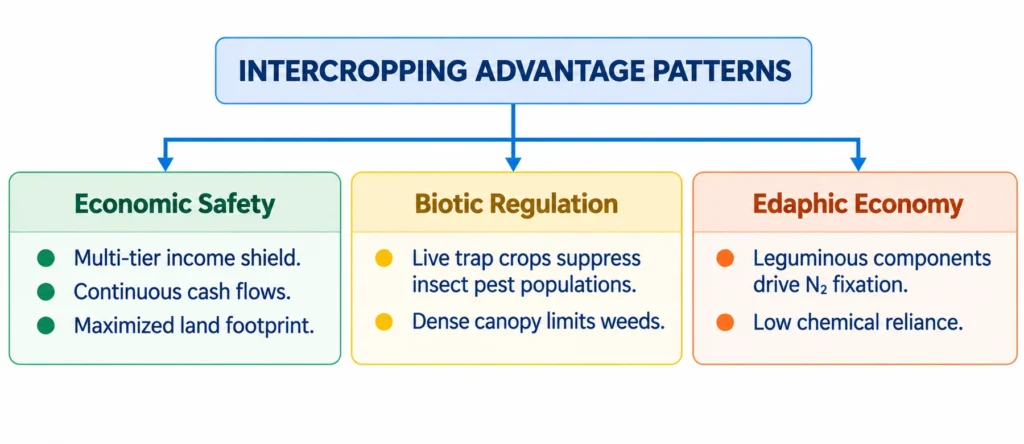
- Guaranteed Profit Margins: Intercropping functions as a spatial insurance mechanism. Even if the primary crop fails due to erratic monsoonal fluctuations or localized weather events, the secondary component crops offer stable yields, guaranteeing economic profits.
- Ergonomic Spatial Exploitation: Unlike monocropping layouts where substantial inter-row space is left unutilized, intercropping fills these gaps with economic crops, maximizing total biomass output per unit area.
2. Biological Plant Protection and Integrated Pest Management (IPM)
- The Trap Cropping Phenomenon: Component crops serve as natural defense barriers. They function as trap crops to intercept pests, act as physical repellents, or lure in beneficial predatory insects.
- Microclimatic Buffering: Tall primary structural crops offer protective canopy shade from excessive scorching solar radiation and act as micro-windbreaks.
- Reduced Input Expenditures: Enhanced biological pest management lowers the volume of synthetic chemical insecticides required, lowering cash overheads.
3. Edaphic Restoration and Nutrient Economy
- Rhizospheric Nitrogen Transfer: Integrating crops from the leguminous family enables biological nitrogen fixation. These species fix atmospheric dinitrogen (N₂) via Rhizobium symbioses, supplying nitrogen to the adjacent non-leguminous companion species.
- Reduced Fertilizer Dependence: Improving baseline soil fertility naturally through multi-species nutrient cycling reduces the application rates of expensive, synthetic chemical fertilizers.
4. Resource-Use Efficiency and Weed Suppression
- Optimized Environmental Captures: Distributing critical natural resources—such as water, soil minerals, and solar radiation—across multi-tiered canopies ensures high water-use efficiency (WUE) and maximum Photosynthetically Active Radiation (PAR) absorption.
- Competitive Weed Exclusion: Beneficial agricultural cultivars occupy empty inter-row spaces that would otherwise be taken over by aggressive weeds, optimizing weed management without relying entirely on chemical herbicides.
Technical Limitations and Operational Constraints
Despite high ecological benefits, scaling intercropping requires advanced farm planning and introduces unique operational challenges:
1. Barriers to Modern Farm Automation
- Unsuitable for Mechanized Farming: Standard automated tractors, mechanical seed drills, and combine harvesters cannot navigate fields with mixed canopy heights, variable row layouts, and differing maturity schedules.
2. Elevated Labor and Management Dynamics
- Time-Intensive Management: This technique requires constant monitoring and demands highly intensive, skilled agronomic management.
- Surging Labor Costs: Inter-row planting, selective manual weeding, and individual staggered harvesting reduce mechanical efficiency, which can increase manual labor expenses.
3. Complex Architectural Planning
- Strict Design Imperatives: Success relies on advanced planning, including careful cultivar selection, matching growth speed traits, and establishing proper row spacing. Any spatial mismatch can lead to resource crowding and crop failure.
4. Input Application Incompatibilities
- Differential Input Responsiveness: Component crops respond differently to irrigation frequencies and chemical fertilizer formulations. As a result, large-scale top-dressing or broad flood irrigation cannot be used effectively without causing nutrient luxury consumption in one crop or phytotoxic damage in the other.
Management Trade-offs: Resource Allocation
|
Systemic Attribute |
Monocropping System |
Intercropping System |
|
Mechanization Adaptability |
Extremely High; fully compatible with automated implements. |
Low; requires high manual labor or customized narrow-track machinery. |
|
Management Demand |
Low; single input application loop across entire acreage. |
High; demands precise planning and skilled monitoring. |
|
Weed Control Strategy |
High dependency on chemical herbicides. |
Relies on biological canopy cover and mechanical hand-weeding. |
|
Nutrient Sourcing |
High reliance on synthetic NPK compounds. |
Utilizes biological nitrogen fixation and varied root zones. |
Types of Intercropping

Alley Cropping

Conceptual Framework of Alley Cropping
Definition and Architecture
- Alley Cropping (scientifically designated as hedgerow intercropping) is an agroforestry system that involves the cultivation of food crops in the “alleys” formed by parallel rows of fast-growing, deeply rooted trees or woody shrubs.
- It sets up a dynamic, multi-tier layout where rows of woody perennials and seasonal agricultural crops alternate across the same piece of land.
- Canopy Management: The woody companion species are routinely pruned or coppiced before the crop cycle begins. This vital practice reduces direct sunlight shading and provides green manure mulch for the adjacent food crops.
Strategic Objectives and Environmental Benefits
1. Topsoil Stabilization and Erosion Control
- Sloped Land Preservation: When established along contour lines in sloped or hilly regions, alley cropping acts as a vegetative barrier. It slows down surface runoff and reduces topsoil erosion, which directly improves regional water quality.
- Windbreak Dynamics: The physical presence of hedge rows decreases wind speeds, creating a stable microclimate that reduces crop transpiration and maximizes water-use efficiency (WUE).
2. Biomass Enrichment and Microclimatic Buffer
- Organic Matter Cycle: Pruning the hedgerows generates nutrient-rich green mulch. When this biomass decomposes, it adds organic matter to the soil, boosting overall soil fertility and structure.
- Shade Management: The strategic shade cast by the taller species protects sensitive understory food crops from extreme heat stress.
3. Nutrient Safety Net and Anti-Leaching Architecture
- The “Nutrient Pump” Mechanism: Soluble plant nutrients, particularly nitrates (NO₃⁻), easily leach past the shallow root zones of standard field crops. The deeper root networks of the hedgerow trees capture these lost nutrients from the subsoil, recycling them back to the surface topsoil through leaf drop and mulch decomposition.
- Groundwater Protection: This natural recycling process minimizes nitrogen leaching into the water table, keeping nearby drinking water supplies free from nitrate contamination.
4. Integrated Biotic and Weed Regulation
- Shade-Driven Weed Control: The dense canopy cover and heavy surface mulch block sunlight from reaching the soil, which naturally suppresses weed seed germination.
- Low Chemical Input Dependence: Improved nutrient cycling and biological weed suppression reduce the farm’s reliance on expensive synthetic chemical fertilizers and industrial pesticides.
Systemic Limitations and Operational Constraints
|
Constraint Category |
Operational and Agronomic Realities |
|
High Management Demands |
Requires highly intensive management, skilled labor, and specialized pruning equipment to keep the woody perennials in check. |
|
Biophysical Competition |
If the system layout is poorly planned, trees and companion crops will directly compete for sunlight, soil moisture, and vital macro-nutrients. |
|
Chemical Drift Hazards |
Standard herbicide drift from treating field crops can severely damage or kill the companion tree species. |
|
Pesticide Complexity |
Splitting applications between standard food crops and woody species complicates insect pest management. |
|
Dynamic Alley Shifts |
As the trees mature, their roots and canopies expand, forcing farmers to change the type of crops grown in the alleys over time. |
|
Market Infrastructure Gaps |
Success often relies on selling timber, fodder, or fruit from the trees. If local markets lack the infrastructure to handle these products, farmers lose out on additional revenue. |
Relay Intercropping (Overlapping Cropping)
Definition and Core Architecture
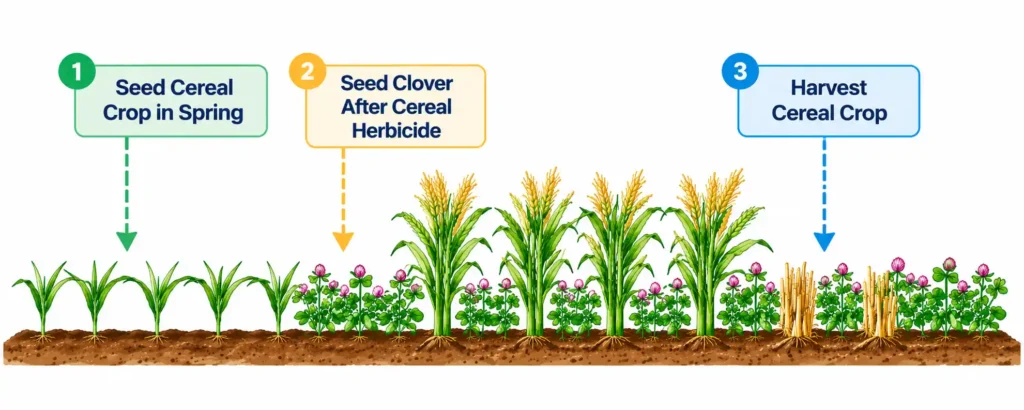
- Relay Intercropping (scientifically designated as overlapping cropping) is an intensive spatial and temporal cropping arrangement where a succeeding crop is planted or seeded directly into a standing primary crop well before the primary crop reaches physiological maturity and is harvested.
- The Relay Analogy: Mimicking a athletic relay race where the baton is passed while both runners are in motion, the life cycles of the component crops overlap for a critical portion of their developmental phases.

Regional Nomenclature and Crop Models
- Traditional Systems: In India, this practice is traditionally known as Paira cultivation in West Bengal and Odisha, and Uttera cultivation in Madhya Pradesh and Chhattisgarh. A classic model involves broadcasting pulses like Lathyrus sativus (Khesari dal) or Linum usitatissimum (Linseed) into standing Oryza sativa (Rice) fields just prior to harvest.
- Modern Intensive Sequences: A high-yield commercial sequence includes the sequential overlapping pattern of Rice – Cauliflower – Onion – Summer gourds.
Strategic Systemic Benefits
1. Resource Conflict Resolution
- Sowing Time Optimization: Relay cropping resolves timeline bottlenecks by eliminating the field preparation lag between crops. This bypasses structural delays in seedbed preparation, ensuring optimal sowing windows for winter crops.
- Input Efficiency: The succeeding crop effectively scavenges residual soil moisture and leftover fertilizer applications from the primary crop, optimizing input utilization without wastage.
2. Risk Management and Commodity Stabilization
- Income Diversification: By avoiding dependence on a single harvest, this multi-tiered system reduces financial vulnerability to commodity market price crashes.
- Biotic Barriers: Growing different crop families together changes insect vector paths and alters microclimates. This mechanical disruption slows down the spread of specialized insect pests and plant diseases.
3. Edaphic Restoration and Erosion Control
- Nitrogen Economy: Incorporating legumes into the relay sequence enables symbiotic nitrogen fixation, which builds soil fertility and supports the nutrition of companion crops.
- Surface Stabilization: The continuous, overlapping vegetative canopy provides excellent soil cover, preventing wind and water erosion while conserving soil structure.
Socioeconomic Evaluation of Relay Intercropping
Advantages
- Higher Profitability: Maximizes net financial returns per unit area by condensing multiple harvest windows into a single calendar year.
- Amortized Overhead: Reduces fixed costs for land and heavy machinery, as multiple crop rotations share the same field footprint.
- Labor Distribution: Distributes rural labor demands evenly throughout the year, preventing seasonal underemployment.
Disadvantages and Soil Constraints
- Soil Structural Limits: The system is completely unadaptable to heavy clay soils, poorly drained fields, or hyper-arid terrain. Heavy clays hinder proper seed-to-soil contact during broadcasting, causing poor seedling establishment.
- Biotic Carryover Hazards: The continuous presence of living host plants creates a permanent green bridge. If a severe disease outbreak occurs, pathogens and nematodes can easily carry over to the next crop, causing damage.
- Frost Vulnerability: In northern regions, some late-seeded relay crops can be damaged by early fall frost before they mature.
- Machinery and Turnaround Pressures: Managing overlapping rows requires specialized, narrow-profile machinery and precise timing, which can increase production costs per unit if operations are delayed.
Row Intercropping
Conceptual Framework of Row Intercropping
Definition and Architecture
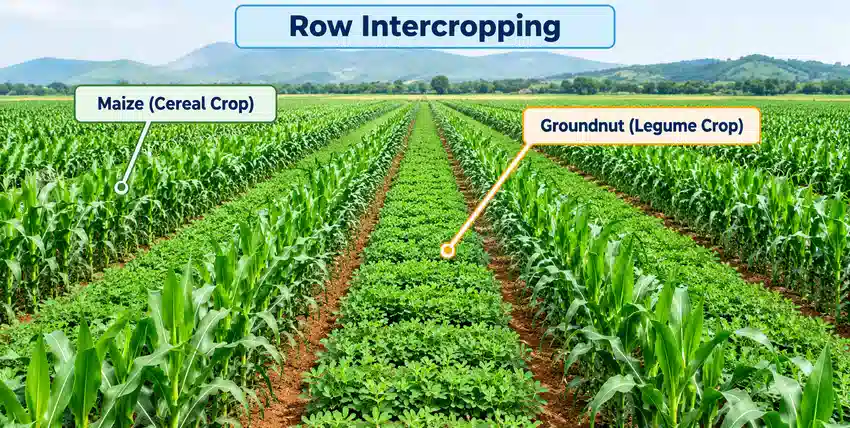
- Row Intercropping is an advanced spatial management system where two or more crops are grown simultaneously on the same plot of land, with at least one crop planted in a distinct, numerically defined row pattern.
- It differs from mixed intercropping (where seeds are blended and broadcast with no row structure) by imposing a strict, predictable row geometry. Common spatial layouts include 1:1, 1:2, 1:3, or 2:2 row configurations.
- Systemic Goal: This technique balances the competition for solar radiation, soil nutrients, and moisture by maintaining an explicit physical separation between the component species.
Strategic Spatial Ratios in Indian Agriculture
- Wheat + Mustard System: Planted in a standard 9:1 spatial row configuration (9 rows of Triticum aestivum alternating with 1 row of Brassica juncea).
- Chickpea + Mustard System: Managed in a 4:1 or 6:1 row matrix to balance light penetration and nutrient extraction.
- Sorghum + Pigeonpea System: Sown in a 2:1 ratio, pairing an early-maturing, tall C4 cereal with a slow-growing, long-duration C3 legume.
Agronomic and Physiological Principles
1. Canopy Stratification and Light Interception
- Ideotypic Complementarity: Row layouts pair tall, erect-growing crops with shorter, shade-tolerant understory crops. This vertical arrangement maximizes the absorption of Photosynthetically Active Radiation (PAR).
- Microclimate Modification: The taller rows act as windbreaks, lowering boundary layer wind speeds. This reduces evaporation from the bare soil surface and enhances overall water-use efficiency (WUE).
2. Below-Ground Rhizospheric Separation
- Root Architecture Stratification: By grouping plants into separate rows, their root zones are staggered vertically. Deep taproot systems (e.g., Pigeonpea) draw moisture from lower subsoil horizons, while shallow, fibrous root networks (e.g., Sorghum) pull nutrients from the topsoil.
- Nutrient Gradient Management: This spatial separation prevents root crowding and allows for a targeted Integrated Nutrient Management (INM) approach within specific crop rows.
3. Phytosanitary Interruption
- Physical Pest Barriers: Continuous monoculture rows allow host-specific insects and fungal pathogens to spread rapidly. Row intercropping breaks this continuity by inserting non-host plant rows, which disrupt insect flight patterns and trap fungal spores.
Socioeconomic Evaluation of Row Intercropping
Advantages
- Optimized Land Use Efficiency: Substantially increases the Land Equivalent Ratio (LER), proving that structured row intercrops utilize land resources better than individual sole crops.
- Mechanization Compatibility: Unlike mixed or relay cropping, row configurations can be aligned with the wheel track widths of small tractors, allowing for semi-automated sowing, intercultural operations, and targeted weeding.
- Yield and Economic Buffer: Protects smallholders from total crop failure due to erratic weather, while generating diverse seasonal income streams.
Disadvantages and Management Constraints
- Precision Sowing Requirements: Requires meticulous row marking and precise tractor calibration during planting, which increases initial labor inputs.
- Harvesting Discrepancies: Harvesting mechanical crops can be difficult if maturity dates overlap but the heights vary, often requiring selective manual harvesting.
- Shading Suppression: If the rows are spaced too closely or aligned poorly relative to the solar path, the faster-growing crop can shade out and suppress the subsidiary crop.
Strip Intercropping
Conceptual Framework of Strip Intercropping
Definition and Structural Architecture
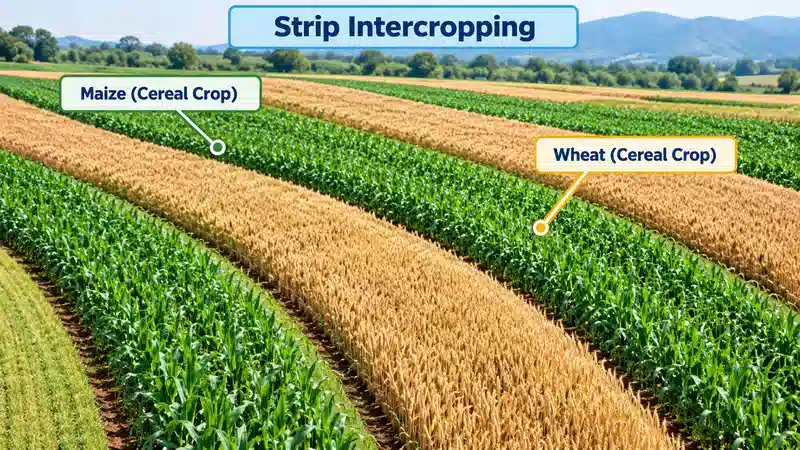
- Strip Intercropping is an advanced spatial management system where two or more crops are grown simultaneously in strips wide enough to permit independent mechanical cultivation (such as tractor-driven tilling, spraying, and harvesting) yet close enough to interact agronomically and ecologically.
- It differs from standard row intercropping because the component crops are not restricted to individual, single alternating rows. Instead, they are organized into distinct, multi-row blocks or bands that repeat across the field landscape.
Strategic Spatial Designs in Modern Agriculture
- Maize + Soybean System: Managed in a 4:6 multi-row strip matrix to optimize solar light capture while permitting small-combine harvesting.
- Cotton + Groundnut System: Sown in wide alternating strips to balance a deep-rooted, tall cash crop with a low-stature, nitrogen-fixing soil cover legume.
- Cereal + Forage Crop Strip Layout: Used to systematically integrate livestock feed demands into commercial grain farms.
Agronomic and Physiological Principles
1. Mechanisation Compatibility and Input Autonomy
- Machinery Synchronization: The width of each strip is meticulously calibrated to match the exact working width of local farm machinery (e.g., boom sprayers, seed drills, and harvesters). This resolves the primary limitation of standard row intercropping.
- Targeted Input Management: Because crops are grouped into distinct bands, farmers can apply specialized chemical fertilizers or target weedicides to one strip without causing phytotoxic drift or damage to the adjacent crop family.
2. Microclimatic and Boundary Modifications
- The Strip Border Effect: The rows located at the edges of each strip experience altered light penetration and air movement. Tall crops on the edge of a strip capture high-intensity lateral solar radiation, which enhances photosynthesis and drives up grain yield.
- Wind and Water Erosion Protection: Alternating tall, stiff-stemmed crops with low-stature, dense cover crops across slopes creates natural barriers. These vegetative breaks disrupt surface water runoff and lower boundary wind speeds, reducing soil erosion.
3. Below-Ground Resource Partitioning
- Rhizosphere Spatial Separation: While the core rows of each strip feed independently, the root networks along the borders overlap. This layout allows for resource complementarity, where deep taproots and shallow fibrous root networks extract moisture and minerals from distinct soil horizons without crowding.
Socioeconomic Evaluation of Strip Intercropping
Advantages
- High Mechanisation Adaptability: Fully compatible with modern, mechanized agricultural equipment, allowing large-scale commercial farms to improve their cropping intensity.
- Risk Diversification: Spreads production risks across multiple crop families, safeguarding farm income from sudden crop-specific pest outbreaks or market price volatility.
- Enhanced Factor Productivity: Maximizes the Land Equivalent Ratio (LER) by leveraging beneficial border interactions while minimizing management and operational complications.
Disadvantages and Systemic Constraints
- Complex Landscape Planning: Requires precise field design and exact machinery calibration during matching operations, which increases initial planning labor.
- Border Competition Management: If the component strips are poorly aligned or too narrow, the faster-growing tall crop can shade out and suppress the vegetative growth of the shorter crop along the borders.
- Staggered Operational Timelines: Managing varying planting, weeding, and harvesting windows across alternating strips requires meticulous field scheduling.
Multi-Storey Cropping (Multi-Tier Cropping)
Conceptual Framework of Multi-Storey Cropping
Definition and Structural Architecture
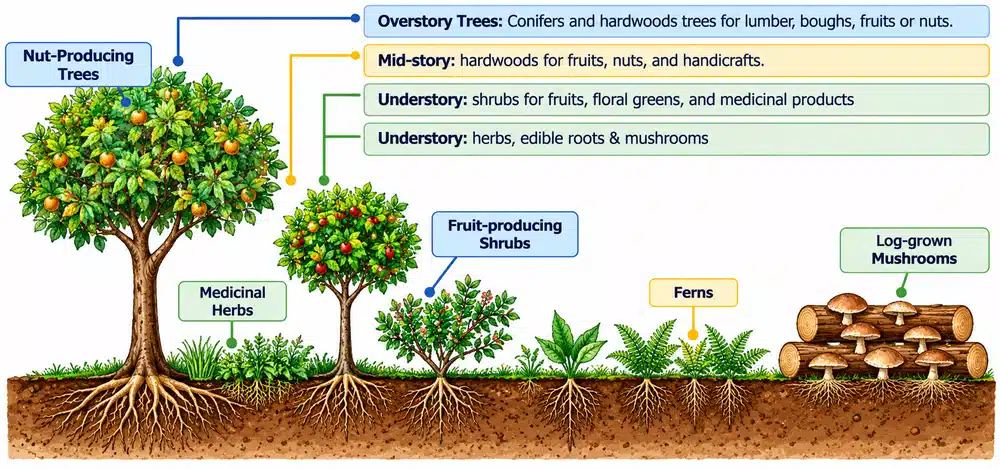
- Multi-Storey Cropping (scientifically designated as multi-tier cropping or forest farming) is the process of cultivating more than two crops simultaneously on the same plot of land, where the component species feature distinctly varying canopy heights.
- This intensive agro-ecosystem sets up a multi-layered vertical canopy. An overstory of woody trees or plantation crops provides a structured microclimate for an understory of specialized agronomic crops, medicinal plants, or pastures.
- Spatial Engineering: The system is planned with sufficient, scientifically calibrated spacing between the overstory trees. This layout ensures that the understory forage or field crops receive enough sunlight to pass their individual light saturation points.

Core Architectural and Agronomic Features
1. Ideotypic Diversity and Multi-Tier Combinations
- Success relies on pairing crops with diverse growth habits, root depths, and crop durations.
- Classic Plantation Model: Highly effective in commercial plantation zones featuring coconut (Cocos nucifera), arecanut (Areca catechu), cashew (Anacardium occidentale), and coffee (Coffea spp.). A standard four-tier combination includes Coconut + Black Pepper + Cocoa + Pineapple.
- Olericultural Models: Short-duration multi-tier systems can be engineered using combinations of coriander (Coriandrum sativum), radish (Raphanus sativus), beetroot (Beta vulgaris), cluster bean (Cyamopsis tetragonoloba), and cowpea (Vigna unguiculata).
2. Diversified Output Matrix
- Unlike simple grain double-cropping, a multi-storey configuration delivers a continuous, diverse output stream from the same plot of land. This matrix includes:
- Food & Nutrition: Fruits, spices, tubers, and vegetables.
- Socioeconomic By-products: Medicinals, ornamentals, fuelwood, high-protein livestock fodder, and organic green fertilizer.
- Ecological Services: Enhanced wildlife habitat and microclimate buffering.
Fundamental Principles of the System
- Ecological Niche Differentiation: Selecting companion species based on non-overlapping requirements for light absorption and root zone exploration to minimize inter-species competition.
- Maximized Factor Productivity: Improving overall system productivity per unit area by increasing cropping intensity both horizontally and vertically.
- Optimized Resource Efficiency: Achieving high water-use efficiency (WUE) and nutritional economy by utilizing the residual inputs and leaf litter of the overstory component.
- Intensive, Waste-Free Input Use: Maximizing the return on investment for irrigation networks and applied nutrients, as inputs serve multiple root zones simultaneously.
- Long-Term Resource Sustainability: Protecting the agricultural environment by mimicking the stable nutrient-cycling pathways of natural forest ecosystems.
Socioeconomic and Ecological Advantages
Implementing a structured multi-storey cropping system provides distinct biophysical and financial advantages, making it an excellent design for smallholders operating under high land constraints.
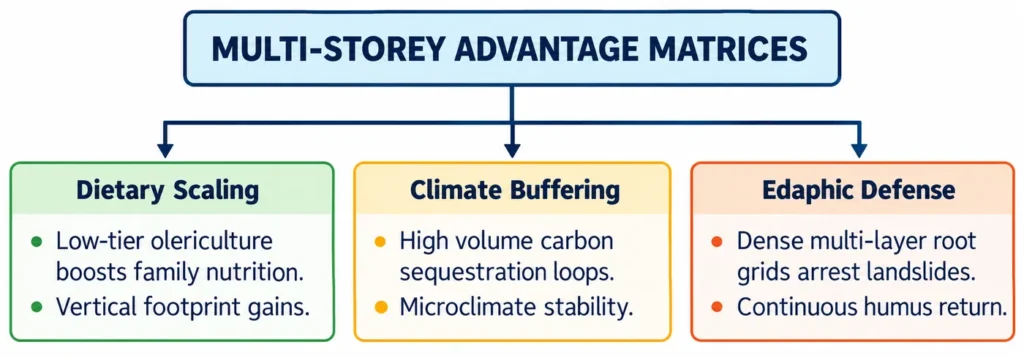
1. Micro-Intensive Food Security and Dietary Diversity
- Nutritional Intensification: Smallholder families can easily integrate intensive vegetable production within the lowest vertical tier. This addition directly enhances household dietary diversity and counters local hidden hunger.
- Optimized Land-Use Efficiency: In geographic zones where horizontal land expansion is blocked by demographic pressures or ecological boundaries, multi-storey systems maximize spatial utilization by expanding vertically.
- Small-Acreage Yield Maximization: Layering high-value fruit trees over short-duration vegetables allows small, fragmented land holdings to produce high aggregated yields.
2. Financial Scaling and Risk Insulation
- Surging Net Returns: This system significantly increases income per unit area. The blended production of multiple stratified species yields a higher economic return than a monoculture of identical proportions.
- Biotic Pest Buffering: Mixed multi-level ecosystems feature much lower pest and disease infestation rates than conventional, fragile monocultures.
- Yield Shock Mitigation: Spreading production across perennial trees, semi-perennial shrubs, and annual understory crops reduces overall yield risk, protecting the farm’s financial baseline from sudden market or environmental shocks.
3. Climate Resilience and Ecological Services
- Carbon Sequestration Cap: Multi-storied agroforestry systems sequester far more atmospheric carbon (CO2) than pure crop stands, serving as an effective tool for climate change mitigation.
- Edaphic Health Restoration: The constant return of leaf litter from the overstory components increases soil organic carbon (SOC) content, which enhances overall soil fertility and stimulates beneficial soil biology.
- Disaster Mitigation: The dense, multi-layered root networks and canopy covers shield the ground from extreme weather hazards. They reduce the destructive impacts of high light intensity, heavy monsoonal rainfall, topsoil erosion, flash flooding, and landslides.
- Natural Resource Optimization: This architecture ensures the best possible use of natural resources—including soil minerals, deep water reserves, seasonal sunlight, and applied nutrients—without wastage.
Technical Disadvantages and Systemic Limitations
Despite its high ecological value, managing a multi-storey farm introduces complex biophysical trade-offs and operational challenges:
1. Intramural Resource Competition
- Yield Suppression Risks: High competition for macro-nutrients, available soil moisture, and direct sunlight can lower the productivity of individual components. This is especially challenging when attempting to introduce sensitive vegetables into established, dense overstory systems without widening tree spacings.
2. Wildlife Depredation and Crop Protection Vulnerabilities
- Wild Animal Damage: Unlike structural, walled home gardens, multi-storey layouts established in forest edges or open agroforestry tracts are highly vulnerable to damage from wild animals. Protecting fragile understory vegetables from browsing herbivores remains difficult.
3. Cultural and Climatic Erosion of the System
- Systemic Technological Decay: While multiple regions historically relied on indigenous vegetable production within multi-storey systems, this sustainable practice is currently fading. The decline is driven by shifting agricultural modernizations, rural migration, labor shortages, and changing macro-climatic conditions.
Agro-Ecological System Comparison
|
Metric |
Monoculture System |
Multi-Storey System |
|
Carbon Sequestration Capacity |
Minimal; temporary seasonal storage. |
Exceptionally High; long-term woody biomass storage. |
|
Microclimate Vulnerability |
High; exposed to thermal shocks and wind damage. |
Low; buffered by structural canopy physics. |
|
Pest Infestation Dynamics |
High; requires intensive pesticide applications. |
Low; regulated by natural biological balances. |
|
Nutrient Mining Risk |
High; occurs uniformly within a single soil layer. |
Low; balanced across deep and shallow root zones. |
Ratoon Cropping (Stubble Cropping) – UPSC Agriculture Optional
Conceptual Framework of Ratoon Cropping
Definition and Architecture
- Ratoon Cropping (scientifically designated as stubble cropping) is an intensive agricultural cultivation system where a subsequent crop is raised not from fresh seed or vegetative cuttings, but from the regrowth of stubble, root systems, or basal buds left in the field after harvesting the primary plant crop.
- Physiological Limit: This method cannot be sustained indefinitely. Crop yield, tillering capacity, and overall quality decrease systematically with each subsequent cycle due to accumulation of systemic diseases and progressive depletion of carbohydrate reserves in the stubble.
- Commercial Longevity: In commercial sugarcane (Saccharum officinarum) production, standard agronomic practice permits a maximum of two to three ratooning cycles before the field must be cleared and replanted with fresh sets.

Agronomic Spectrum: Suitable Crops and Industrial Utility
While sugarcane remains the global reference model, ratooning is utilized across diverse crop classifications to maximize temporal efficiency:
- Staple and Cash Crops: Highly viable in plantation systems like banana (Musa paradisiaca) and pineapple (Ananas comosus), alongside field crops like cotton (Gossypium spp.), sorghum (Sorghum bicolor), pigeonpea (Cajanus cajan), rice (Oryza sativa), and pearl millet (Pennisetum glaucum).
- Industrial and Bio-Pharma Sectors: Widely employed on aromatic plants like mint (Mentha spp.), industrial fiber crops like ramie (Boehmeria nivea), and plants grown for essential oils or pharmaceuticals.
- The Guayule Model: The woody desert shrub guayule (Parthenium argentatum)—a vital substitute for natural rubber—is harvested for the first time at age two, then ratooned every spring until a final destructive harvest of both tops and roots is completed.
Socioeconomic and Agronomic Advantages
1. Early Phenological Maturation
- Time Conservation: Ratoon crops bypass the germination and early vegetative development phases. As a result, they mature sooner in the season—typically by about 1.5 months—allowing farmers to optimize land-use rotation.
- Industrial Synchronization: For sugarcane processing, early maturation lengthens the sugar mill’s actual seasonal crushing window, maximizing industrial throughput and processing efficiency.
2. Drastic Input Cost Reductions
- Resource Optimization: Ratooning eliminates the high input costs linked to primary field preparation, preliminary irrigation cycles, and seed-cane procurement (which constitutes a massive share of initial planting outlays).
3. Allied Agricultural and Bio-Industrial Potential
- High-Value Forage: In specific geographic pockets, short-term sugarcane ratoon crops are grown strictly to produce high-quality green fodder for dairy cattle.
- Genetic Preservation: Combined with precise plant protection protocols, multiple ratooning preserves the genetic purity of elite varieties and genetically modified plants over extended periods by avoiding breeding segregations.
- Molecular Farming Engine: Sugarcane is a prime host for molecular farming (synthesizing value-added bio-industrial compounds) due to its superior C4 photosynthetic capacity, high soluble compound storage, rapid metabolic transformation loops, and secure vegetative propagation.
Technical Disadvantages and Systemic Bottlenecks
|
Operational/Agronomic Constraint |
Biophysical and Economic Manifestations |
|
Elevated Nitrogen Demand |
Requires a significantly higher application of nitrogenous fertilizer to stimulate dormant axillary buds and build early biomass. |
|
Yield Deterioration & Neglect |
Baseline yields are typically lower than the primary plant crop. This lower return causes widespread farmer neglect, leaving fields poorly managed. |
|
Biotic Stress Vulnerability |
Poorly managed ratoon fields turn into pest reservoirs, increasing vulnerability to destructive diseases (e.g., Red Rot) and stubble-boring insects. |
|
Unfavorable Flowering (Pith Formation) |
Specific varieties undergo premature flowering under cold winter nights. This triggers cane pithiness, delays harvesting, increases fiber content, and drops sugar recovery. |
Crop Rotation (Seasonal Crop Sequencing) – UPSC Agriculture Optional

Conceptual Framework of Crop Rotation
Definition and Core Architecture
- Crop Rotation is the agronomic practice of growing a planned sequence of diverse crop species on the same piece of land over successive growing seasons. It stands as a vital countermeasure to the soil-depleting nature of monocropping.
- Systemic Goal: This technique breaks up sequential agricultural cycles, ensuring that no single crop type strips the same set of macro- and micronutrients from the soil year after year.
- The Nitrogen Balance Model: A classic example involves rotating Corn (Zea mays) with Beans or pulses like Red Gram (Cajanus cajan). While corn is a heavy feeder that consumes a large amount of topsoil nitrogen, the subsequent bean crop uses symbiotic Rhizobium pathways to fix and return atmospheric nitrogen (\(\text{N}_{2}\)) to the soil matrix.
- Complex Long-Term Cycles: Multi-year rotations often combine diverse crop architectures and botanical families, such as a sequential rotation of Rice – Red Gram – Banana.
Fallowing and Agropastoral Integration
- Fallow Phases: A well-planned crop rotation system can include a strategic fallow period where no crops are planted at all. This leaves the bare ground time to naturally regenerate its moisture levels and organic matter before the next high-input season.
- Agropastoral Cycles: During these bare fallow or cover crop periods, many farmers integrate livestock farming into the cycle. Animals graze on the stubble or cover vegetation, dropping manure that accelerates nutrient cycling and improves the soil’s biological profile.
Multidimensional Benefits of Crop Rotation Systems
Implementing structured crop rotations provides substantial improvements across edaphic, biological, and mechanical farm dimensions:
1. Management of Biotic Stress and Resistance
- Breaking Pest Life Cycles: Many destructive insects, nematodes, and fungal pathogens target specific plant types. Alternating crop families across seasons starves these host-specific pests, preventing them from establishing dangerous populations.
- Mitigating Weed and Chemical Resistance: Continuous single-crop herbicide applications cause weeds to rapidly evolve resistance. Rotating crops changes the canopy shade levels and allows for different chemical weedicide groups, lowering the likelihood of developing resistant pests and weeds.
2. Preservation of Soil Biophysical Health
- Physical Architecture: Alternating shallow, fibrous-rooted crops with deep, woody taprooted species prevents subsoil compaction, aerates different soil depths, and preserves healthy soil physical structures.
- Chemical Profile: It maintains balanced nutrient distribution. Integrating deep-feeding crops draws minerals up from lower subsoil horizons, addressing shallow topsoil nutrient deficiencies.
- Biological Vitality: The change in root exudates encourages a highly diverse community of soil organisms, supporting long-term ecosystem sustainability.
3. Soil Conservation and Erosion Control
- Surface Protection: Incorporating trailing cover crops or close-growing pulses within the rotation grid creates a dense soil cover. This boundary shields the topsoil from raindrop impact and wind, slowing the rate of erosion in a field.
Socioeconomic and Ecological Dynamics of Crop Rotation – UPSC Agriculture Optional
Socioeconomic and Ecological Advantages
Implementing a scientifically scheduled crop rotation matrix provides structural improvements across edaphic, biological, and economic farm dimensions, serving as the cornerstone of sustainable agriculture.
1. Comprehensive Improvement of Soil Condition and Structure
- Edaphic Parameter Reconfiguration: Alternating diverse crop families—especially pairing shallow, fibrous-rooted cereals with deep-rooting tap-rooted legumes—improves the soil’s chemical, biological, and physical composition.
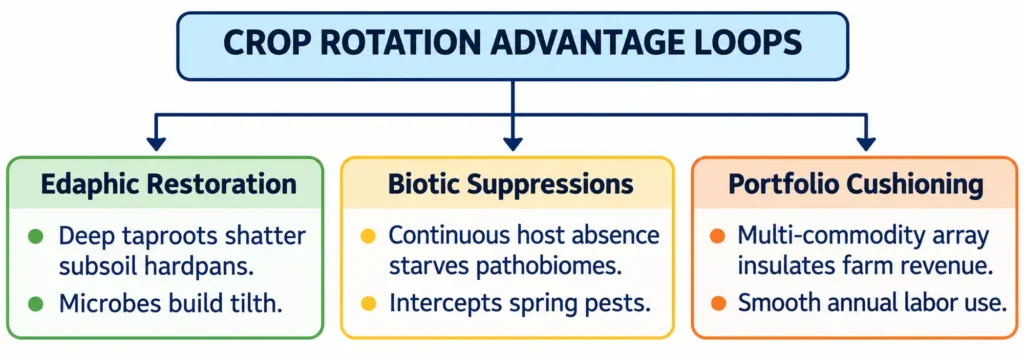
- Topsoil Deepening Mechanics: The physical expansion of roots at varied subterranean depths creates natural macro-pores. Deep diggers break up subsoil hardpans, pull up locked nutrients from lower horizons, and gradually deepen the fertile topsoil layer while increasing its organic matter and water-use efficiency (WUE).
2. Soil Conservation and Hydrological Safety
- Erosion Mitigation: Crop rotation builds up soil organic carbon (SOC), which stimulates beneficial soil microbes and strengthens soil tilth.
- Runoff Interception: The resulting stable soil aggregates hold their structure against water impact, significantly lowering surface runoff and topsoil loss.
- Water Quality Improvement: By reducing sediment erosion and stabilizing the field matrix, this practice minimizes the leaching of dissolved or sediment-attached agrochemicals into local water systems, preserving regional water quality.
3. Multi-Trophic Biotic Regulation and Resistance Management
- Disrupting Vector Life Cycles: Insect pests, host-specific weeds, and nematodes rely on continuous host presence to survive across seasons. Altering the plant family across sequential cycles cuts off their food supply and breaks their reproductive loops.
- Spring Insect Interception: When overwintering insect pupae reawaken in the spring looking for their primary food source, crop rotation forces them into contact with a non-host plant that they cannot feed on, suppressing the pest population.
- Phytosanitary Disease Prevention: Soil-borne plant pathogens often overwinter within infected crop residues, roots, and vines. Crop rotation helps to keep these diseases from returning the following year by starving out their pathobiome.
4. Labor Synchronization and Portfolio Diversification
- Workload Distribution: Because different crops have staggered planting, management, and harvesting windows, rotation distributes labor and equipment demands evenly throughout the year, reducing seasonal farm management bottlenecks.
- Market Risk Insulation: Cultivating diverse commodities increases the range of products for sale. This economic buffer protects farm revenue from single-crop market price crashes, preventing the risk of placing all agricultural assets into a single basket.
Technical Disadvantages and Systemic Risks
Despite its clear long-term sustainability benefits, adopting multi-species crop rotations introduces capital, management, and agro-climatic challenges:
1. High Upfront Capital and Economic Risks
- Surging Initial Investment: Transitioning away from monoculture demands a significant financial investment each season to buy different seed stocks and inputs for the changing crops.
- Machinery Capital Overheads: Different crop families often require specialized mechanical tools for planting, crop protection, and harvesting. This requirement can force farmers to invest in different types of machinery, driving up initial setup costs.
- Production Uncertainty: Agricultural success is never fully guaranteed. If a newly introduced rotational crop fails due to erratic weather, the farmer can lose the entire harvest, along with their high upfront capital investment.
2. Elevated Cognitive and Operational Skill Demands
- Information Overload: Managing multiple crops requires a broader range of abilities and detailed technical knowledge regarding the individual needs, pests, and growth habits of each species.
- Operational Skill Gaps: Running a diverse array of specialized machinery demands advanced technical training, requiring more time, learning effort, and management skill from the farming workforce.
3. Agro-Climatic and Edaphic Constraints
- Environmental Limitations: Specific geographic regions, local climates, and baseline soil types are naturally optimized for particular monocultures.
- Rotational Barriers: In hyper-arid desert zones or heavy, poorly drained clay basins, the extreme temperature and rigid soil profile cannot easily support the growth of alternative rotational crops, creating a permanent structural barrier to diversification.
Farming Systems: Concepts, Objectives, and Classifications – UPSC Agriculture Optional
Definition and Scope
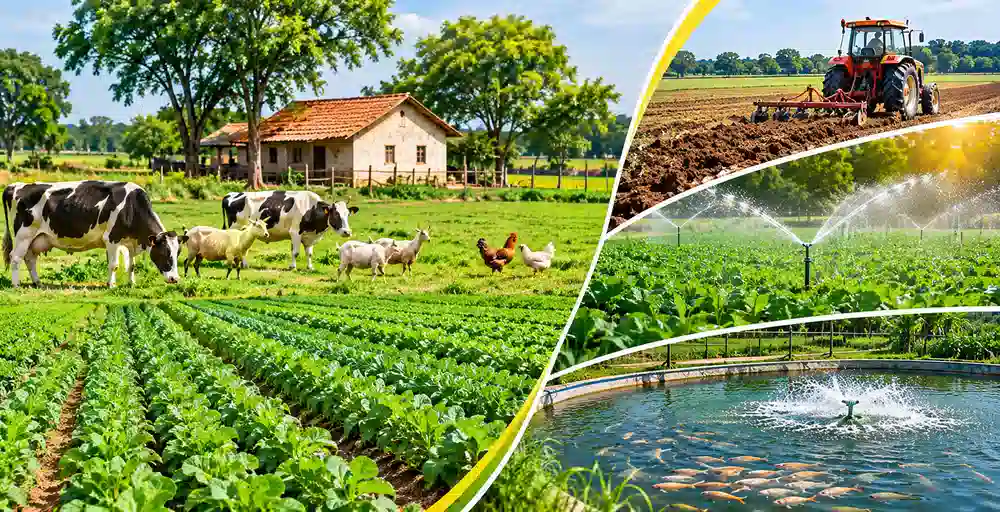
- Farming System refers to a diagnostic and holistic agricultural management enterprise. It integrates various human and material resources, cropping patterns, and alternative ventures based on specific agro-ecological conditions, economic priorities, and technological levels.
- Unlike a cropping system, which is limited to crop-soil-climate interactions, a farming system views the entire farm household as a coordinated unit. It optimizes the recycling of internal farm residues and balances energy pathways to maximize total factor productivity.
Strategic Objectives of Farming Systems in India
Designing a scientifically structured farming system is vital for India’s diverse, smallholder-dominated agrarian economy. The system operates around five primary objectives:
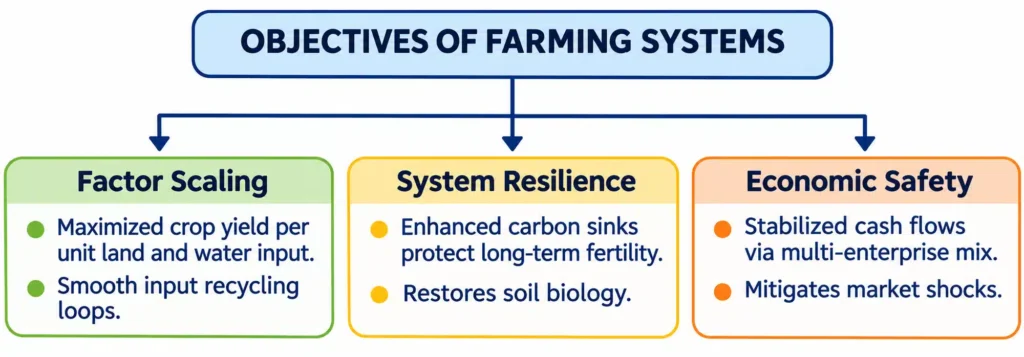
1. Maximising Productivity
- To achieve the highest possible crop yields and livestock output per unit area. This is done by optimizing resource-use efficiency across land, water, and agricultural inputs.
2. Ecological Sustainability
- To maintain long-term soil health, surface and groundwater quality, and regional biodiversity. This ensures continuous, sustainable farm output over time without depleting finite natural resources.
3. Economic Viability and Income Stability
- To secure rural financial stability and boost net farm income. This is achieved by reducing reliance on commercial inputs, cutting baseline operational costs, and diversifying income streams through complementary farm enterprises.
4. Systemic Risk Reduction
- To cushion the farm enterprise from climate anomalies (such as severe drought) and volatile market price drops. This risk insulation is achieved through diversified multi-cropping, crop-livestock integration, and adaptive cultivation methods.
5. Environmental Conservation
- To protect the agricultural boundary by selecting management practices that prevent soil erosion, conserve moisture, support pollinators, and lower the farm’s carbon footprint.
Classification Hierarchy of Farming Systems in India
Agricultural production frameworks are classified into macro-systems based on geographic location, access to capital, resource supply, and technology levels:

Deep-Dive: Subsistence Farming Systems
1. Intensive Subsistence Agriculture
- Demographic Push: Practiced primarily in regions experiencing extreme high population pressure on land.
- Operational Profile: Cultivators manage small, highly fragmented farm plots using high manual labor inputs. Due to severe land fragmentation, farmers continue to extract maximum output from limited fields because they lack alternative livelihoods.
- Input Dynamics: To push yields past normal limits, farmers apply high doses of biochemical inputs and rely heavily on supplemental irrigation.
- Cropping Profiles: The high thermal pattern and fertile alluvial soils permit the cultivation of more than one crop annually on the same plot (high cropping intensity). Rice (Oryza sativa) functions as the primary staple food crop. Other essential crops include wheat (Triticum aestivum), maize (Zea mays), pulses, and oilseeds.
2. Primitive Subsistence Agriculture
This division relies on traditional methods and contains two main types: nomadic herding and shifting cultivation.
Shifting Cultivation (Slash-and-Burn Agriculture)
- Geographical Limits: Practiced across heavily forested tropical ecosystems, including the Amazon basin, tropical Africa, Southeast Asia, and Northeast India. These regions feature high annual rainfall and rapid wild vegetation regrowth.
- The Slash-and-Burn Process: A piece of forest land is cleared by cutting down trees and burning the remaining trunks and branches. The resulting mineral-rich ash is mixed into the topsoil to act as a natural fertilizer.
- Agronomic Management: Seeds are planted directly into the ash-enriched soil layer. This primitive method does not involve structural ploughing or basic soil intercultural practices.
- Crop Matrix: Cultivators grow mixed crops like dry paddy, maize, millets, yam, potatoes, cassava, and vegetables for two to three years.
- Systemic Decay and Fallowing: The field is farmed for only a short period. As crop yields decrease due to heavy weed invasion, rapid topsoil erosion, and severe loss of soil fertility, the clearing is abandoned. The farmers then move to a fresh patch of pristine forest, repeating the cycle while the old plot enters a long fallow phase.
Ecological Assessment and Regional Nomenclature of Shifting Cultivation
Regional Delineation in India
This primitive system is practiced across multiple tribal and hilly pockets in India, recognized under distinct regional names:
- Jhum / Jhumming: Assam, Meghalaya, Mizoram, and Nagaland (Northeast India).
- Ponam: Kerala.
- Podu: Andhra Pradesh and Odisha.
- Bewar / Masha / Penda / Bera: Diverse tribal blocks of Madhya Pradesh.
Environmental Concerns and Deforestation Impacts
- The Sustainability Assessment: Modern agricultural experts and state planners discourage shifting cultivation due to its wasteful nature.
- Erosion Vulnerability: Clearing the forest canopy exposes fragile tropical soils to heavy monsoonal rain. This exposure accelerates topsoil erosion, strips out essential organic matter, and causes severe nutrient leaching.
- Deforestation Risks: The continuous clearing of new plots leads to large-scale deforestation, destroys native wildlife habitats, reduces regional carbon sinks, and causes severe agrobiodiversity loss. This disruption reduces the ecosystem’s capacity to handle the impacts of climate change.
Dryland, Terraced, and Commercial Farming Systems – UPSC Agriculture Optional
Rainfed and Moisture-Constrained Production Systems
Dry Agriculture (Dryland Farming)
- Physiological Resilience: Dry agriculture refers to the cultivation of crop cultivars specially adapted to withstand extreme aridity and prolonged moisture deficits without supplemental irrigation.
- Yield Deviations: When crop varieties typically grown under controlled irrigated networks are introduced into dry farming setups, their per hectare yields drop significantly.
- Cropping Intensity Limitations: Due to short monsoon periods and rapid soil drying, most of these fields can support only one crop during the year (monoculture).
- Geographical Core: This practice serves as the economic backbone for the drier zones of Rajasthan (Zone XIV), Gujarat (Zone XIII), and Madhya Pradesh (Zone VIII).
Terrace Cultivation (Horticultural Engineering)
- Topographical Adaptation: Practiced exclusively on sloping hillsides where flat, level land is severely limited.
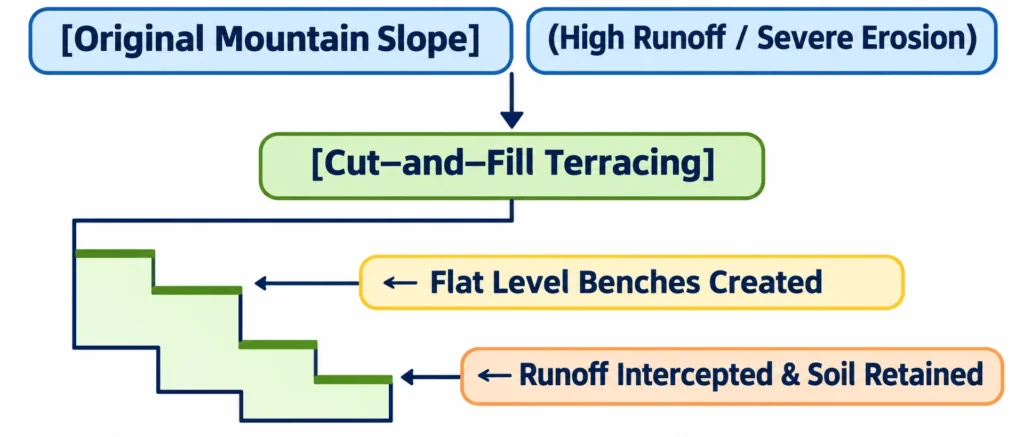
- Structural Engineering: Hill and mountain slopes are cut into sequential, flat steps or benches. These platforms provide small patches of level land managed like permanent, flatland agriculture.
- Hydrological and Edaphic Defense: Structuring these steps breaks up long slopes, slowing down surface runoff. This mechanism intercepts water movement and prevents severe soil erosion across fragile mountain watersheds.
Commercial Agriculture Systems
Commercial agriculture shifts the focus from home consumption to maximizing marketable surplus. It uses large-scale layouts to produce cash crops—such as wheat (Triticum aestivum), cotton (Gossypium spp.), sugarcane (Saccharum officinarum), tea (Camellia sinensis), rubber (Hevea brasiliensis), and corn (Zea mays)—to secure profits through domestic trade or international exports.

1. Intensive Commercial Farming
- Demographic Frame: Practiced in regions experiencing small landholdings paired with a dense human population.
- Input Architecture: Farmers apply a lot of manpower and high variable input loads (fertilizers, pesticides) onto a relatively small piece of land to maximize total production value per hectare.
2. Extensive Commercial Farming
- The Structural Opposite: This operational model applies a small workforce to very large contiguous land holdings.
- Automation Reliance: Cultivation relies almost entirely on large-scale mechanisation of agriculture. It uses heavy tractors, automated seeders, and combine harvesters, minimizing manual labor costs.
3. Plantation Agriculture (Estate Farming)
- Historical Matrix: Introduced systematically by British administrators in the nineteenth century, plantation farming focuses on high-value perennial bush or tree cultivation.
- Crop Architecture: Operates as a strict single crop farming (monoculture) system. It manages industrial commodities like rubber, tea, coffee (Coffea spp.), cocoa (Theobroma cacao), spices, coconut (Cocos nucifera), and high-value temperate/tropical fruits (e.g., apples, grapes, and oranges).
- Capital and Management Demands: The system is highly capital-intensive. It demands advanced managerial ability, technical know-how, sophisticated machinery, synthetic fertilizers, managed irrigation, and direct transport facilities.
- Industrial Agro-Processing Integration: To prevent post-harvest spoilage and maintain quality, major plantations (like tea, coffee, and rubber) integrate an industrial processing factory directly within the farm estate or right next to it.
- Geographical Distribution:
- Hilly tracts of North-Eastern India and the sub-Himalayan plains of West Bengal (primarily for tea plantations).
- Nilgiri, Anamalai, and Cardamom hills across peninsular India (for coffee, rubber, and spice estates).
Ley Farming Systems – Notes for UPSC Agriculture Optional
Definition and Core Architecture
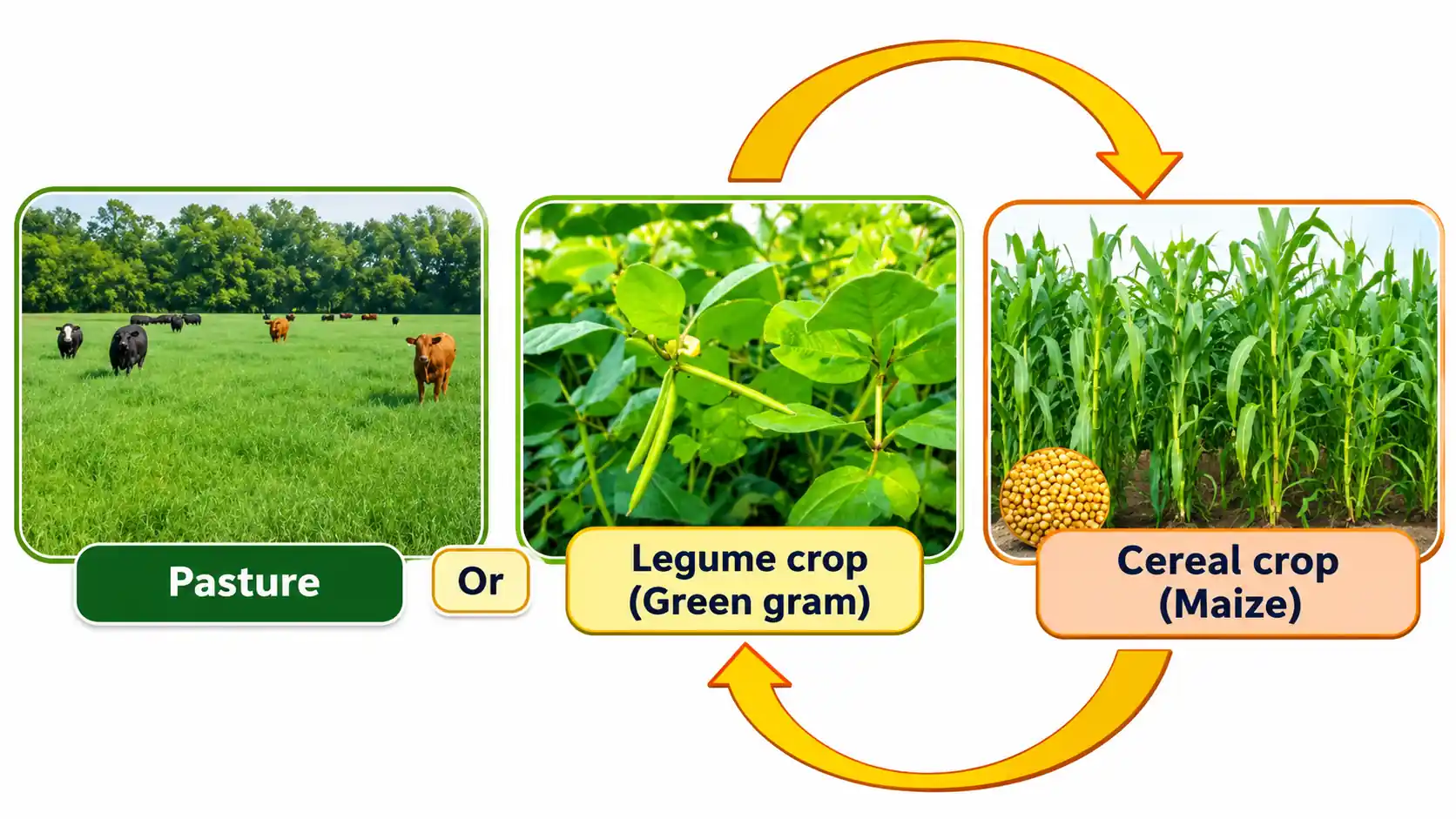
- Ley Farming is an integrated agropastoral system where temporary pasture crops (grasses and legumes) are grown in a structured seasonal rotation with arable field crops.
- The primary output focuses on producing high-quality hay and silage to meet the year-round nutritional needs of livestock, while naturally restoring soil fertility across depleted fields.
Systemic Components and Structural Approach
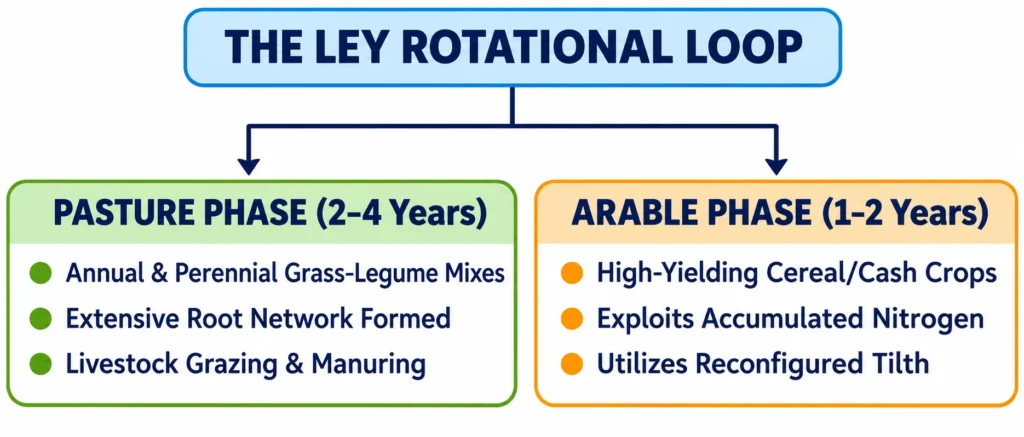
- The Dynamic System: Ley farming acts as a dynamic and integral system of agriculture. It links the three core pillars of the farm ecosystem—soil, plants, and livestock—into a closed-loop nutrient cycle.
- Rotational Strategy: Resource-poor farmers alternate shallow-rooted arable crops with a mix of short-term annual or long-term perennial grasses and legumes. This method serves as a primary approach to rebuild soil health while stabilizing food and fodder security.
- Advanced Management: For maximum crop yield, the system represents the best use of available land. It combines traditional grazing wisdom with the latest methods of crop husbandry to ensure long-term sustainability.
Agronomic and Physiological Principles
1. Grass-Legume Synergies and Fodder Dynamics
- Nutritional Balance: Setting up a diverse grass-legume mixture produces a superior forage yield. The grasses provide high structural carbohydrates and fiber, while the legumes boost the crude protein content of the feed.
- Nitrogen Contribution: The leguminous component uses symbiotic Rhizobium pathways to fix atmospheric nitrogen N2. Part of this fixed nitrogen supports the companion grasses, while the rest remains in the soil as residual fertility for the next arable crop.
2. Underground Structural Reconfiguration
- Root Stratification: Perennial pasture grasses develop deep, dense, and fibrous root systems over multiple seasons. This extensive root mass physically binds soil particles together, improving soil aggregate stability and water infiltration.
- Organic Humus Build-up: When the pasture phase ends and the roots are plowed under, the slow decomposition of this large organic mass increases soil organic carbon (SOC). This process builds a deep reservoir of stable humus that improves soil water-holding capacity and water-use efficiency (WUE).
3. Intercepting Degradation Pathways
- Breaking Pest Continuities: Resting fields under a pasture mix cuts off the specialized host niches needed by common crop pests, weeds, and nematodes.
- Erosion Control: The continuous, dense vegetative cover forms a live shield that reduces raindrop impact and surface water velocity, protecting vulnerable fields from topsoil erosion.
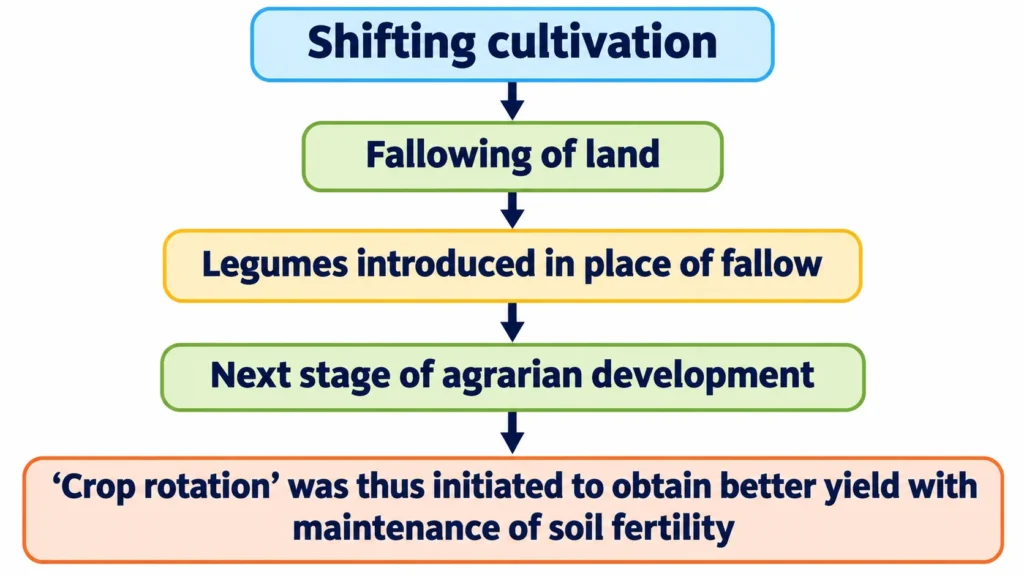
Advanced Agroecological Dynamics of Ley Farming Systems – UPSC Agriculture Optional
Socioeconomic and Ecological Advantages
Implementing a well-calibrated ley farming loop bridges the structural gap between plant science, animal husbandry, and soil physics. This integration creates multi-trophic benefits across the entire farm boundary.
1. Atmospheric Nitrogen Enrichment and Soil Nutrition
- Rhizospheric Fixation Engines: Integrating deep-rooted forage legumes within the crop rotation matrix optimizes biological nitrogen fixation (BNF). This process enriches the topsoil with plant-available nitrogen components, naturally increasing subsequent crop yields and grain quality.
- Nutrient Mining Abatement: Most heavy food grains (such as wheat or rice) deplete topsoil macro-nutrients. Alternating them with high-yielding leguminous pastures counters this degradation, eliminating the need for expensive synthetic nitrogenous fertilizers.
2. Restoring Soil Aggregation and Organic Matter Structure
- The Grass-Legume Synergy: Legume pastures planted alone often fail to reach baseline humification targets. Mixing them with perennial meadow grasses accelerates the accumulation of high-quality organic materials.
- Humus Build-Up Milestones: Peer-reviewed agronomic research proves that introducing multi-species meadow grasses increases soil organic matter by about 0.1% per year. This organic residue builds structural macro-pores, which can expand field water infiltration capacity by up to four times over a 5-year phase, preventing rapid soil fatigue.

3. Biological Weed Suppression and Managed Grazing
- Competitive Exclusion: Sowing a high-density, multi-species pasture mix covers empty inter-row spaces, blocking sunlight from reaching the soil surface to naturally eliminate weed seed germination.
- Agropastoral Eradication: Allowing cattle to graze on these fields creates a targeted biological control system. The livestock eat unwanted plants, keeping aggressive annual weeds from setting seed and disrupting their life cycles.
4. Preventing Deep Drainage and Topsoil Erosion
- Subterranean Extraction Nets: The root networks of perennial pasture plants grow deep into the subsoil, absorbing water and mobile nutrients from lower horizons.
- Hydrological Stabilization: This deep root activity dries out the lower soil profile, creating a storage buffer that stops deep drainage and prevents the leaching of dissolved agrochemicals into groundwater.
- Aggregated Matrix Shield: Shallow topsoils are unstable and have poor water retention. The dense root mass of a ley pasture binds loose soil particles together, strengthening soil tilth to check wind and water erosion.
Technical Limitations and Implementation Challenges
While highly sustainable, transitioning to a ley farming model requires careful agronomic planning and introduces specific structural trade-offs:
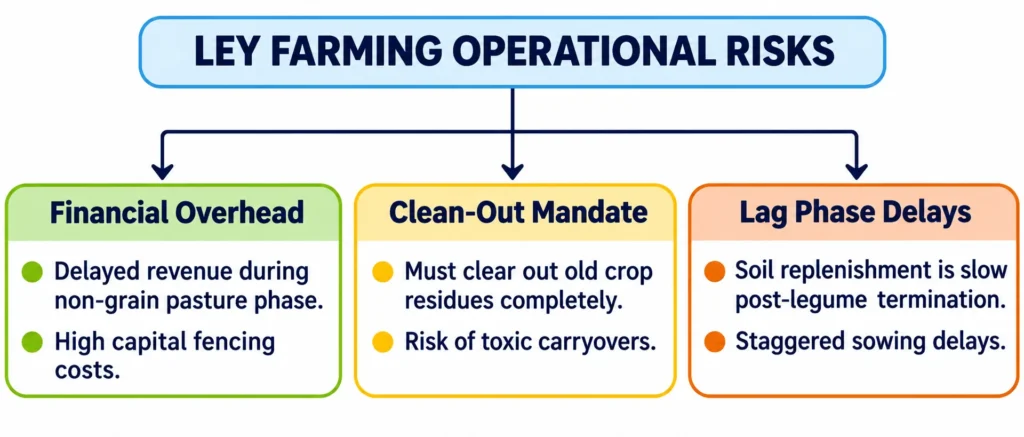
1. High Capital and Time Investments
- Delayed Financial Returns: Adopting this system demands considerable time and investment of lots of money. Dedicating fields to forage production means missing out on immediate cash returns from food staples, which can strain capital-scarce smallholders.
- Socioeconomic Gaps: Setting up secure fencing, clean animal water infrastructure, and high-quality storage facilities requires significant upfront funding.
2. Germination and Environmental Vulnerabilities
- Establishment Failures: The success of the pasture phase depends on high-quality seed lines. Complexities often arise from improper seed preparation, low seed quality, or unfavorable weather conditions (such as early terminal drought), which can cause poor seedling establishment.
3. Complex Clean-Out Mandates and Field Preparation
- Eradicating Existing Cultivars: Before sowing a new pasture mix, farmers must remove all modern forms of plant cultivation from the soil. If old crop residues or volunteer plants are left in the field, they can cause weed competition and carry over destructive pests or diseases to the new pasture.
4. Slow Replenishment and Lag Phase Delays
- Staggered Sowing Windows: To protect subsequent crop yields, farmers must observe a precise interval before removing old pasture plants and sowing the next crop. Short-term grasses release nutrients quickly, but soils can replenish slowly after heavy legume growth. This delay requires careful field tracking to prevent nutrient immobilization from stalling the next grain cycle.
Cooperative Farming Systems – Notes for UPSC Agriculture Optional

Definition and Structural Architecture
- Cooperative Farming is an institutional and economic management system where individual farmers voluntarily pool their land holdings, capital, draft power, and labor resources to form a unified, larger operational unit.
- While farmers pool their physical assets to leverage economies of scale, each individual family retains ownership rights over their specific land parcels.
- Profits and harvested produce are distributed among members based on two distinct metrics:
- The total land area contributed to the cooperative block.
- The volume of active labor and work hours put in during the cropping season.
Socioeconomic Objectives and Growth Trajectory
Primary Institutional Goals
- Consolidation of Fragmented Land: To bypass the economic inefficiencies caused by heavy land fragmentation and small average holding sizes across India.
- Input and Asset Optimization: To combine limited capital reserves, bulk-purchase inputs, lower production costs, and shared farm implements.
- Maximizing Market Leverage: To eliminate intermediate traders, establish direct forward and backward linkages with agro-industries, and secure higher farm-gate prices for members.
Historical Implementation in India
- Cooperative farming systems in India have only recently appeared relative to traditional ancestral models, gaining initial programmatic backing during early Five-Year Plans.
- The Shared Benefit Matrix: The core aim of these systems is to combine land resources and farmers so that everyone benefits by converting small subsistence operations into modern, profitable agricultural ventures.
- The Capital Bottleneck: There is huge potential to build this method in India; unfortunately, funding has been slow to make it possible. The lack of low-interest institutional credit lines and limited public funding has slowed the expansion of rural processing facilities.
Socioeconomic Vulnerabilities and Adoption Barriers
Despite its clear theoretical advantages for smallholders, scaling cooperative systems across India face deep socio-cultural and economic challenges:

1. Cultural Attachment to Land Titles
- Ancestral Land Bonding: Rural families are deeply attached to their land and unwilling to give it up to be shared in a cooperative system.
- The Ownership Anxiety: Even with legal protection guaranteeing ownership retention, a deep fear of permanent land loss keeps smallholders from volunteering for collective systems.
2. Displacement and Unemployment Concerns
- Fear of Job Loss: Farmers fear they will lose their jobs if individual, labor-intensive operations are automated.
- Mechanisation Friction: Smallholders worry that introducing modern machinery over large fields will leave surplus family labor structurally unemployed.
3. Ideological Distrust and Misleading Propaganda
- Misleading Political Framing: Rural adoption is slowed by an immense amount of propaganda related to “new” lines of thinking.
- Friction to Collective Management: Opponents often mischaracterize cooperative ventures as rigid, state-controlled models, creating widespread distrust among independent rural communities.
Strategic Structural Reforms for Scale
To overcome these institutional challenges and tap into the potential of cooperative management, modern policy shifts from traditional cooperative farming societies toward market-driven frameworks:
- Farmer Producer Organisations (FPOs): Organizing smallholders into legal FPOs lets them retain complete individual management over their fields while pooling input buying power and marketing, bypassing land aggregation concerns.
- Custom Hiring Centres (CHCs): Setting up shared machinery hubs allows for mechanized farming over adjacent fields without forcing the structural merging of separate land titles.
- Transparent Digital Audits: Using secure, transparent accounting and land registry systems helps build institutional trust and cuts through negative misinformation.
Crop Diversification – UPSC Agriculture Optional
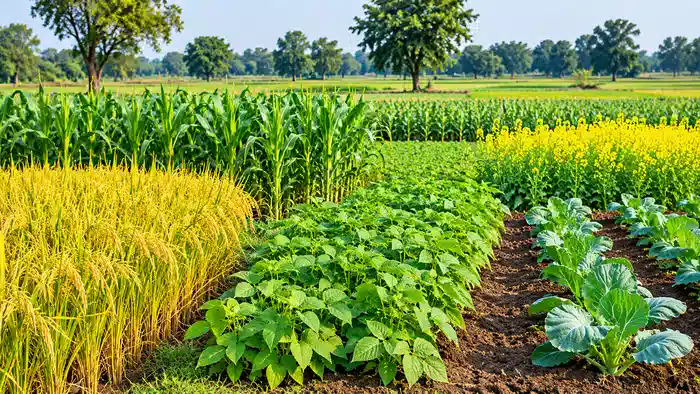
Definition and Core Scope
- Crop Diversification refers to the dynamic addition of new crops or cropping systems to agricultural production on a specific farm unit.
- This strategy takes into account the higher economic returns from high-value, value-added crops while simultaneously leveraging complementary marketing opportunities to maximize farm revenue.
- It serves as a vital component of sustainable land-use planning, shifting agriculture from risky subsistence models toward stable, market-driven agro-ecosystems.
Strategic Objectives
- Risk Insulation: Spreads climate and market risks across multiple species, protecting smallholders from single-crop failures.
- Economic Scaling: Boosts net returns by introducing high-value horticultural, oilseed, or pulse crops into traditional cereal loops.
- Resource Optimization: Enhances water-use efficiency (WUE) and nutritional economy by utilizing different root zones and canopy levels.
Typology and Matrix of Crop Diversification
Crop diversification can be implemented across multiple dimensions, ranging from the field scale to large, micro-watershed landscapes:
Advanced Structural Diversification Matrix
|
Type of Diversification |
Nature of Diversification |
Potential Benefit |
||
|
Improved Structural Diversity |
Makes crops within the field more structurally diverse across spatial layouts. |
Pest suppression and optimized light interception efficiency. |
||
|
Genetic Diversification in Monoculture |
Cultivation of a mixture of varieties of the same species simultaneously within a monoculture block. |
Disease suppression and increased production stability via multi-line resistance. |
||
|
Diversify Field with Fodder Grasses |
Growing high-yielding fodder grasses alongside food grains, pulses, oilseeds, or vegetables. |
Pest suppression and creates direct opportunities to integrate profitable livestock farming. |
||
|
Crop Rotations |
Introducing temporal diversity through planned, sequential cropping seasons over time. |
Disease suppression, weed break cycles, and increased long-term production stability. |
||
|
Polyculture |
Maximizing spatial and temporal diversity by growing two or more crop species within the same field footprint. |
Insect, pest, and disease suppression, climate change buffering, and increased production. |
||
|
Agroforestry |
|
Enhanced pest suppression, microclimate stabilization, and climate change buffering. |
||
|
Developing larger-scale diversified landscapes through a mix of crops and multiple cropping systems. |
Broad-scale pest suppression, biodiversity conservation, and climate change buffering. |
||
|
Micro-Watershed Based Diversification |
Integrating diverse crops with alternative farming components (poultry, fisheries, horticulture) across a watershed. |
Insect, pest, and disease suppression, climate buffering, increased production, year-round employment, and income. |
Socioeconomic and Ecological Advantages
CROP DIVERSIFICATION TARGET LOOPS
- Biotic Resistance
- Multi-line genetic mix starves pathobiomes.
- Breaks monocure weeds.
- Climate Resilience
- Tree-canopy shields buffer heat anomalies.
- Watersheds retain water.
- Economic Secu(Truncated)
- Value-added ι (Truncated) into premium
- Smooth annua (Truncated)
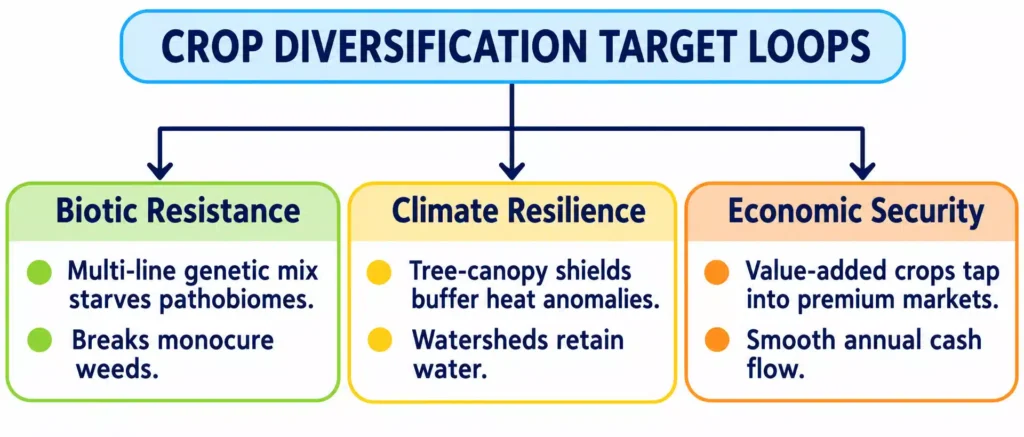
1. Multidimensional Pest and Disease Suppression
- Breaking Insect Niches: Monocultures allow host-specific pests to expand rapidly. Structural and species diversification creates physical barriers that alter insect feeding habits and slow down pathogen movement.
- Genetic Protection: Cultivating varied genotypes or distinct varieties of the same species within a single block prevents a single mutated pathogen from wiping out the entire harvest.
2. Climate Change Buffering and Resource Conservation
- Microclimatic Stability: Systems like agroforestry and layered polycultures protect sensitive understory crops from extreme heat anomalies and high boundary layer winds.
- Watershed Sustainability: Micro-watershed based diversification helps retain soil moisture, recharge shallow aquifers, and prevent topsoil erosion, preserving long-term soil health.
3. Income Stabilization and Value Addition
- Year-Round Employment: Integrating food crops with livestock fodder and watershed components distributes agricultural labor needs evenly across all seasons, minimizing structural rural underemployment.
- Complementary Marketing: Diversification allows smallholders to enter niche value-added markets, generating steady cash flows and protecting farm income from single-commodity price crashes.
Crop Diversification: Benefits, Challenges, and Policy Interventions – UPSC Agriculture Optional
Conceptual Framework of Crop Diversification
- Crop Diversification refers to the dynamic process of adding new crops or cropping systems to agricultural production on a specific farm unit. This approach shifts resources from low-profit systems toward sustainable, high-value crop portfolios.
- It balances the varying returns of market-driven crops with complementary marketing opportunities. This practice serves as a vital component of sustainable land-use planning in the UPSC Agriculture Optional framework.
Socioeconomic and Ecological Benefits
1. Maximising Income on Small Land Holdings
- The Smallholder Challenge: At present, 70–80% of farmers in India have land below 2 hectares. This heavy fragmentation of land holdings makes traditional cereal monocultures economically unviable.
- High-Value Substitution: To overcome this scale limitation, existing cropping patterns must be diversified with high-value crops such as maize (Zea mays), pulses, oilseeds, and horticultural varieties that yield higher profits per acre.
- State Policy Directives: Governments incentivize this shift to balance resources. For example, the Government of Haryana launched the Mera Pani – Meri Virasat Scheme, paying farmers a financial incentive of Rs. 7,000 per acre to switch from water-intensive paddy to alternative cash crops.
2. Ensuring Macroeconomic and Economic Stability
- Market Shock Insulation: Relying on a single crop leaves smallholders vulnerable to sudden market crashes. Adopting a diversified crop portfolio helps the farm system better tolerate the ups and downs in price of various farm products.
- Income Stabilization: This price buffer secures the long-term economic stability of farming products and ensures regular household cash flows.
3. Mitigating Natural Calamities and Climatic Aberrations
- Climate Change Resilience: Hyper-arid belts and rainfed zones frequently face sudden adverse weather conditions like erratic rainfall, severe drought, unseasonal hail, and unexpected incidence of insect and pest disease.
- Risk Spreading via Mixed Cropping: Under these highly unpredictable conditions, practicing crop diversification through mixed cropping or intercropping acts as an agronomic insurance policy. Because different species have varying stress thresholds, it reduces the risk of total crop failure.
4. Balancing Food Demand and Combating Malnutrition
- The Hidden Hunger Challenge: A large share of the Indian population suffers from chronic malnutrition, and high numbers of adolescent girls and women suffer from severe anemia.
- Diversifying the Food Basket: Moving acreage toward pulses, oilseeds, horticulture, and vegetable crops improves rural socio-economic status. It adds vital micro-nutrients, proteins, and quality lipids to the household food basket.
- National Nutrition Mandates: To fulfill food safety and nutritional security targets, the Government of India launched the National Food Security Mission (NFSM), specifically designed to increase the total area and productivity of pulses and oilseeds across the country.
5. Environmental Conservation and Soil Restoration
- Rhizospheric Nitrogen Safety Nets: Adopting crop diversification helps in the conservation of natural resources.
- Fixing Nitrogen: Introducing a leguminous component into the traditional, input-heavy rice-wheat cropping system introduces Rhizobium symbioses. These legumes fix atmospheric nitrogen, restore soil organic carbon (SOC), and build long-term soil health without requiring heavy inputs of synthetic chemical fertilizers.

Technical Challenges and Structural Barriers to Diversification
Despite its clear advantages, broad adoption of crop diversification across India is slowed by severe biophysical, structural, and institutional challenges:
- High Rainfed Dependence: The majority of the cropped area in the country is completely dependent on rainfall. This lack of assured irrigation exposes non-cereal crops to severe terminal moisture stress.
- Sub-Optimal and Over-Use of Resources: Misaligned agricultural subsidies cause the over-use of land and water resources (e.g., flood-irrigated rice in arid zones). This causes groundwater depletion and secondary salinization, damaging the long-term sustainability of agriculture.
- Inadequate Quality Seed Supply: A critical bottleneck is the inadequate supply of seeds and plants of improved cultivars. This deficit forces smallholders to rely on low-yielding traditional varieties.
- Extreme Land Fragmentation: The continuous fragmentation of land holdings creates tiny, scattered plots. This scale barrier less favors the modernization and mechanisation of agriculture.
- Deficient Basic Infrastructure: Rural adoption is slowed by poor basic infrastructure, including sub-standard rural roads, erratic power grids, and weak transport and communication networks.
- Post-Harvest Handling Deficits: Farmers face high wastage due to inadequate post-harvest technologies and a lack of cold-storage infrastructure for handling perishable horticultural produce.
- Weak Agro-Based Industries: A very weak agro-based industry in rural areas prevents local processing and value addition, forcing distress sales.
Previous Year Question based on it
- Explain different types of farming. Discuss the factors affecting types of farming. (20M, CSE 2024)
- Explain the term conventional and conservation tillage. Give account of their comparative effects on soil properties and greenhouse gas emissions. (20M, CSE 2024)
- Differentiate between intercropping and mixed cropping. Explain the terms ‘additive series’, ‘replacement series’ and ‘land equivalent ratio’ with examples. (15M, IFoS-2023)
- How can the cropping intensity and farm profitability be enhanced with the incorporation of different types of speciality corn in existing cropping systems.? (10M CSE 2023 150W)
- Describe the multi-storied cropping system. Discuss in detail its advantages and feasibility inhorticultural crops. (15M, IFoS-2022)
- Discuss the factors considered for selection of a cropping system. Suggest efficient and productive cropping systems for Indo-Gangetic plains. (15M, IFoS-2022)
- Describe the role of diversification and intensification of the cropping systems in enhancing farm productivity and nutritional security. (8M, IFoS-2022)
- Define Integrated Farming System (IFS). How can IFS improve the income of different landholding groups? (20M, CSE 2021)
- Discuss Integrated Farming System (IFS) with suitable examples. How can IFS improve livelihoods of small and marginal farmers? (15M, IFoS 2021)
- What is Land equivalent Ratio (LER)? Give advantages and disadvantages of LER. (15M, IFoS 2021)
- Rice-wheat crop rotation is very common in north Indian Agriculture. Discuss and describe the advantages and disadvantages of this crop rotation according to the principles of crop rotation. (CSE 2020)
- What is diversified system of farming? How it is beneficial to small and marginal farmers in India? (10M, 150W, CSE 2020)
- Choice of crops and cropping systems is governed by length of growing season critically comment. (10M, CSE 2019)
- Differentiate catch crop and Trap crop (20M, CSE 2019)
- Discuss the importance of diversification and intensification in modern agriculture. (8M, 150W, IFoS-2019)
- Discuss the importance and scope for drought-tolerant varieties in crops. (8M, 150W, IFoS-2019)
- Explain the concept and benefits of multiple, multi-storey, relay and intercropping. (10M, IFoS-2019)
- What is multiple cropping? Give its significance in increasing the crop production. (8M,150W, IFoS-2018)
- Diversification and intensification are important in present day agriculture. Explain. (8M, 150W, IFoS-2017)
- Describe cropping system, Intercropping and Relay cropping in agriculture, with examples. (10M, 150W, IFoS-2017)
- Farming system vs Mixed farming (10M, 150W, 2016)
- Describe Decoy crop vs Trap crop (10M, CSE 2016)
- Differentiate between multi-storey cropping and relay cropping. Write their importance. (8M,150W, IFoS-2016)
- What is crop diversification? What are the factors affecting it? (8M, 150W, IFoS-2016)
- Important characteristics of dryland and rainfed farming. (10M, 200W, IFoS-2016)
- Discuss inter-cropping to meet food production sustainability. (8M, IFoS-2015)
- Describe the basis of crop and management requirement for success of multiple cropping and relay cropping.(10M, IFoS-2015)
- Explain multiple cropping, its significance and constraints experienced by farmers (15M, CSE 2015)
- Why is crop diversification more beneficial than traditional monoculture system (20M, CSE 2015)
- Differentiate and elaborate Intensive agriculture and Sustainable agriculture (10M, CSE 2015)
- What are the elements of weather affecting crop production? Explain the adjustment of cropping system in the aberrant weather conditions. (8M,150W, IFoS-2014)
- Rice- wheat crop rotation is very popular in North India. Is this rotation in accordance with principles of crop rotation? Discuss the advantages and disadvantages of crop rotation. (10M, IFoS-2014)
- What is multi storied cropping? State the principles of multi storied cropping. Also state the important factors that limit the adoption of multi storied cropping. (10M, IFoS-2014)
- What are the advantages of integrated farming system? Discuss about resource recycling in different integrated farming systems in India (10M, 150W, CSE 2013)
- Explain Crop diversification (10M, 150W, CSE 2013)
- Short notes on Ley farming (10M, 150W, CSE 2013)
- Explain Intercropping (10M, 150W, CSE 2013)
- Differentiate cropping system and cropping pattern (15M, CSE 2012)
- Intensification and Diversification of agriculture (15M, 200W, CSE 2012)
- What are principles of agricultural regions? Give importance of intercropping system. (12M, 150W, CSE 2012)
- In the context of Integrated Farming System (IFS), describe feasible enterprise diversification for dry land areas with special reference to small landholdings (30M, CSE 2010)
- Differentiate Cropping Scheme and Cropping Pattern (10M, CSE 2009)
- Short notes on Tillage (20M, 200W, CSE 2009)
- Integrated crop management (ICM) (200W, 20M, CSE 2008)
- Short notes on Cropping and farming system (20M, 200W, CSE 2006)
- What is sustainable agriculture? Give its limitations and strategies to achieve food security for the 21st century (60M, CSE 2006)
- Short notes on Sustainable agriculture (20M, 200W, CSE 2003)
- Short notes on Land Equivalent Ratio (20M, 200W, CSE 2002)
- Short notes on Crop Diversification (20M, 200W, CSE 2002)
- Why is rice-wheat cropping sequence considered important among other crop sequences in the country?Describe briefly the limiting factors and remedial measures associated with this crop sequence for their higher production. (60M, CSE 2002)
- Define intercropping. Give the definition of different systems of intercropping each with 3 examples. Discuss the effect of component crops on each other. (60M, CSE 2001)
- Prepare a production plan for a family farm of 0.5 hectare having four fields irrigated by hired tube well water in which domestic needs govern the cropping system (60M, CSE 2001)
- Intercropping of sugar beet with sugarcane (15M, CSE 2001)
- Short notes on recent methods of line sowing (20M, 200W, CSE 2001)
- Short notes on summer sown pigeon pea-wheat rotation (15M, CSE 2001)
- Short notes on Wheat after potato and wheat with potato (15M, CSE 2001)
- Short critical notes on Multi-storey Cropping (20M, 200W, CSE 1999)
- Short critical notes on Inter cropping and mixed cropping (20M, 200W, CSE 1998)
- Short critical notes on Contour farming (20M, 200W, CSE 1998)
- Define maximum economical yield (MEY) Describe the important inputs and operations in wheat after toria.(60M, CSE 1997).
- Short critical notes on Farming system approach (20M, 200W, CSE 1996)
- Cropping system (200W, CSE 1995)
- Ley farming Vs alley cropping (200W, CSE 1993)
- Cropping System vs. Farming System. (200W, CSE 1992)
- Mixed cropping vs. Relay cropping. (200W, CSE 1992)
- Multiple cropping patterns. (200W, CSE 1990)
- Discuss the differences between the traditional and modern approaches to tillage. What are the problems of tillage research? (CSE 1990)
- Major cropping patterns in India (200W, CSE 1989)